Claude Code doesn't have a fixed per-seat cost in the traditional sense. What you actually pay depends on which plan you're on, which model you're using, how large your codebase is, and how many agents you're running. That variability is the first thing to understand — and the main reason developers often pick the wrong plan or get surprised by their bill. Meta's Muse Code pricing is also metered, with Standard and Contributor tiers.
This guide breaks down every pricing path, gives you realistic per-session estimates, and shows you where the real cost levers are. All prices sourced from Anthropic's official pricing page and API documentation.
Claude Code Pricing at a Glance
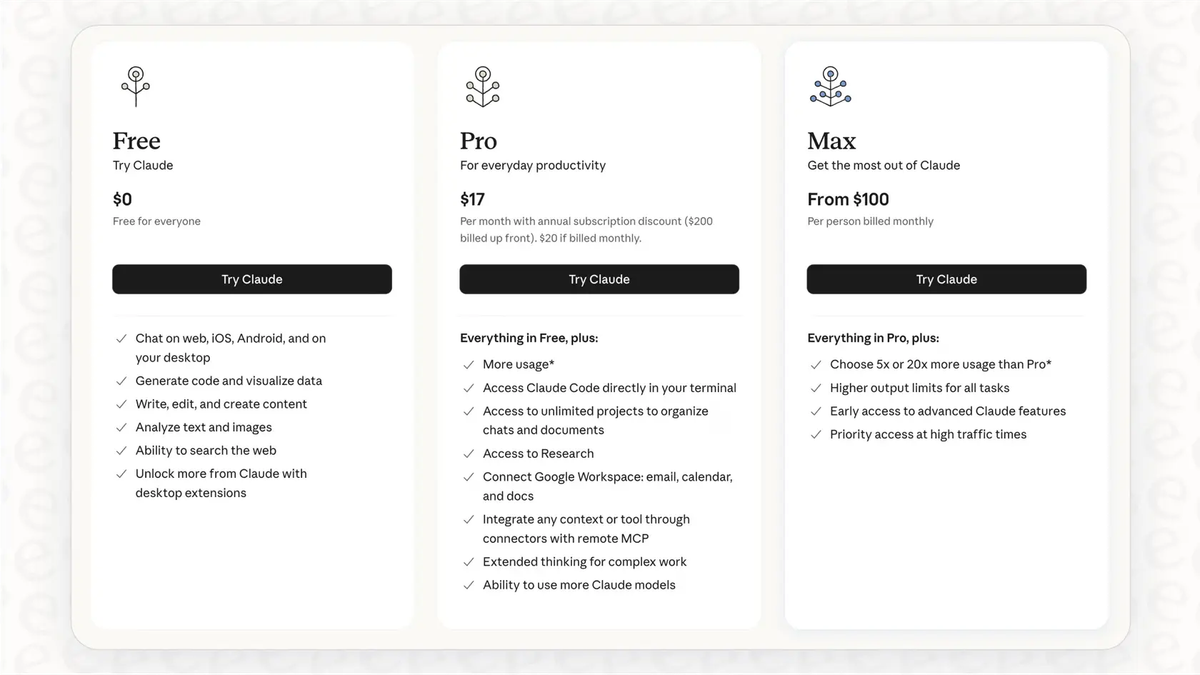
| Plan | Cost | Claude Code Access | Best For |
|---|---|---|---|
| Free | $0/mo | ❌ Not included | Basic chat only |
| Pro | $20/mo | ✅ | Solo devs, light-to-moderate usage |
| Max 5x | $100/mo | ✅ | Daily heavy users, hitting Pro limits |
| Max 20x | $200/mo | ✅ | Full-time agentic workflows, multi-agent |
| Team Standard | $20/seat/mo (annual) | ❌ | Non-developer team members |
| Team Premium | $100/seat/mo (annual) | ✅ | Developer seats with 6.25x Pro usage |
| Enterprise | Custom (contact sales) | ✅ All users | Compliance, HIPAA, 500K+ context |
| API (pay-as-you-go) | Per token | ✅ | Automation, variable workloads |
Prices are for US billing. Annual billing on Pro saves ~15% ($17/mo effective). Verify current pricing at claude.com/pricing before subscribing.
How Claude Code's Pricing Actually Works
Subscription vs token consumption model
Claude Code isn't priced as a standalone product. It's a CLI tool that runs in your terminal, connects to Anthropic's model APIs, and is billed through your existing Claude plan or API account. Subscription plans (Pro, Max, Team) give you a fixed monthly fee with included usage — Claude Code draws from the same token budget as your regular Claude usage. Once you hit your limit, you either wait for the window to reset or pay overage at standard API rates.
The key structural choice is subscription vs. API:
- Subscription (Pro/Max/Team): Flat monthly fee, usage pooled with Claude chat. Hit limits → wait for reset or pay overage. Best for consistent daily use where the flat rate beats per-token billing.
- API pay-as-you-go: No monthly floor, full cost visibility. Best for automation or variable workloads.
Rule of thumb: API billing only beats Pro if you're below roughly 50 sessions per month. Consistent daily use almost always makes subscription the better value.
What drives token cost
Three variables account for most of your Claude Code spend:
Context size is the biggest one. A typical Claude Code session reading through a medium-sized codebase can consume anywhere from 10,000 to 100,000+ tokens depending on complexity, context size, and how many back-and-forth iterations you do. Every file Claude reads, every prior message in the session, and every tool call result adds to the context processed on each subsequent turn.
Model choice has an outsized impact. Claude Opus 4.6 costs about $5 per million input tokens and $25 per million output tokens, while Claude Sonnet 4.6 costs roughly $3 per million input tokens and $15 per million output tokens — per Anthropic's official API docs. On subscription plans, Opus burns through your quota significantly faster than Sonnet for equivalent tasks.
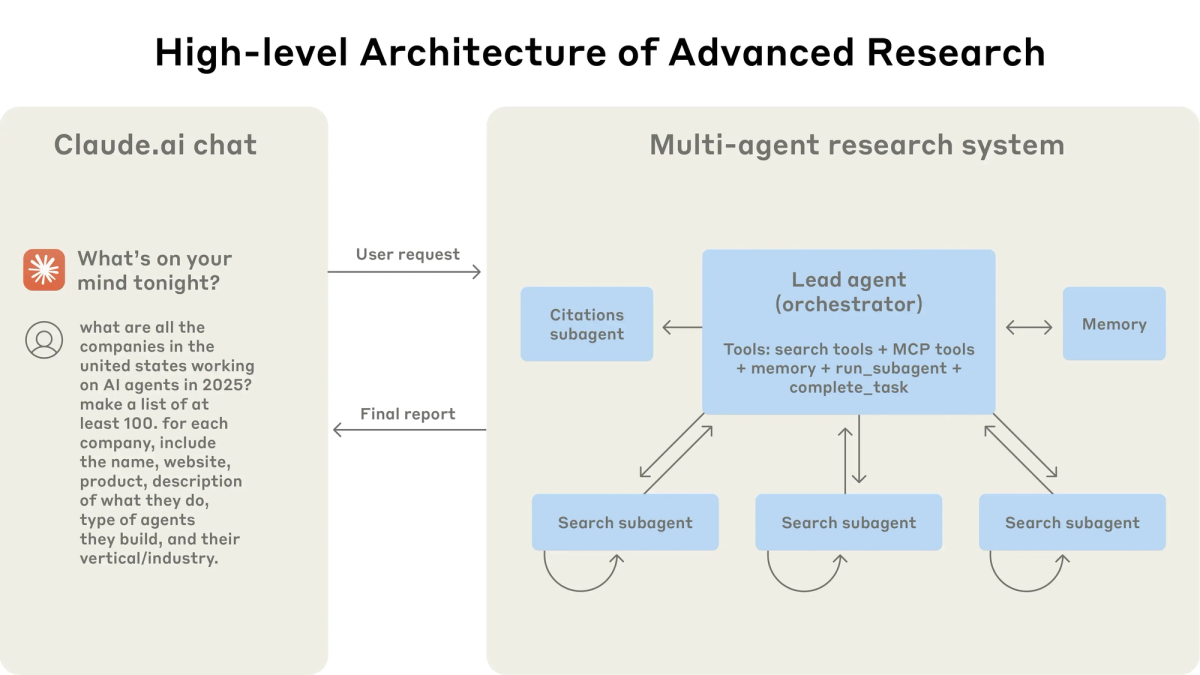
Agent multipliers are the cost most developers underestimate. Agent Teams spawn multiple Claude Code instances, each with its own context window. A 3-agent team uses roughly 7x more tokens than a standard single-agent session, because each teammate maintains its own context window and runs as a separate Claude instance.
Auto-accept mode and cost implications
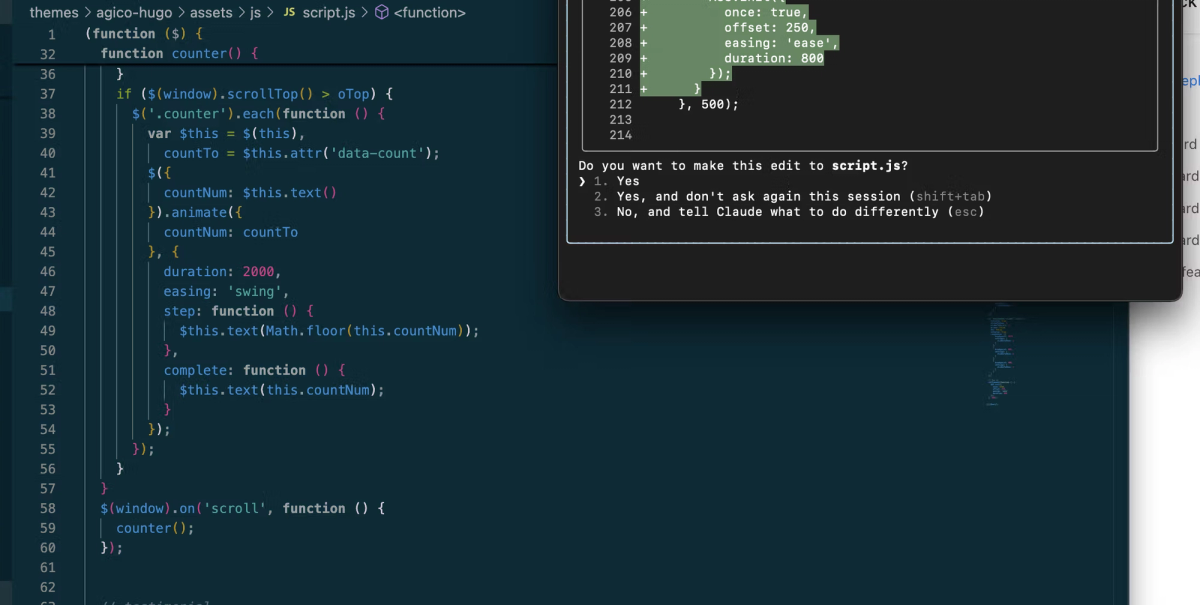
Auto-accept mode lets Claude execute file edits without confirmation prompts, which speeds up agentic sessions significantly. The cost implication: Claude tends to take more actions per task when it doesn't pause for approval, which increases both tool call count and session length. If you're on API billing or approaching subscription limits, running targeted sessions with plan mode first is more cost-efficient than pure auto-accept on open-ended prompts.
Plan Breakdown
Pro — $20/month
Pro plan users typically have access to approximately 44,000 tokens per 5-hour period, which translates to roughly 10–40 prompts depending on the complexity of the codebase. Access includes Sonnet 4.6 and Opus 4.6, terminal CLI, web, and desktop.
Not included: Agent Teams (requires enabling an experimental flag and burns quota fast at this tier), priority access during peak times.
Who it's for: Developers working on small-to-medium codebases doing focused sessions — not running Claude Code continuously for 6+ hours daily.
Teams
Standard seats offer 1.25x more usage per session than Pro and have a weekly usage limit. Premium seats offer 6.25x more usage per session than Pro. Claude Code is only accessible on Premium seats ($100/seat/month annual, $125/month billed monthly). You can mix seat types within the same organization — useful if only developers need Claude Code while other team members need Claude for writing and analysis. Teams support up to 150 seats; above that, Enterprise is required.
Enterprise — Contact Sales
Enterprise uses a single seat type, priced per user per month and billed annually. The seat fee gives each user access to Claude on web, desktop, and mobile, plus Claude Code. Usage isn't included in the seat fee — every token your team uses in chat, Claude Code, or Cowork is billed at standard API rates on top of your seat cost.
This is structurally different from subscription plans: there's no included usage, and token costs are metered directly. Admins can set spend limits per user. Enterprise also unlocks a 500K context window (vs 200K on Team), HIPAA-readiness, SCIM, audit logs, and SSO.
API pricing (pay-as-you-go)
Per Anthropic's official pricing documentation, current rates for the recommended models are:
| Model | Input | Output | Cache Read |
|---|---|---|---|
| Opus 4.6 | $5/MTok | $25/MTok | $0.50/MTok |
| Sonnet 4.6 | $3/MTok | $15/MTok | $0.30/MTok |
| Haiku 4.5 | $1/MTok | $5/MTok | $0.10/MTok |
MTok = million tokens. Cache reads are 10% of standard input price — prompt caching is one of the largest cost levers for API users. Batch API provides a 50% discount across all models for non-time-sensitive workloads. Note: legacy Opus 4.1 is still available at $15/$25 per MTok but is not recommended; Opus 4.6 delivers better performance at one-third the cost.
Real Usage Cost Estimates
These estimates are based on Anthropic's published averages — $6 per developer per day on API pricing, with 90% of users staying below $12/day — combined with community-reported session data.
Light user — small bug fixes and refactors
Profile: 1–2 Claude Code sessions per day, focused tasks (single file or small module), mostly Sonnet 4.6, sessions under 30 minutes.
Estimated API cost: $2–5/day → ~$50–100/month. Recommended plan: Pro at $20/month. Subscription easily beats API billing at this volume; you'll rarely hit limits.
Medium user — daily agentic sessions, multi-file edits
Profile: 3–5 hours of active Claude Code per day, multi-file features and refactors, mix of Sonnet and occasional Opus, plan mode used regularly.
On average, Claude Code costs roughly $100–200/developer per month with Sonnet 4.6, with large variance depending on how many instances users are running.
Estimated API cost: $6–12/day → ~$130–260/month. Recommended plan: Max 5x at $100/month. At this usage level the subscription is 2–2.5x cheaper than API billing, and you avoid mid-session rate limits.
Heavy user — multi-agent workflows, long sessions
Profile: Claude Code as primary development tool for most of the workday, Agent Teams for complex tasks, significant Opus usage, multiple concurrent sessions.
Token usage scales with the number of active teammates and how long each one runs. Each teammate runs its own context window. A 3-agent session for an hour can consume what a single-agent session consumes in a full day.
Estimated API cost: $20–60+/day → $400–1,200+/month. Recommended plan: Max 20x at $200/month. Open-source maintainers who qualify can instead apply for the Claude Max 20x Plan through Anthropic's grant program. One developer reported using 10 billion tokens over eight months — estimated API cost exceeded $15,000, while Max at $100/month for the same period totaled around $800 — a 93% saving.
Claude Code vs Competitors: Pricing Comparison
Claude Code vs Cursor
Cursor Pro at $20/month matches Claude Code Pro in price, but the billing mechanics differ. Cursor's credit system pools $20 of monthly credits for premium model use, with Auto mode (unlimited, model-agnostic) handling routine tasks. Claude Code's subscription pools token capacity across all usage with a 5-hour reset window. For developers who primarily use Auto mode in Cursor, the effective cost per session is lower. For developers who need sustained Opus-level reasoning across long sessions, Claude Code's Max plans offer better value than Cursor's Ultra ($200/month) for equivalent heavy use.
Claude Code vs Verdent (credit-based model)
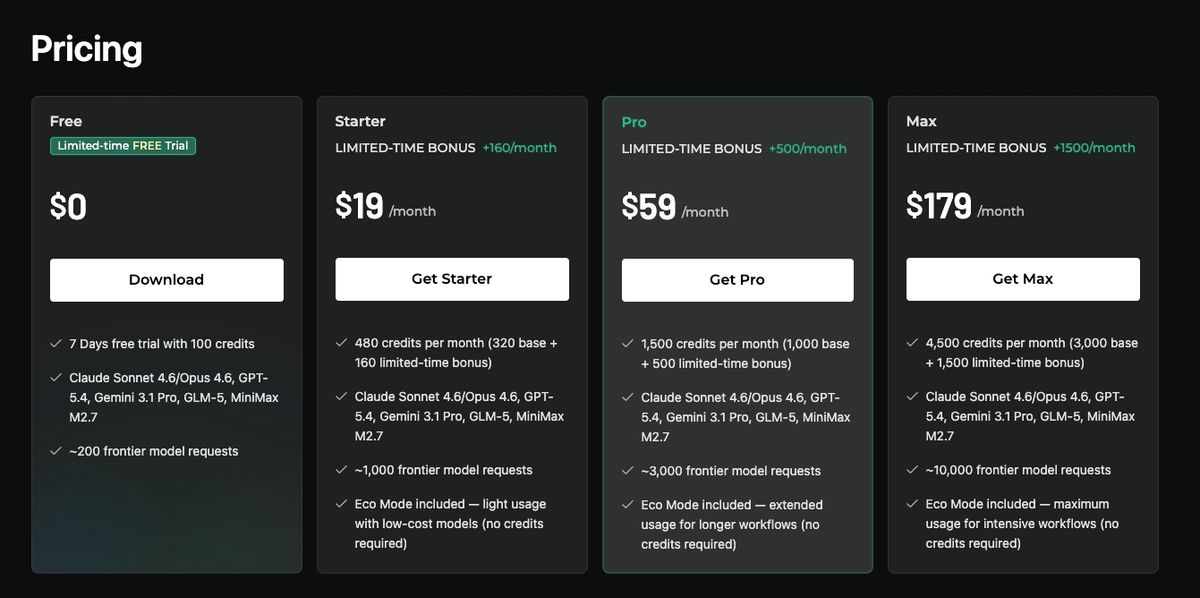
Verdent uses a monthly credit pool: Starter at $19/month (640 credits), Pro at $59/month (2,000 credits), Max at $179/month (6,000 credits). Each task consumes credits based on the model used and task complexity. The key structural difference from Claude Code: credits don't expire mid-month and aren't rate-limited by 5-hour windows. For developers who work in intensive bursts rather than steady daily sessions, Verdent's credit pool is more flexible. For developers who use AI coding tools consistently throughout a full workday, Claude Code's flat subscription amortizes more efficiently at scale.
Claude Code vs GitHub Copilot
GitHub Copilot Pro at $10/month delivers unlimited autocomplete, multi-model chat, agent mode, and unmatched GitHub integration. It's half the price of Claude Code Pro — but the comparison only holds if your use case fits Copilot's capabilities. Copilot's agent mode handles straightforward multi-file tasks but has no equivalent to Claude Code's Agent Teams or the 1M token context window that went GA in March 2026.
| Claude Code Pro | Cursor Pro | Verdent Pro | GitHub Copilot Pro | |
|---|---|---|---|---|
| Price | $20/mo | $20/mo | $59/mo | $10/mo |
| Billing model | Token quota (5-hr reset) | Credits ($20 pool) + unlimited Auto | Credit pool (monthly) | Flat (300 premium requests) |
| Multi-agent | ✅ (experimental flag) | ✅ Background Agents | ✅ Parallel (GA) | ❌ |
| Context window | 1M tokens (Opus/Sonnet 4.6, GA Mar 2026) | ~200K | Project-level indexing | Workspace-level |
| JetBrains | ✅ plugin | ❌ | ✅ plugin | ✅ native |
✦ Verdent gives new users 100 free credits with no credit card required — enough to benchmark real parallel agent sessions before committing.
Is Claude Code Worth the Cost?

When it pays off
Claude Code delivers clearest ROI on tasks where the alternative is hours of manual effort: large-scale refactors, framework migrations, comprehensive test suite generation, and architectural analysis of unfamiliar codebases. At 1M tokens of usable context, Claude Code can hold thousands of source files, entire monorepos, and full documentation sets simultaneously — without needing you to manually manage which files are loaded. That capability doesn't exist in IDE-based tools at the same scale.
When the token cost becomes a bottleneck
The 5-hour reset window is the sharpest friction point. Developers have reported burning through 4 hours of usage in 3 prompts when using plan mode to refactor a frontend architecture. Open-ended prompts on large codebases, Opus on every task, and Agent Teams sessions all accelerate quota consumption. If you regularly hit limits before the reset, you're either on the wrong plan or using the wrong model for routine tasks.
How to control and estimate your spend
Three high-impact tactics from Anthropic's cost management documentation:
Use Sonnet as the default. Sonnet handles most coding tasks well and costs less than Opus. Reserve Opus for complex architectural decisions or multi-step reasoning. Use /model to switch models mid-session.
Clear context between unrelated tasks. /clear starts fresh when switching to unrelated work. Stale context wastes tokens on every subsequent message.
Use plan mode before expensive operations. Planning first prevents costly rework — Claude outlines the approach before writing code, catching direction errors before they compound across 20 tool calls.
For API users, install ccusage to get daily and monthly token breakdowns by model directly from local session logs. For subscription users, /stats shows usage patterns within a session.
Verdent gives new users 100 free credits with no card required. Get started free → Benchmark your real usage costs before committing to a plan — runs on Claude Sonnet 4.6, Opus 4.6, GPT-5.4, Gemini 3.1 Pro, GLM-5, and MiniMax M2.7, so you can compare model performance and credit consumption side by side.
FAQ
Does Claude Code have a free plan?
No. Claude Code is not available on the Free plan. The free tier gives you access to Claude chat on web, iOS, Android, and desktop, but the terminal-based Claude Code environment requires at least a Pro subscription or API credits. New API accounts receive a small amount of free credits for testing, which technically lets you run a few Claude Code sessions before you're billed — but for any sustained use, you'll need to choose a paid path.
How much does Claude Code cost per month for a solo developer?
It depends on intensity. Light users (1–2 focused sessions per day) will stay comfortably within Pro at $20/month. Daily developers doing multi-file agentic work typically land in the $100–200/month range on API billing, making Max 5x at $100/month the better value. Power users running multi-agent workflows all day should budget for Max 20x at $200/month or expect significant API overages.
How is Claude Code billed — subscription or usage?
Both options exist. Subscription plans (Pro $20/mo, Max 5x $100/mo, Max 20x $200/mo) include a token budget that resets on a 5-hour cycle and weekly. API pay-as-you-go bills per token at standard rates with no monthly floor. Enterprise plans bill the seat fee annually plus API-rate token consumption on top — there is no included usage; every token is metered at standard API rates.
Does Claude Code review cost extra?
Claude Code's built-in code review capabilities — reading diffs, analyzing PRs — consume tokens from your existing plan budget with no separate charge. All standard Claude Code access is included in your subscription tier. If you're asking about GitHub Copilot's code review feature as a comparison point, that's a separate product in Copilot's ecosystem with its own pricing.
How does Claude Code pricing compare to Verdent?
The billing models are structurally different. Claude Code uses time-windowed token quotas that reset every 5 hours and weekly — intensive burst sessions can exhaust a window quickly. Verdent uses a monthly credit pool where credits persist across the billing period without daily rate limits. For developers who work in intensive bursts with rest in between, Verdent's credit model offers more flexibility. For developers who use AI coding tools consistently throughout a full workday, Claude Code's flat subscription amortizes more efficiently. For multi-agent parallel execution specifically, Verdent's native parallel architecture with Git worktree isolation is a GA feature; Claude Code's Agent Teams remain experimental and require manually enabling a flag.
Related Reading