
Quick reality check: Claude Code has genuinely changed how a lot of developers think about AI-assisted coding. The terminal-native approach, the deep codebase reasoning, the 1M token context window that went GA in March 2026 — it's serious infrastructure. But "serious" also means "expensive," and the terminal-first workflow is simply a dealbreaker for a chunk of developers who live in an IDE. Another terminal agent entering the same space is Meta Muse Code. One workspace-oriented option in the same conversation is covered under Trae Work Alternatives.
I've been running Claude Code and its main competitors on real projects long enough to have clear opinions on where each one wins and loses. If you've evaluated Claude Code and are now comparing options, here's the honest breakdown. A focused three-way comparison is available in Codex vs. Claude Code vs. Cursor.
Why Developers Look for Claude Code Alternatives
Common friction points
The average cost for Claude Code is $6 per developer per day, with daily costs remaining below $12 for 90% of users — but team usage averaging $100–200/developer per month with Sonnet 4.6, with large variance depending on how many instances users are running and whether they're using it in automation. For solo developers or small teams, that math is fine. For larger teams or burst-heavy workflows, it adds up fast.
Agent Teams multiply consumption significantly. When Claude Code spawns sub-agents, each agent maintains its own context window and runs as a separate Claude instance. A 3-agent team uses roughly 7x more tokens than a standard single-agent session. If multi-agent orchestration is your primary use case, that's a cost model worth stress-testing before committing.
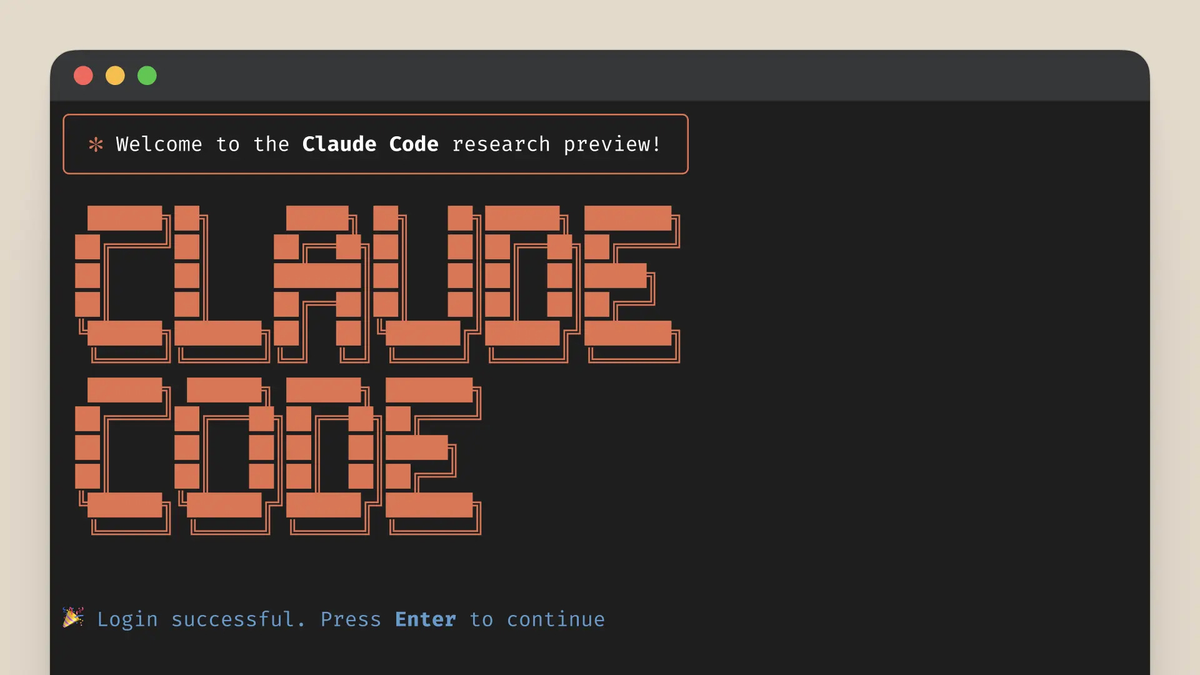
The other major friction point is the workflow itself. Claude Code is terminal-native by design — you run claude in your shell, describe a task, and it executes. The terminal-first workflow might not be for everyone, and the pricing is completely separate from other IDEs and tooling ecosystems. For developers who spend their days in an IDE with visual diffs, instant autocomplete, and a tool panel, that paradigm shift is real.
What to prioritize when switching
Before comparing alternatives, get clear on what's actually driving your search. The answers lead to different tools:
- Cost predictability → Look at flat-subscription or quota-based tools (Cursor, Windsurf)
- IDE integration → Cursor, Windsurf, or GitHub Copilot
- Multi-agent parallel execution → Verdent, or Claude Code's own Agent Teams
- Open-source model control → Cline
- JetBrains compatibility → GitHub Copilot, Windsurf plugin, or Claude Code's JetBrains plugin.Another set of options is listed under Emergent Alternatives."
How We Evaluated These Alternatives
Evaluation criteria
Every tool in this list was assessed across five dimensions that matter specifically for developers coming from Claude Code:
Multi-agent support — Does the tool run multiple agents simultaneously, or sequentially? Is it GA or still in beta? IDE integration — Does it require a new editor, or does it slot into your existing setup? Code verification — Is there a built-in review or test-fix loop, or does that responsibility stay with the developer? Pricing — Flat subscription, quota, credit, or token-based? What does sustained heavy use actually cost? Project-scale handling — How does the tool behave on large codebases (100k–1M+ lines)?
Verdent — Best for Parallel Multi-Agent Execution
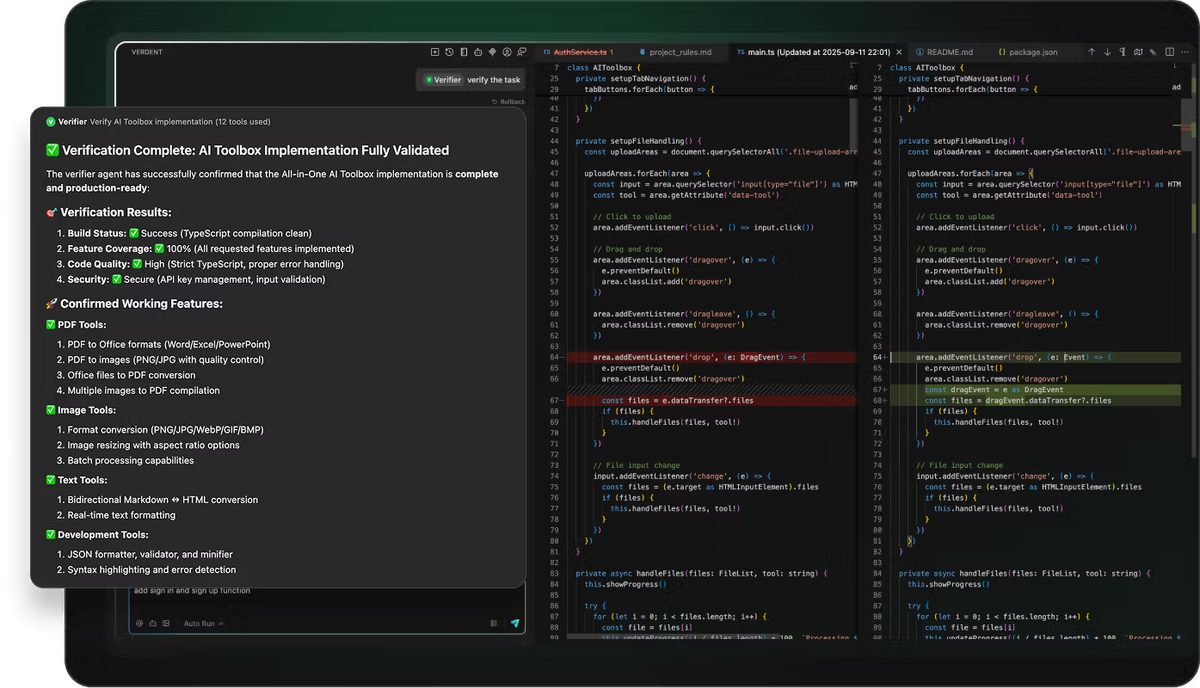
One-line position: The alternative that most directly replaces Claude Code's multi-agent capabilities in an IDE context.
What makes it different
Where Claude Code runs agent teams sequentially coordinated by a lead agent, Verdent's architecture runs multiple specialized agents in true parallel from the start. Parallel Thinking dispatches multiple research agents simultaneously to investigate different parts of a problem. Parallel Coding runs each agent inside its own isolated Git worktree — a frontend agent and backend agent can modify the same codebase concurrently without conflict.
The Plan Mode behavior is worth calling out specifically. Before any agent touches code, Plan Mode converts your prompt into a structured, reviewable task breakdown. This directly addresses the failure mode where Claude Code's agent makes a confident wrong assumption early and builds on it through 40 tool calls before you notice. Verdent surfaces those misalignments in the plan phase, before execution starts.
Git worktree isolation also means the output is reviewable by design — each agent produces a clean branch with a scoped diff, rather than a monolithic commit across 30 files.
Verdent supports VS Code and JetBrains via plugin, with multi-model access including Claude Sonnet 4.6, GPT-5, and Gemini 3.1 Pro.
Pricing and fit
Starter: $19/month (640 credits) | Pro: $59/month (2,000 credits) | Max: $179/month (6,000 credits). Credit-based model with cost that scales by model and task complexity, making it more predictable than Claude Code's token-based API billing for heavy agent sessions.
Best for: Teams that need the multi-agent parallelism of Claude Code but want an IDE-native experience, visual diff reviews, and per-branch isolation instead of terminal orchestration.
Limitations to know
Verdent is newer and has a smaller community and ecosystem than Cursor. The credit model requires some calibration — frontier model usage (Claude Opus 4.6, GPT-5) burns credits significantly faster than native models. JetBrains plugin support exists but the full parallel execution workflow requires the Verdent desktop application.
Verdent gives new users 100 free credits with no card required. Get started free → Run a real parallel agent task — choose from Claude Sonnet 4.6, Opus 4.6, GPT-5.4, Gemini 3.1 Pro, GLM-5, or MiniMax M2.7 — and see how the credit model holds up against your actual workflow before you switch.
Cursor — Best for AI-Native IDE Experience
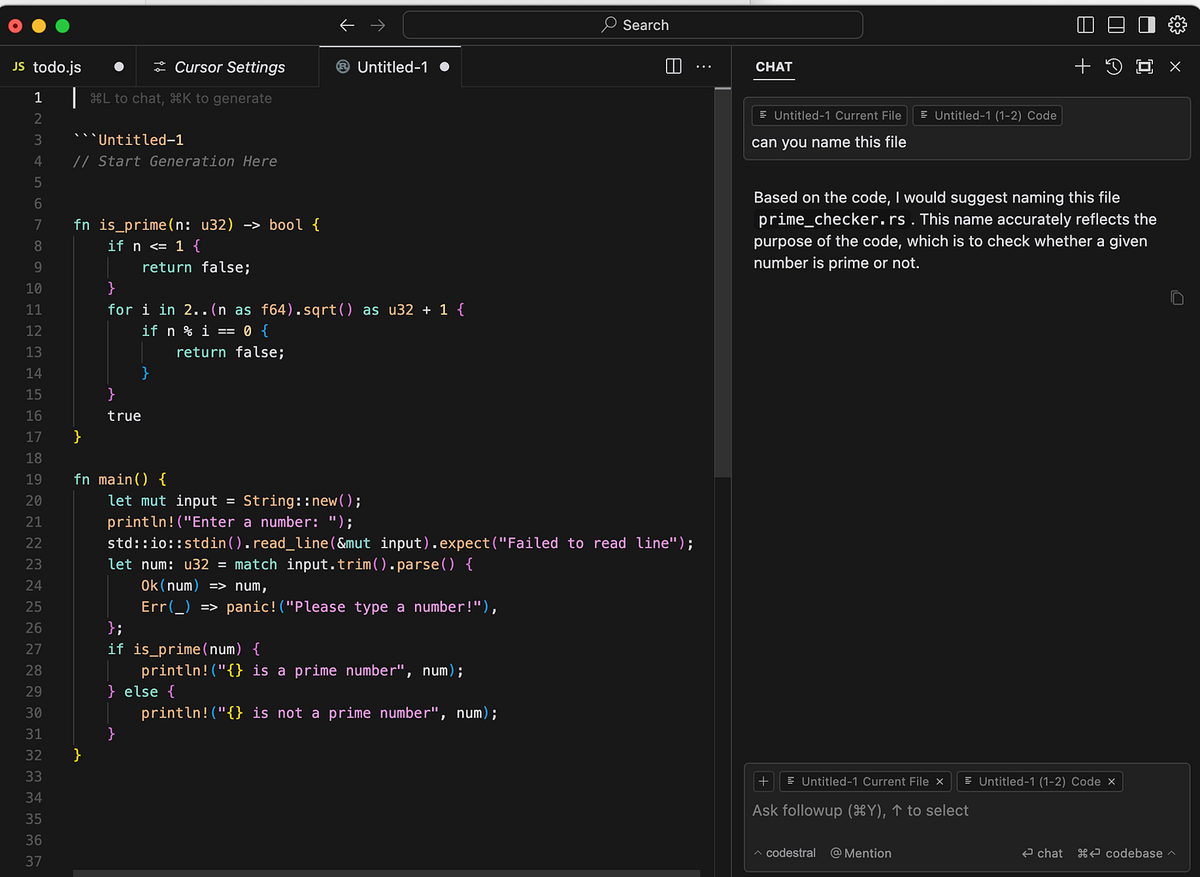
One-line position: The most mature IDE alternative for developers who want plan-and-approve control over every file change.
Core strengths
Cursor's Composer creates a plan, edits files, and shows you a diff for approval at every step. Developer trust comes from seeing everything as a diff instead of hoping the AI didn't delete something critical.
Cursor gives you access to every major frontier model and lets you switch between Claude Sonnet 4.6, GPT-5.4, Gemini 3.1 Pro, and others on a per-conversation basis. Auto mode selects the best model for each request from an unlimited pool. When you manually select a premium model, it draws from your monthly credit balance.
Background Agents run async in cloud sandboxes on separate branches — the closest IDE-native equivalent to Claude Code's multi-agent mode. Bugbot reviews PRs automatically. The .cursorrules ecosystem, built up by a large community, lets teams encode project-level AI conventions.
Pro: $20/mo | Teams: $40/seat/mo | Ultra: $200/mo (cursor.com/pricing)
Where it falls short for complex projects
On very large codebases (500k+ lines), Cursor's @Codebase semantic search is more mature than some competitors, but Cursor handles large repos more reliably today because it degrades more gracefully. Background Agents are sequential rather than parallel — they don't distribute work across branches simultaneously the way Claude Code's Agent Teams or Verdent's parallel execution does. And like Windsurf, Cursor is a VS Code fork with no JetBrains support.
Cline — Best Open-Source Option
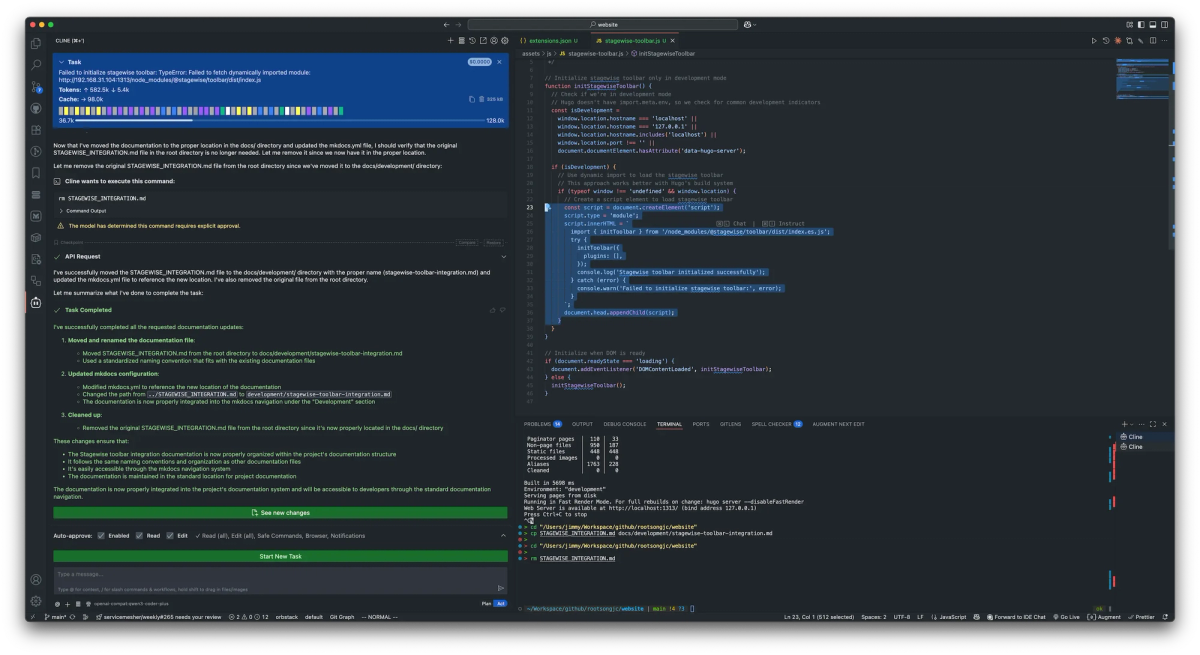
One-line position: The right choice when model transparency and vendor independence outweigh UX polish.
Core strengths
Cline's core pitch is BYOM with no markup. You pick your model — any provider, including local — you pay provider rates directly, and Cline charges nothing on top. For developers who want cost control and provider independence, this is the model.
Cline supports API providers including OpenRouter, Anthropic, OpenAI, Google Gemini, AWS Bedrock, Azure, GCP Vertex, Cerebras, and Groq. It features dual Plan/Act modes requiring explicit permission before each file change, MCP integration, and terminal execution. It tracks total tokens and API usage cost for the entire task loop, keeping you informed of spend every step of the way.
With 5 million VS Code installs, Cline has a large community and active development. Cline CLI 2.0 added parallel terminal agents, and the Teams plan (free through Q1 2026, then $20/month with first 10 seats always free) adds JetBrains support, RBAC, and centralized billing.
Trade-offs vs commercial tools
Running Claude Sonnet 4.6 through Cline for a full day of coding normally costs $5–15 in API tokens. With Claude Opus 4.6, that jumps to $15–40 per day. Monthly API bills of $200–500 are common among power users. The "free tool" framing can be misleading — what you save on subscription you may spend on API tokens. The UX is also less polished than Cursor or Windsurf, and multi-agent support is in earlier stages of maturity compared to Claude Code's Agent Teams.
Pricing: Free (BYOK) | Teams: $20/seat/mo (first 10 seats always free) | Enterprise: Custom
Windsurf — Best Free-Tier Option
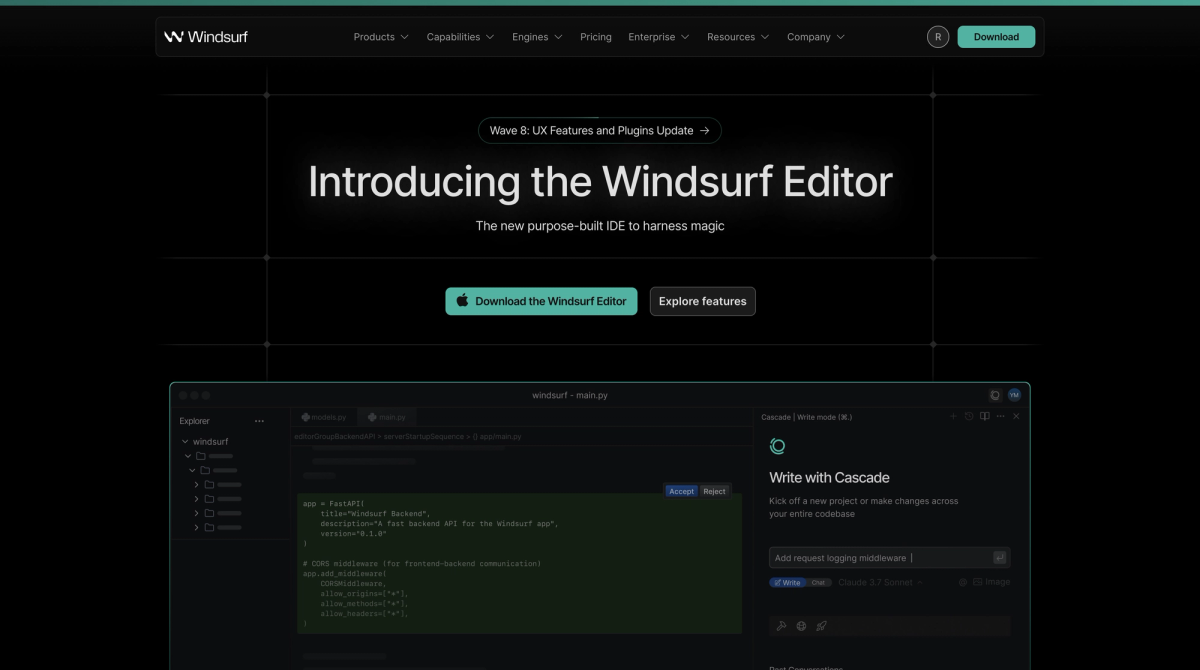
One-line position: The most accessible entry point for developers wanting agentic IDE capabilities without a subscription commitment.
Fit and limitations
The heart of Windsurf is Cascade, an agentic AI system that can understand your entire codebase, make multi-file changes, run terminal commands, auto-fix errors, and remember your preferences across sessions.
Tab completions (Windsurf's inline autocomplete) are unlimited on every plan including Free — they never touch your quota. Only Cascade and Chat with premium models consume from your daily/weekly allowance. This makes the free tier genuinely useful for evaluation, not just a timed trial.
The March 2026 pricing shift moved Pro from $15 to $20/month and replaced the credit pool with daily/weekly quotas — eliminating the burst flexibility that heavy users relied on. The developer community revolted, with many noting that daily quotas are strictly worse than credits for anyone who works in bursts.
Free: Light quota, unlimited Tab | Pro: $20/mo | Teams: $40/seat/mo | Max: $200/mo (windsurf.com/pricing)
Multi-agent support in Windsurf is limited to parallel Cascade sessions introduced in Wave 13 (early 2026) — sequential sessions running side by side, not true parallel branch execution with isolation.
GitHub Copilot — Best for Inline Completion Workflows
One-line position: Not an apples-to-apples Claude Code replacement, but the right tool if your primary need is intelligent autocomplete with optional agentic features.
When it still makes sense
At $10/month with unlimited autocomplete, multi-model chat, agent mode, and unmatched GitHub integration, Copilot delivers more per dollar than any competitor. Pull request summaries, automated code review, issue-to-code with Copilot Workspace, and integration with GitHub Actions — if your workflow centers on GitHub, no competitor offers this level of integration.
Core agentic capabilities — custom agents, sub-agents, and plan agent — are now generally available in GitHub Copilot for JetBrains IDEs as of March 11, 2026. For JetBrains teams, this is a meaningful upgrade.
Free: 2,000 completions + 50 requests | Pro: $10/mo | Business: $19/seat/mo | Enterprise: $39/seat/mo
Why it's not an apples-to-apples Claude Code replacement
Copilot's agent mode works for straightforward tasks, but complex multi-file refactoring — the kind that requires understanding architectural implications across a large codebase — is where dedicated agentic tools pull ahead. Copilot has no equivalent to Claude Code's Agent Teams, no terminal-native multi-agent orchestration, and no context window approaching 1M tokens. It's the right choice for teams that want AI assistance layered over their existing workflow, not teams looking to delegate full architectural tasks to an autonomous agent.
Comparison Table: Claude Code vs Alternatives
| Claude Code | Verdent | Cursor | Cline | Windsurf | GitHub Copilot | |
|---|---|---|---|---|---|---|
| Multi-agent | ✅ Agent Teams (experimental flag) | ✅ Parallel execution, GA | ✅ Background Agents (sequential) | ⚠️ CLI parallel (early stage) | ⚠️ Parallel sessions (Wave 13) | ❌ No |
| IDE support | VS Code, JetBrains plugin | VS Code, JetBrains | VS Code fork only | VS Code | VS Code fork + 40+ plugins | VS Code, JetBrains, Neovim, more |
| Git isolation | ✅ Git worktrees (via agent teams) | ✅ Per-agent worktree, native | ❌ | ❌ | ❌ | ❌ |
| Code verification | ✅ Built-in test-fix loop | ✅ Multi-round verification | ⚠️ Diff approval only | ⚠️ Diff approval only | ⚠️ Diff approval only | ⚠️ Code review agent |
| Context window | 1M tokens (Opus/Sonnet 4.6, GA Mar 2026) | Project-level indexing | 200K (manual @context) | Depends on model | 200K (auto RAG) | Workspace-level |
| Pricing (individual) | $20/mo (Pro) to $200/mo (Max 20x) | $19–$179/mo | $20–$200/mo | Free (BYOK) | $20/mo (Pro) | $10–$39/mo |
| Open source | ❌ | ❌ | ❌ | ✅ | ❌ | ❌ |
| Terminal-native | ✅ Primary interface | ❌ | ❌ | ⚠️ CLI available | ❌ | ❌ |
How to Choose
If your priority is multi-agent parallel execution
Verdent is the closest IDE-native alternative, with true parallel execution in isolated Git worktrees and a Plan Mode that prevents compounding errors. If you want to stay terminal-native, Claude Code's own Agent Teams (enabled via CLAUDE_CODE_EXPERIMENTAL_AGENT_TEAMS=1) may be the better answer — switching tools to get a capability the original tool already has doesn't make sense unless cost or workflow friction is the real issue.
If your priority is cost
Cline with BYOK is structurally the cheapest option if you have existing API access and are already paying for Claude or another provider — Cline charges nothing on top. If you want a subscription with predictable monthly billing, GitHub Copilot Pro at $10/month is the most cost-effective option for developers who don't need deep multi-agent orchestration. Cursor and Windsurf Pro at $20/month are comparable to Claude Code Pro; the difference is flat quota vs. token-based billing.
If your priority is open-source flexibility
Cline is the clear answer — Apache 2.0 licensed, 5 million VS Code installs, and full provider portability. You control the model, the API key, and the data pipeline. The tradeoff is UX maturity and the need to self-manage costs. For teams with data residency requirements or a preference for self-hosted models via Ollama or LM Studio, Cline is the only serious option in this list.
FAQ
What is the best free Claude Code alternative?
GitHub Copilot Free (2,000 completions + 50 premium requests/month) is the most practically useful free tier — it works across VS Code, JetBrains, and Neovim without any subscription. Windsurf's free tier offers limited Cascade sessions with unlimited Tab completions. Cline is free if you bring your own API key, though that cost shifts to your API provider. Claude Code has no free tier — Pro at $20/month is the entry point.
Does any alternative support multi-agent parallel coding?
Yes, with important caveats. Verdent supports true parallel multi-agent execution with Git worktree isolation as a GA feature. Claude Code's own Agent Teams spawn multiple instances that work simultaneously, with a lead agent coordinating subtasks and merging results — though this requires enabling an experimental flag. Cursor's Background Agents run async in cloud sandboxes but are sequential rather than parallel. Windsurf's Wave 13 added parallel Cascade sessions, but without the branch isolation that makes true parallel execution safe on shared codebases. Cline's parallel terminal agents are in early stages.
Is Verdent a good Claude Code alternative?
For the specific use case of multi-agent parallel execution with IDE integration, yes. Verdent's Plan Mode, Git worktree isolation, and parallel agent architecture address the same problems Claude Code's Agent Teams do, but inside a VS Code/JetBrains environment with visual diffs instead of a terminal. The tradeoff: Claude Code's reasoning depth on complex architectural tasks, and its 1M token context window, are still ahead. If you're making the switch primarily to get an IDE-native experience with multi-agent support, Verdent is the most direct fit. If cost is the driver, the math depends on your usage patterns — compare your Claude Code monthly spend against Verdent's credit consumption at your actual task volume.
Which Claude Code alternative works best for large codebases?
Claude Code's 1M context window is now GA for Opus 4.6 and Sonnet 4.6, providing roughly 830K usable tokens after the compaction buffer — enough for thousands of source files, entire monorepos, full documentation sets alongside the code they describe. That context advantage is significant and not yet matched by IDE-native tools. For large-codebase work inside an IDE, Windsurf's remote indexing scales to 1M+ line repos via RAG, and Cursor's @Codebase semantic search is the most mature IDE-side implementation. For the absolute largest codebases with the deepest context reasoning, Claude Code is still the benchmark.
Can I use multiple AI coding tools together?
Many developers use both Claude Code and an IDE agent. Claude Code for large autonomous tasks, Windsurf or Cursor for in-editor work. They're not competing — they're complementary. A common pattern: Claude Code or Verdent for major refactors, architectural analysis, and multi-agent orchestration; Cursor or Windsurf for daily feature work with inline completions and quick agent sessions; GitHub Copilot as the always-on autocomplete layer. The tools compose well precisely because they operate in different workflow layers.
Related Reading