
Here's something that's been making the rounds in developer Slack channels lately: "Is Windsurf still the right long-term bet?" That question didn't exist six months ago. Now I hear it constantly.
I get it. I've been deep in AI coding tools for a while now, and the Windsurf situation in 2026 is genuinely complicated. The tool still works. But for teams making a 12-month commitment to a toolchain, "still works" isn't the same as "still the right call." Let's be honest about why developers are looking elsewhere — and which alternatives actually fit which scenarios.
Why Developers Are Looking for Windsurf Alternatives

Cognition acquisition — product direction uncertainty
The frenzy around Windsurf represents a new peak in the wild race to develop AI coding tools. Cognition acquired Windsurf days after Google hired away its CEO Varun Mohan, co-founder Douglas Chen, and research leaders in a $2.4 billion reverse-acquihire — leaving much of the 250-person team behind. OpenAI's $3 billion acquisition offer had already expired.
The roadmap centers on integrating Devin into Windsurf's IDE, enabling developers to plan tasks, delegate code generation to AI agents, and review pull requests within a single interface. Windsurf's existing features like Tab and Cascade remain integrated.
What's unresolved: the founding team that built Cascade is now at Google. Cognition is a capable company, but it's an open question whether Windsurf's product velocity will match its pre-acquisition trajectory. For teams making long-horizon toolchain decisions, that uncertainty is real.
Credit burn and pricing concerns
Windsurf built a loyal user base by offering a predictable pricing model that was noticeably cheaper than competitors. In March 2026, the company abandoned that advantage — replacing the $15/month credit system with strict daily and weekly usage quotas at $20/month, immediately sparking developer backlash.
The $5 price increase matters because Windsurf's previous $15 price point was its clearest competitive advantage over Cursor's $20 Pro. That gap is now gone. The structural shift from a monthly credit pool to daily rate limits also changes how burst usage works — you can no longer sprint through your allocation on one big project.
Large codebase limitations
On very large codebases (500k+ lines), Cursor's @Codebase semantic search is more mature than Windsurf's auto-indexing, and it degrades more gracefully. Windsurf occasionally has indexing delays at that scale.
Team collaboration gaps
Windsurf Teams offers centralized billing and an admin dashboard, but lacks the deep GitHub-native PR and issue workflows that larger engineering teams rely on. There's no equivalent to Copilot's issue-to-PR automation or Cursor's shared .cursorrules for team-level AI conventions.
Cursor — Best for Power Users Who Want Maximum Control
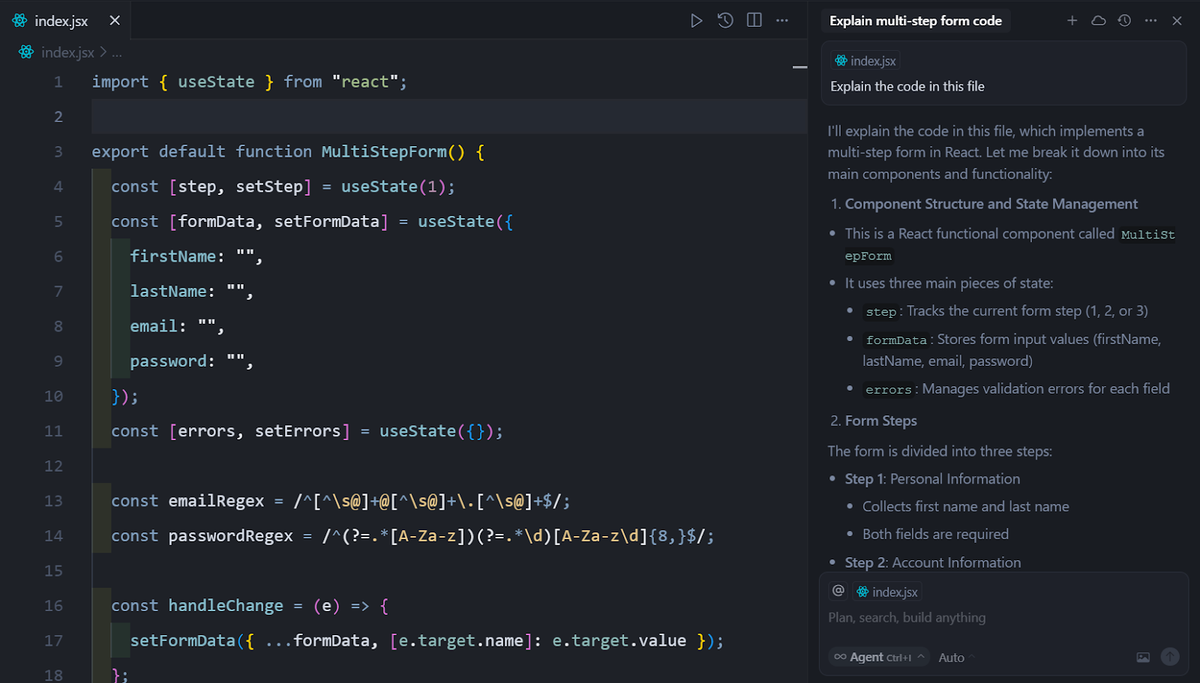
If you're leaving Windsurf because Cascade's autonomous execution makes you nervous on production code, Cursor is the natural landing spot.
Cursor's Composer creates a plan, edits files, and shows you a diff for approval at every step. You're in the loop constantly. Developer trust comes from seeing everything as a diff instead of hoping the AI didn't delete something critical.
Cursor gives you access to every major frontier model and lets you switch between Claude Sonnet 4.6, GPT-5.4, Gemini 3.1 Pro, and others on a per-conversation basis. Auto mode handles 80% of tasks from an unlimited pool. When you manually select a premium model, it draws from your monthly credit balance.
The Business plan at $40/user/month adds centralized billing, shared team rules, and SSO. Every team member gets the same AI capabilities as an individual Pro subscriber — the premium is purely for organizational features.
Where Cursor falls short: No JetBrains support (VS Code fork only). If your team runs heavy agent sessions on frontier models, overages can add up quickly at API rates.
Pro: $20/mo | Teams: $40/seat/mo | Ultra: $200/mo
GitHub Copilot — Best for Enterprise Scale and Existing GitHub Workflows
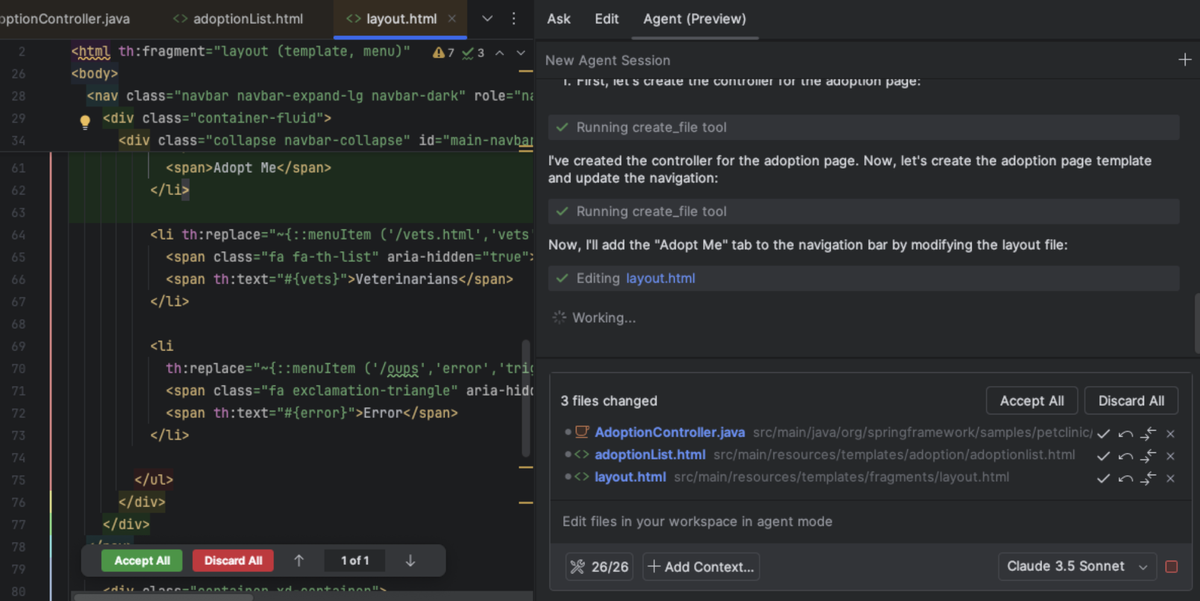
This is the tool most teams should evaluate before committing to anything else, simply because the value-per-dollar math is hard to beat.
At $10/month with unlimited autocomplete, multi-model chat, agent mode, and unmatched GitHub integration, Copilot delivers more per dollar than any competitor. Pull request summaries, automated code review, issue-to-code with Copilot Workspace, and integration with GitHub Actions — if your workflow centers on GitHub, no competitor offers this level of integration.
On JetBrains specifically: core agentic capabilities are now generally available in GitHub Copilot for JetBrains IDEs as of March 11, 2026, including custom agents, sub-agents, and plan agent, with agent hooks in preview and auto-approve support for MCP.
Feature availability varies: VS Code receives new features 3–6 months before other IDEs. JetBrains has full support with some terminal Chat limitations. Neovim/Vim support code completion only, no Chat or agent mode.
Where Copilot falls short: Copilot's agent mode works for straightforward tasks, but complex multi-file refactoring — the kind that requires understanding architectural implications across a large codebase — is where Cursor and Windsurf pull ahead. The 300 premium requests/month on Pro also runs thin for heavy agent users.
Free: 2,000 completions + 50 requests | Pro: $10/mo | Pro+: $39/mo | Business: $19/seat/mo | Enterprise: $39/seat/mo
Cline — Best for Customizable Open-Source Agentic Coding
Cline is the right answer when you need complete model and cost transparency, don't want to be locked into a vendor's credit system, or need to satisfy security requirements around data residency.
Cline's core pitch is BYOM with no markup. You pick your model (any provider, including local), you pay provider rates directly, and Cline charges nothing on top. The tradeoff: you're managing your own API keys, budgets, and model selection.
Cline supports API providers including OpenRouter, Anthropic, OpenAI, Google Gemini, AWS Bedrock, Azure, GCP Vertex, Cerebras, and Groq. It features dual Plan/Act modes requiring explicit permission before each file change, MCP integration, and terminal execution. It keeps track of total tokens and API usage cost for the entire task loop.
The Teams plan (free through Q1 2026, then $20/month, with the first 10 seats always free) includes JetBrains extension support, centralized billing, team management dashboard, and role-based access control.
Where Cline falls short: Running Claude Sonnet 4.6 through Cline for a full day of coding normally costs $5–15 in API tokens. With Claude Opus 4.6, that jumps to $15–40 per day. Monthly API bills of $200–500 are common among power users. The UX is also less polished than Cursor or Windsurf.
Pricing: Free (BYOK) | Teams: $20/seat/mo (first 10 seats always free) | Enterprise: Custom
Verdent.ai — Best for Multi-Agent Parallel Execution on Complex Projects
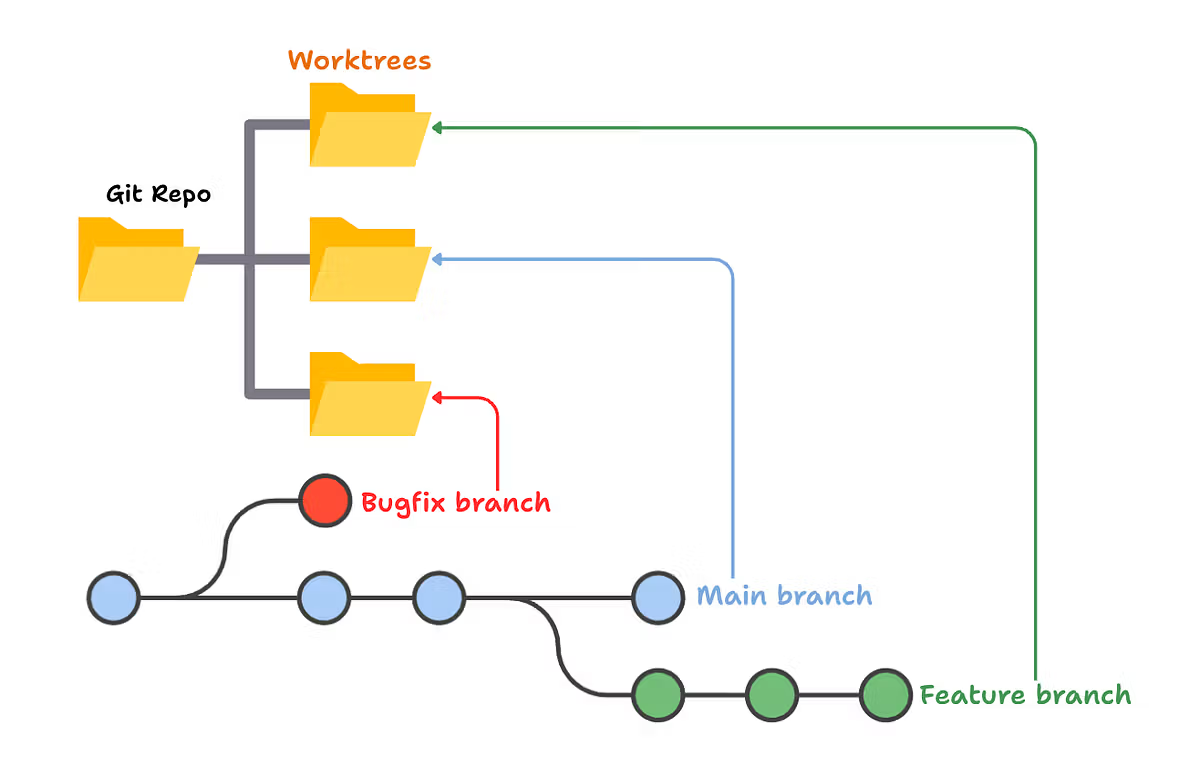
Most tools in this list handle tasks sequentially — one agent, one task, review, repeat. Verdent is the alternative when the job itself requires multiple agents working in parallel.
How multi-agent parallel coding differs from single-agent IDEs
Where Cursor and Windsurf run a single agent through a task chain, Verdent runs multiple specialized agents simultaneously. Parallel Thinking assigns multiple research agents to investigate different parts of a problem concurrently. Parallel Coding runs each agent in an isolated Git worktree, so a frontend agent and a backend agent can work on the same codebase at the same time without stepping on each other.
The practical difference: a large feature that would take Cursor's agent 45 minutes of sequential steps — read files, plan, write tests, implement, fix — can be decomposed and distributed. Each sub-task runs in isolation, the results are verified, and the branches are merged. For complex projects, this isn't just faster; it's a different mental model for what "delegating to AI" means.
Plan-First approach and Git worktree isolation
Verdent's Plan Mode converts ambiguous requirements into structured, reviewable task plans before any code is written. This matters: one of the common failure modes with agentic tools is the AI making confident wrong assumptions early and building on them. Plan-First surfaces those misalignments before they compound.
Git worktree isolation means each agent operates on its own branch. No agent can accidentally overwrite another's work, and you get a clean diff history for each sub-task. For teams where code review is a serious gate, this produces reviewable output rather than a monolithic diff that touched everything.
Verdent supports VS Code and JetBrains via plugin, with multi-model support including Claude Sonnet 4.6, GPT-5, and Gemini 3.1 Pro. Pricing starts at $19/month (Starter) through $179/month (Max) on a credit-based subscription.
Best fit: Complex multi-module projects, solo devs running parallel workstreams, teams that need architectural-level AI coordination rather than single-file assistance.
Claude Code — Best for Terminal-Native Agentic Workflows
Claude Code is architecturally different from everything else on this list. It's not an IDE — it's a terminal agent that reads your codebase, edits files, and runs commands. You bring the editor.
Claude Code is available in your terminal, IDE, desktop app, and browser. Native extensions are available for VS Code, VS Code forks like Cursor and Windsurf, and JetBrains. You can also spawn multiple Claude Code agents that work on different parts of a task simultaneously — a lead agent coordinates, assigns subtasks, and merges results.
JetBrains users have a native path: Claude Agent is now integrated into JetBrains IDEs via the AI chat, included in the JetBrains AI subscription at no additional cost. It's built on Anthropic's Agent SDK — the same foundational building blocks that make Claude Code effective — with diff viewing and approval-based operations inside the IDE.
The context window advantage is substantial. Claude Code's context window exceeds 400,000 tokens with Zero Data Retention privacy mode, SOC2 Type II certification, and checkpoints for instant filesystem rollback if a generated solution fails the build.
Where Claude Code falls short: Token-based billing is less predictable than quota or credit systems. No Vim/Neovim/Sublime support. The terminal-first workflow requires a mindset shift for developers accustomed to IDE-native agents.
Pricing: Requires Claude Pro ($20/mo) or Max ($100/$200/mo) subscription.
Decision Matrix: Which Tool Fits Which Scenario
| Scenario | Best Fit | Why |
|---|---|---|
| Solo dev, VS Code, daily coding | Cursor Pro | Best agent control, model flexibility, $20/mo |
| JetBrains team, can't change IDEs | GitHub Copilot or Claude Code | Copilot: native JetBrains agent + $10/mo. Claude Agent: included in JetBrains AI subscription |
| Large monorepo (500k+ lines) | Cursor or Claude Code | Cursor's @Codebase more mature; Claude Code's 400k context handles extreme scale |
| Enterprise, regulated industry (HIPAA/FedRAMP) | Windsurf Enterprise | Only tool with HIPAA, FedRAMP, ITAR certs at non-custom pricing |
| Cost transparency, BYO model | Cline | No markup, full provider choice, first 10 team seats free |
| Multi-agent parallel workflows | Verdent.ai | Purpose-built for parallel execution, Git worktree isolation, Plan-First |
| Deep GitHub integration (issue→PR) | GitHub Copilot | Native GitHub Actions, Copilot Workspace, PR automation — no competitor matches this |
| Complex architectural refactors | Claude Code | 400k context, multi-agent orchestration, composes with any editor or CI/CD pipeline |
FAQ
Is Windsurf still a safe long-term choice after Cognition acquired it?
Functionally, yes — the product is intact and actively developed. Since acquiring Windsurf, Cognition's ARR has more than doubled, and combined enterprise ARR is up more than 30%. The product isn't being abandoned. The legitimate concern is whether the team that built Windsurf's core differentiation — the founders are now at Google — will be replaced by engineers with the same vision. Watch the changelog cadence over the next two quarters before making a multi-year commitment.
Which Windsurf alternative works best in JetBrains IDEs?
Three real options: GitHub Copilot (native agent support as of March 2026, $10/mo), Windsurf itself (plugin covers autocomplete and chat, full Cascade requires the Windsurf Editor), and Claude Agent, which is now integrated into JetBrains IDEs via the AI chat and included in the JetBrains AI subscription at no additional cost. For teams already paying for JetBrains AI, Claude Agent is the easiest path to serious agentic workflows without changing your IDE.
What's the best free Windsurf alternative?
GitHub Copilot's free tier gives 2,000 completions and 50 premium requests per month and works in VS Code, JetBrains, and Neovim. It's the most practically useful free tier in the category. Cline is technically free if you have existing API access — no subscription, just bring your own keys. For most developers without existing API spend, Copilot Free is the better starting point.
Which alternative handles multi-agent workflows natively?
Verdent.ai is purpose-built for this — parallel agents in isolated Git worktrees is a core feature, not a bolt-on. Claude Code also supports spawning multiple agents that work on different parts of a task simultaneously, with a lead agent coordinating subtasks and merging results. Cursor's Background Agents run async in cloud sandboxes and are the closest IDE-native equivalent, but they're sequential rather than parallel.
Is Cursor the obvious replacement, or are there better fits?
Cursor is the most common migration target, but "obvious" depends on your constraints. If you're on JetBrains, Cursor isn't even an option — GitHub Copilot or Claude Agent are the practical paths. If you need BYOK cost control, Cline eliminates the vendor credit problem entirely. If you're dealing with genuine multi-agent orchestration needs, neither Cursor nor Windsurf is purpose-built for that — Verdent or Claude Code make more sense. Cursor is the right default for VS Code developers who want the deepest single-agent IDE experience and are willing to pay $20/month for it. It's not universally "the" answer.
Related Reading