A million-token context window does not tell you whether a model will edit the right five files. That is the practical problem in GLM 5.3 vs Gemini 3.7 Flash: both can hold a large repository snapshot, but neither published specification proves context selection, patch discipline, or recovery on the same change.
I would not declare a winner without running one multi-file task through the same harness, tools, permissions, and budget. What the current documentation can support is a sharper pilot design—and a conditional choice while those results are missing. Facts and linked pages were checked on September 1, 2026.
The Decision for Repository Work
For a text-heavy backend repository, put both models into a controlled pilot. GLM 5.3 is the stronger candidate when you want 128K maximum output, always-on reasoning, and a Z.ai-oriented coding stack. Gemini 3.7 Flash is the stronger candidate when lower current API prices, adjustable reasoning, or multimodal repository inputs matter.
That is a shortlist, not a performance verdict. The deciding evidence should be accepted patch rate, unnecessary files changed, tests passed, recovery after tool failure, wall-clock time, and total billed tokens. A coding model comparison that changes the runner at the same time measures two systems, not two models.
Context Use on One Multi-File Change
Use one bounded task: rename an authentication configuration field, update the shared type and two consumers, migrate unit and integration tests, and leave unrelated formatting untouched. Give both runs the same commit, instructions, tool schemas, test commands, maximum calls, and stopping rule.
Selecting Relevant Files
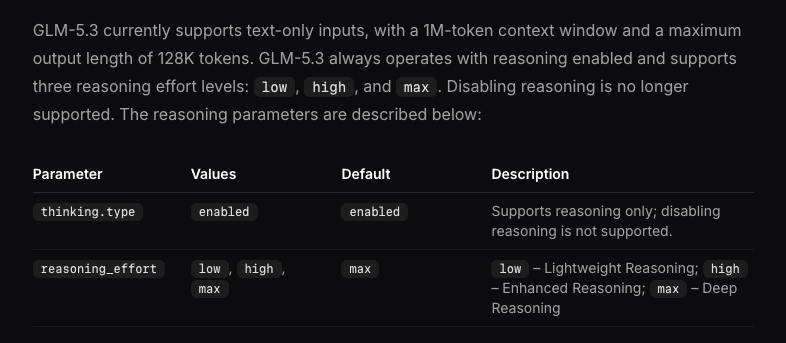
Start with symbol search and dependency tracing rather than dumping the repository into the prompt. Record every file read, the order in which it was opened, and why it entered the patch. GLM 5.3 is text-only with a 1M-token input window and 128K maximum output;
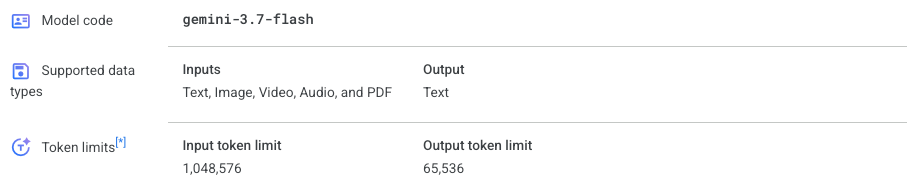
Gemini 3.7 Flash accepts text, images, video, audio, and PDFs with 1,048,576 input tokens and 65,536 output tokens. Those ceilings are comparable for this text-only task. File selection is not.
Maintaining Constraints Across Tool Calls
Keep acceptance criteria in a compact state object that the harness re-injects after every tool result: required files, forbidden areas, test commands, and the last verified state. Then score whether each model preserves the no-unrelated-formatting constraint after searches, edits, and failed tests. Context size creates room; the runner decides what stays visible inside it.
Patch and Verification Workflow
Structured Edits and Test Feedback
Expose the same search, read, patch, and test tools. Require a structured patch, then return raw test output without a friendly summary. Neither vendor currently publishes a matched result for this workflow, so do not infer patch quality from launch benchmarks. The useful result is the smallest diff that passes the named tests and survives human review.
Recovery After an Invalid Tool Call
Inject one recoverable failure: reject a patch call with an unknown field and return the same schema error to both models. Allow one correction without restating the task. Google explicitly tells developers to validate calls before execution and documents a Malformed_Function_Call workaround; Z.ai likewise tells GLM 5.3 integrations to verify parameter completeness in tool streams. These are integration instructions, not evidence that either model recovers better. Measure whether the second call is valid, preserves the intended patch, and avoids restarting discovery.
Operational Tradeoffs
Current API Access and Model Versions
The current IDs are glm-5.3 and stable, GA gemini-3.7-flash. Z.ai exposes OpenAI Chat Completions, OpenAI Responses, and Anthropic Messages-compatible routes, although account history can affect protocol access. Its ZCode setup separates overseas Z.ai accounts from BigModel access in China. Google limits the Gemini Developer API and AI Studio to its published supported-country list; other deployments can use its enterprise agent platform. Quotas are account, plan, and project dependent, so capture the actual limits shown in each console before starting the pilot.
Latency, Thinking Controls, and Cost
GLM 5.3 keeps reasoning on and offers low, high, and max, defaulting to max. Gemini 3.7 Flash offers low, medium, and high, defaulting to medium. That makes an unchanged-default latency test unfair; match the operational intent, then report both time to first tool call and time to verified completion.
At current raw API rates, GLM 5.3 costs $1.40 per million input tokens and $4.40 per million output tokens.
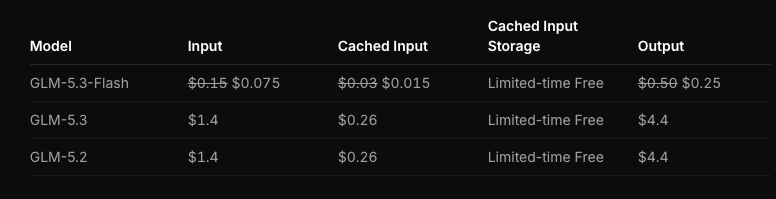
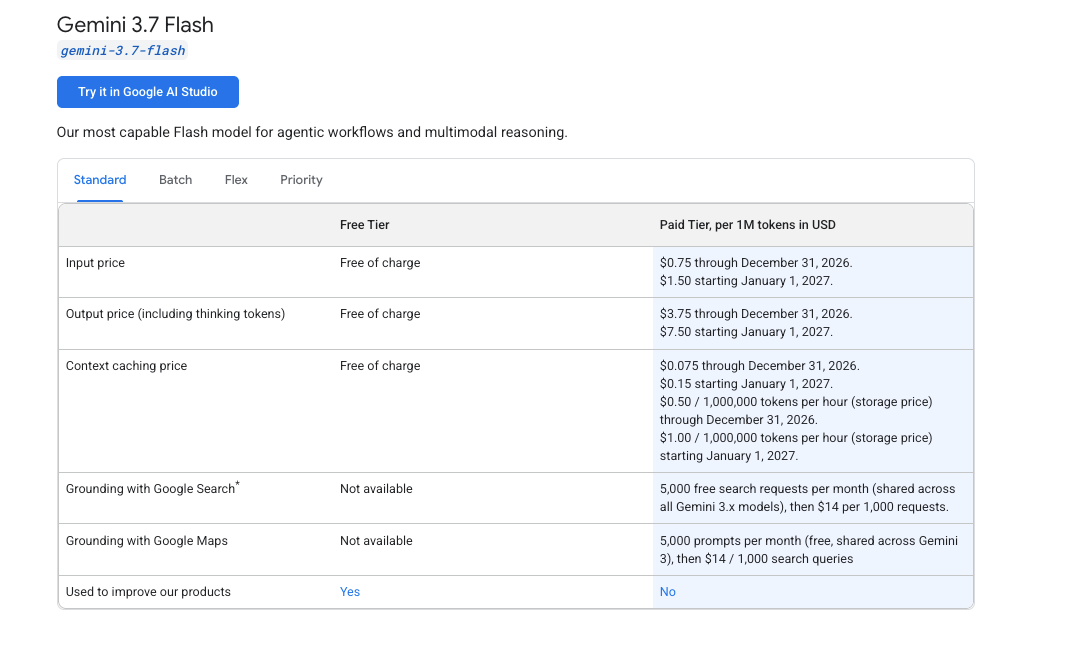
Gemini 3.7 Flash costs $0.75 and $3.75 through December 31, 2026. A 100K-input, 10K-output run is therefore about $0.184 versus $0.1125 before cache, retries, tools, and agent-loop overhead. Lower list price does not guarantee lower cost per accepted patch.
Frequently Asked Questions
Would Antigravity reproduce the raw Gemini 3.7 Flash repository result?
No. Antigravity uses Gemini 3.7 Flash inside a managed harness with filesystem and code-execution tools, persistent files, hooks, and automatic context compaction around 135K tokens. That may improve or worsen the outcome, but it is not the raw-model condition.
Would ZCode reproduce the raw GLM 5.3 result on the same task?
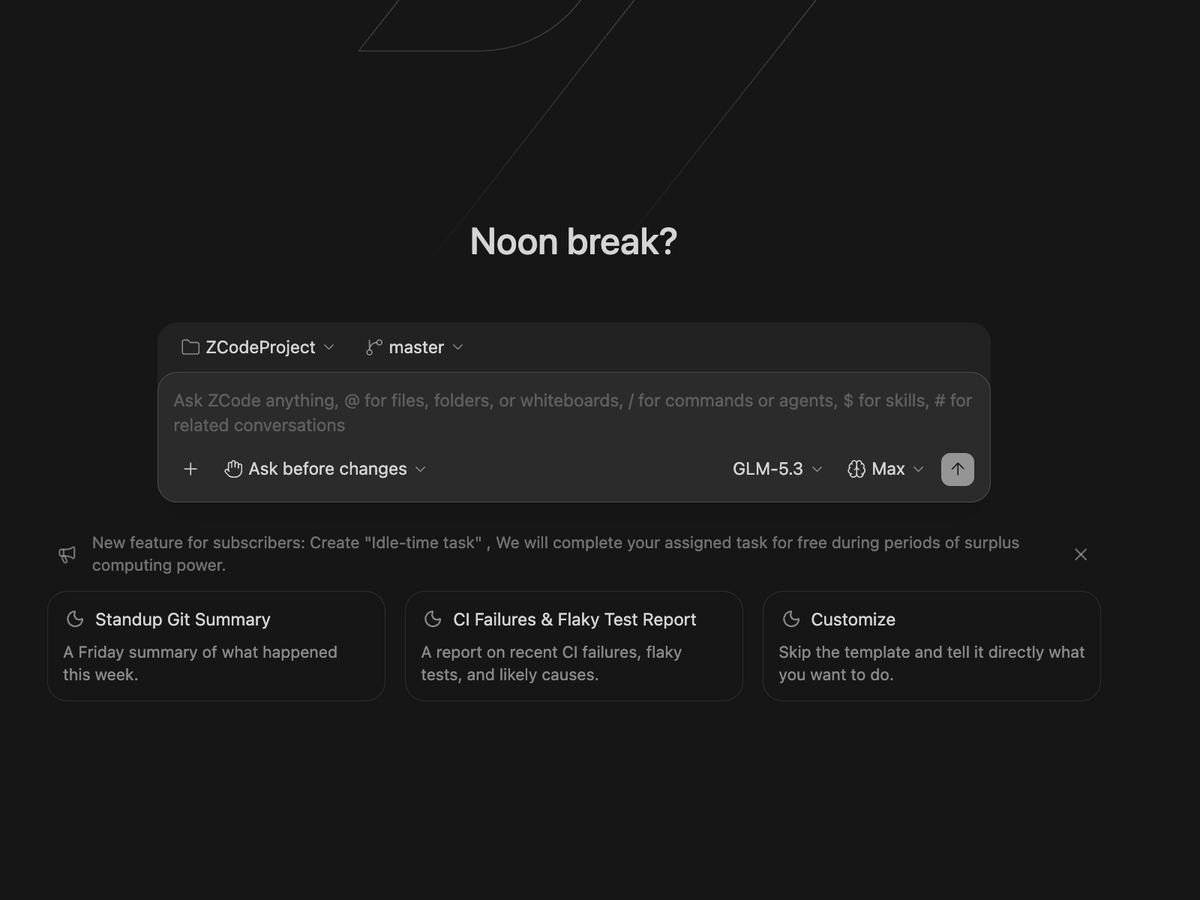
No. ZCode is deeply adapted to GLM 5.3 and combines workspace state, file references, Git state, execution modes, and long-task completion and recovery controls. Compare ZCode with Antigravity as agent systems, or compare the raw APIs in one neutral harness. Do not mix the two experiments.
Do design-mock inputs create a Gemini advantage absent from this test?
Yes. Google specifically positions Gemini 3.7 Flash for design adherence and auditing code against mocks. A text-only authentication change removes that input class, so this pilot cannot support a conclusion about frontend design work.
Can multimodal UI repositories favor Gemini 3.7 Flash beyond this scope?
Yes. Gemini 3.7 Flash natively accepts images and other media, while GLM 5.3 is text-only. Screenshots, PDFs, visual diffs, and design references can create a meaningful Gemini advantage, provided both systems receive equivalent rendering and inspection tools.
Would single-file work reverse the GLM 5.3 versus Gemini 3.7 Flash recommendation?
It could. A small edit reduces the value of long-context retention and recovery while increasing the importance of startup latency and per-request cost. Run a separate single-file track; do not average it into the repository result.