Most alternatives lists compare tools by feature checklist. That's not what a DeepSeek-TUI user needs. If you're here, you already know what the tool does. The useful question is: which specific constraint is making you look elsewhere? The answer determines your path — because the tools that solve model lock-in loo+-k nothing like the tools that solve single-maintainer risk, and neither resembles the tools that solve IDE integration.
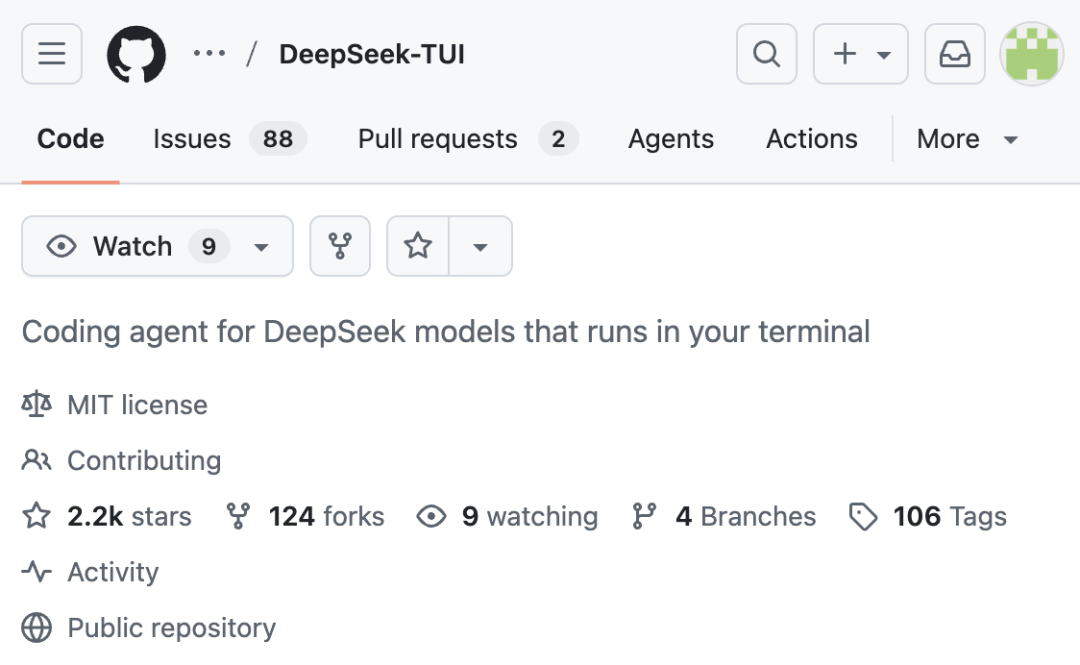
This evaluation keeps DeepSeek-TUI as the anchor. It's still an actively iterated project at v0.8.x with a real user base. The point isn't to replace it — it's to map six alternatives to the six most common reasons you'd leave it.
Why You're Looking for a DeepSeek-TUI Alternative
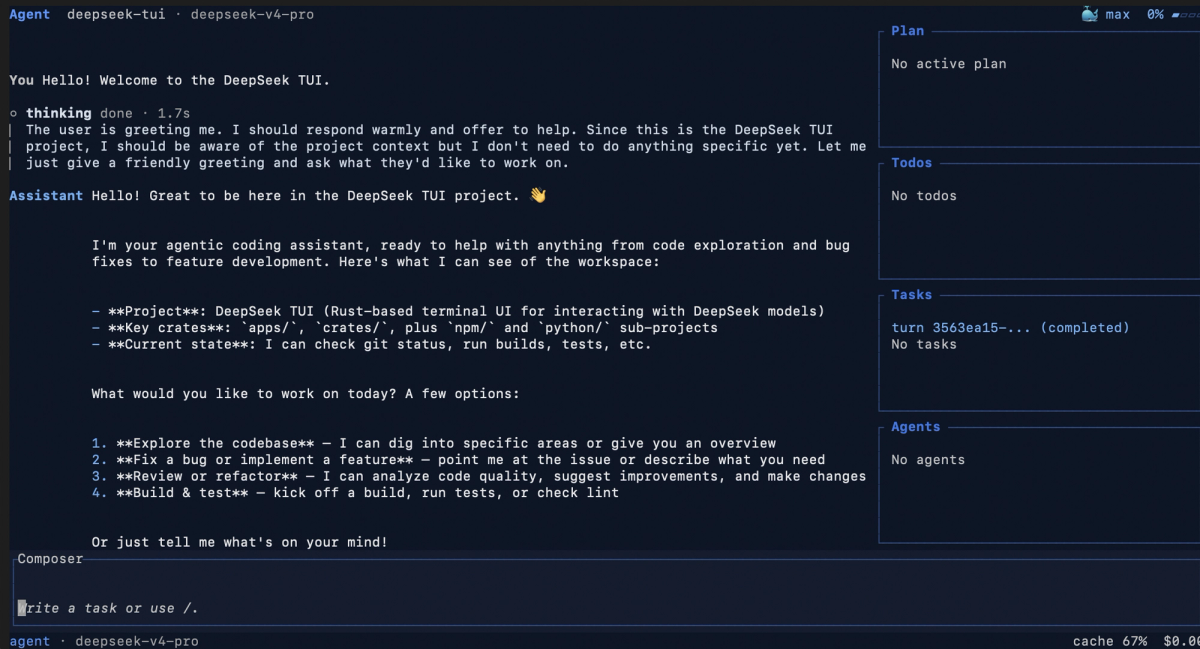
You want a different model family (DeepSeek-TUI is V4-locked)
DeepSeek-TUI's supported providers — DeepSeek's API, NVIDIA NIM, Fireworks, SGLang — all serve DeepSeek models. There is no path to Claude Sonnet, GPT-5.5, or Gemini within DeepSeek-TUI's current architecture. If your workload needs a different model family, the tool exits your options regardless of how well-tuned everything else is.
You don't want a single-maintainer project for production
Hunter Bown maintains DeepSeek-TUI as an individual developer. That is not a criticism — v0.8.8 has 37 releases and active iteration — but it's the correct risk characterization for enterprise procurement or production pipelines. If a vendor or security review requires organizational backing, DeepSeek-TUI doesn't clear that bar.
You need IDE integration, not just terminal
DeepSeek-TUI is a terminal TUI. There is no VS Code extension, no JetBrains plugin, no diff sidebar. If your team workflow is anchored to an IDE, a terminal-native tool adds a context switch you may not want.
You're hitting RLM cache-miss costs and want different cost shape
DeepSeek-TUI's RLM parallel sub-agent calls fanout to V4-Flash children. At high volume, cache misses on initial context loads compound. If you've been running RLM heavily and watching token costs, the cost shape of a subscription-anchored tool or a model with aggressive caching becomes relevant.
How We Evaluated
Six criteria mapped to the four problems above:
| Criterion | What it addresses |
|---|---|
| Maturity & maintainership | Single-maintainer risk |
| Model strategy | Lock-in constraint |
| Parallel execution / sub-agents | RLM functional equivalent |
| MCP & Skills support | Migration portability |
| Workspace isolation | Per-task safety |
| Cost shape | Token economics |
No benchmark scores. No "X% accuracy" claims without a source. Tool behavior varies too much by prompt, harness, and task type for unverified numbers to be useful.
The 6 Alternatives
- Claude Code — Anthropic-maintained, Claude-family-locked, mature subagent pattern
Claude Code is the most direct functional analog to DeepSeek-TUI: a terminal coding agent with tool call approvals, a skills/CLAUDE.md system, MCP support, and a subagent pattern via the Task tool. The differences that matter:
- Model: Anthropic family only. Claude Code can use DeepSeek V4 as a backend via environment variable substitution (officially documented by DeepSeek), but that path loses xhigh effort, /ultrareview, task budgets, and other Anthropic-native features
- Maintainership: Anthropic, not an individual developer. GA product with enterprise plans
- Parallel agents:
Tasktool spawns independent Claude subagent instances; richer state than RLM's lightweight flash calls, but no configurable 1–16 concurrency primitive - Cost: subscription-anchored (Pro/Max) or API-metered at $5/$25 (Opus 4.7)
- Context: 200K tokens vs DeepSeek-TUI's 1M
The right switch for: teams on Claude models who want Anthropic's ecosystem and don't need V4's price economics.
- Aider — Long-running open-source CLI, multi-model, Git-native
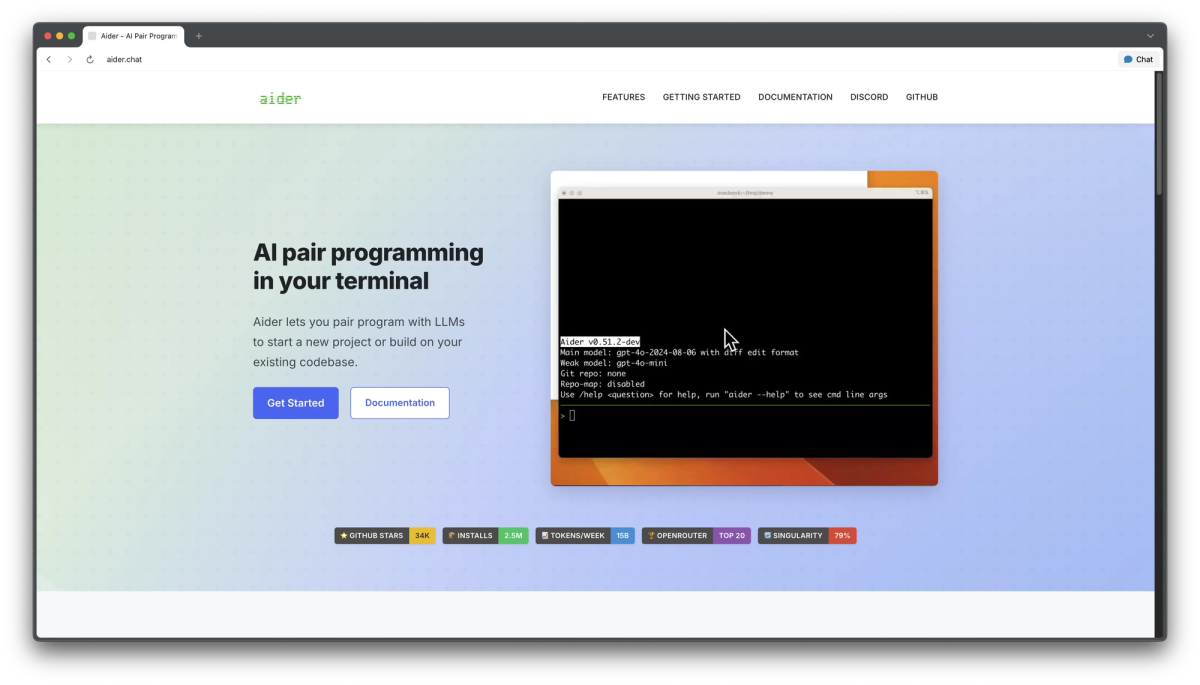
Aider is the most mature multi-model terminal coding agent available. It predates the current wave of AI coding tools and has a large, stable user base. Key characteristics:
- Model: genuinely model-agnostic. DeepSeek (
deepseek/deepseek-chat, which now routes to V4-Flash), Claude, GPT, Gemini, Ollama local models — all supported. Aider's benchmarks list DeepSeek as a top performer on their code editing benchmark. V4-Pro can be added via custom model settings if not yet in the default config; check aider.chat/docs/llms/deepseek.html for current model list - Architecture: pair-programming model, not an autonomous agent loop. Aider edits files and commits; you remain in the loop for each change
- Maintainership: Paul Gauthier, very active open-source project with community contributors; not a single-person shop in the same way
- Parallel execution: no native sub-agent system; this is Aider's functional gap vs DeepSeek-TUI's RLM
- MCP: not natively supported; Aider's extension surface is different from MCP
- Cost: API-metered, any provider
The right switch for: developers who want multi-model flexibility and don't need autonomous parallel sub-agents. Best fit when the constraint is model lock-in, not maintainership or IDE integration.
- Cline — VS Code extension, multi-model, large user base
Cline runs inside VS Code as an extension. It's the answer specifically to the IDE integration constraint. Characteristics:
- Model: multi-model — Claude, GPT, Gemini, DeepSeek V4, Ollama, any OpenAI-compatible API
- Interface: VS Code sidebar with conversation view, diff viewer, and tool approvals — not a terminal TUI
- Parallel execution: no native parallel sub-agent system; task decomposition is sequential
- MCP: Cline supports MCP servers; the extension marketplace includes pre-configured MCP integrations
- Skills: does not use SKILL.md; extension capabilities are configured differently
- Maintainership: active team with strong GitHub engagement; not a single individual
The right switch for: developers whose primary constraint is IDE integration. If you spend your time in VS Code and want AI assistance embedded there rather than in a separate terminal window, Cline is the most direct path.
- OpenCode — Open-source terminal agent, model-agnostic
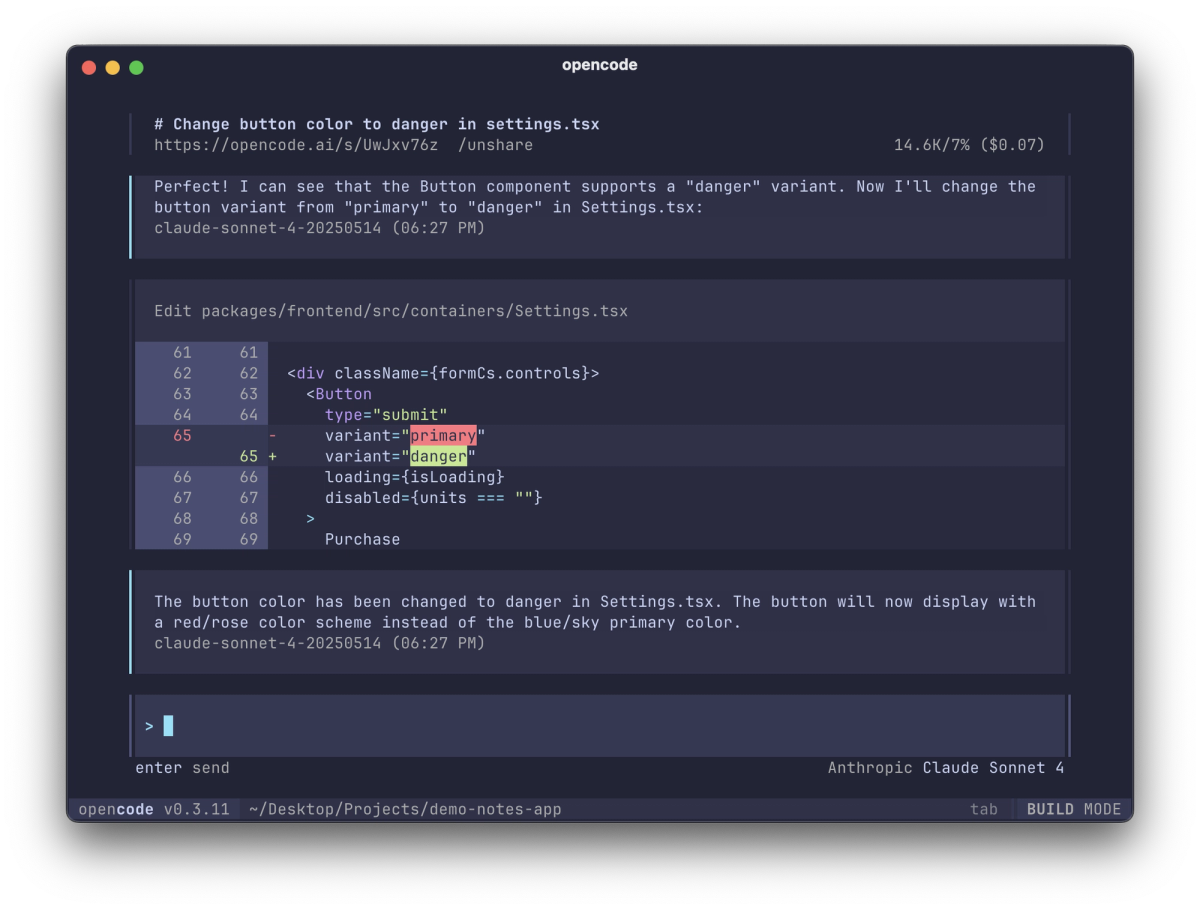
OpenCode is a TUI-based terminal coding agent written in Go. It's the closest structural analog to DeepSeek-TUI in the open-source alternatives space while being genuinely model-agnostic:
- Model: any model via configuration — Claude, GPT, DeepSeek V4, NVIDIA Nemotron 3 Super (officially documented by NVIDIA), Ollama local models
- Interface: TUI-based, similar terminal-native feel to DeepSeek-TUI
- Parallel execution: no native RLM-equivalent; task tool support in development
- MCP: MCP support in recent versions
- Skills: configurable via
~/.config/opencode/opencode.json - Maintainership: open-source team; more contributors than a solo project
The right switch for: developers who like DeepSeek-TUI's terminal-native TUI aesthetic but want model flexibility without building their own harness. OpenCode's Go binary is lighter than DeepSeek-TUI's dual Rust binary pair but heavier than Aider's Python CLI.
- NeMoCode — Same author as DeepSeek-TUI, but tuned for NVIDIA Nemotron
NeMoCode is Hunter Bown's second terminal coding agent, built specifically for NVIDIA Nemotron models rather than DeepSeek. If you're moving away from DeepSeek-TUI because of model lock-in but want to stay in the Hmbown ecosystem design language:
- Model: NVIDIA Nemotron (NIM-hosted, vLLM, SGLang, TensorRT-LLM)
- Command:
nemo code - Architecture: Python-based (pip install), not Rust — different stack from DeepSeek-TUI
- Similar concepts: endpoint management, model formation concepts (multiple model configurations),
nemo doctordiagnostics - Maintainership: same single developer as DeepSeek-TUI — same risk profile, different model target
- MIT license
This is not a generic multi-model tool. It's a model-specific harness, parallel in philosophy to DeepSeek-TUI but pointing at NVIDIA's model family instead of DeepSeek's. The right switch for: teams already on NVIDIA infrastructure (DGX systems, NIM microservices) who want the same model-specific harness approach but for Nemotron rather than DeepSeek V4.
- Multi-agent platforms with parallel execution and Git worktree isolation
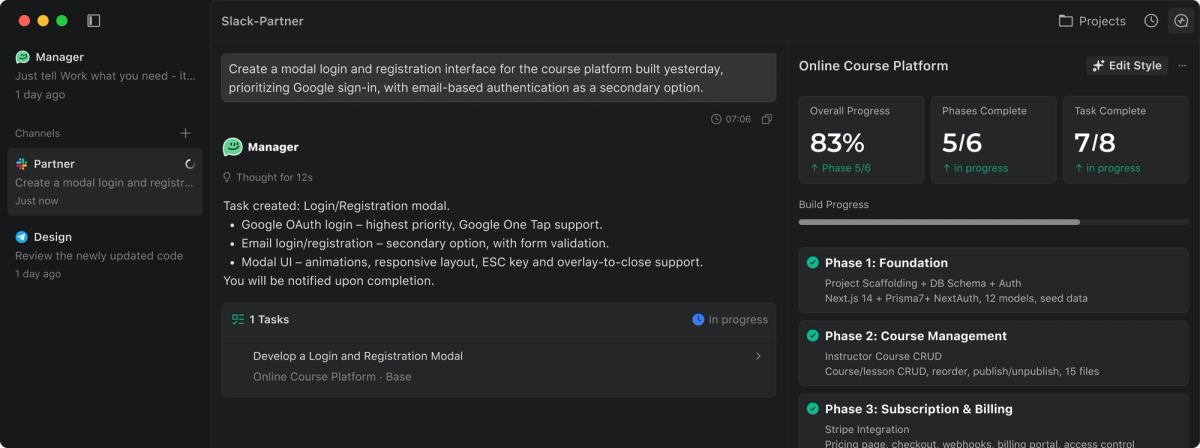
The five alternatives above are all single-model-session or single-developer tools. There's a different category worth naming: platforms that provide parallel agent execution, Git worktree isolation, and multi-model routing as first-class architectural features — often with IDE integration alongside terminal access.
Verdent is one example of this category. Others in the same space include platforms built on LangGraph or CrewAI orchestration with IDE frontends. What distinguishes this category from the alternatives above:
- Parallel worktrees: each agent works in an isolated Git branch by default, not per-session terminal workspaces
- Multi-model routing: different task types route to different models in the same workflow
- IDE-anchored: VS Code or JetBrains integration alongside agent orchestration
This category isn't a direct swap for DeepSeek-TUI. It's a different product tier — closer to "platform for agent workflows" than "terminal coding assistant." The right switch for: teams who have hit the limit of single-agent tools and need parallel execution, multi-model routing, and structured workflow enforcement as platform-level features rather than harness code they build themselves.
Side-by-Side Comparison Table
| DeepSeek-TUI | Claude Code | Aider | Cline | OpenCode | NeMoCode | Multi-agent platforms | |
|---|---|---|---|---|---|---|---|
| Runtime | Rust TUI | Node CLI | Python CLI | VS Code ext | Go TUI | Python CLI | Varies |
| Default model | DeepSeek V4-Pro | Claude Sonnet | DeepSeek / Claude | Any | Any | Nemotron | Any (routed) |
| Multi-model support | ❌ DeepSeek-family only | ❌ Claude-family only (V4 via workaround) | ✅ broad | ✅ broad | ✅ broad | ❌ Nemotron-family only | ✅ first-class |
| Parallel sub-agents | ✅ RLM (1–16 flash) | ✅ Task tool | ❌ | ❌ | ❌ | ❌ | ✅ first-class |
| MCP support | ✅ | ✅ | ❌ native | ✅ | ✅ | — | ✅ |
| Skills (SKILL.md) | ✅ reads .claude/skills | ✅ native | ❌ | ❌ | config-based | — | Varies |
| Workspace isolation | Per-session | Per-session | Git-native | Per-session | Per-session | Per-session | Git worktrees |
| Maintainership | Single dev | Anthropic (GA) | Active OSS | Active team | Active OSS | Single dev (same) | Varies |
| Cost shape | API-metered | Subscription + API | API-metered | API-metered | API-metered | API-metered | Platform pricing |
Decision Framework — Which Alternative Fits Which Switch
"I want the same UX with a different model" → Aider or OpenCode
Both are terminal-native and genuinely multi-model. Aider is more mature with a larger community and strong DeepSeek support (V3/V4 via the existing deepseek-chat endpoint). OpenCode is a closer structural match to DeepSeek-TUI's TUI design. Pick Aider if you value the depth of community support and benchmark coverage; pick OpenCode if you want the TUI aesthetic without Aider's Python dependency.
"I want IDE integration, not terminal" → Cline or multi-agent platforms
Cline is the answer if you want to stay in VS Code with a similar tool-call-approval workflow. Multi-agent platforms are the answer if you need IDE integration alongside parallel execution and multi-model routing — a different product tier rather than a direct swap.
"I want NVIDIA models specifically" → NeMoCode
Same author, same design philosophy, different model target. Be aware this is another single-maintainer project, so the risk profile is the same as DeepSeek-TUI — you're not solving the maintainership constraint by switching.
"I want Anthropic's ecosystem and enterprise support" → Claude Code
If the constraint is vendor accountability and first-party ecosystem depth (Routines, /ultrareview, task budgets, enterprise SLAs), Claude Code is the right switch. The model lock-in tradeoff is real — but it's the inverse of DeepSeek-TUI's.
"I want multi-model routing and parallel execution as a first-class concept" → Multi-agent platforms
If you've hit the ceiling of single-agent tools and what you actually need is a platform that handles model routing, parallel worktree coordination, and workflow enforcement without you building it — that's a category change, not a tool swap.
What to Carry Over from DeepSeek-TUI
Skills directory conventions
DeepSeek-TUI discovers skills from .claude/skills, which Claude Code also uses. If you've built skills that conform to SKILL.md conventions, they're portable to Claude Code without restructuring. Aider doesn't use SKILL.md; you'll need to adapt the content into Aider's configuration model. OpenCode uses a different config format but can ingest similar constraint and workflow content.
MCP server config
If you've configured MCP servers in DeepSeek-TUI, the server definitions themselves (the stdio command, env vars, auth) are portable to Claude Code or Cline, both of which implement the same MCP protocol. What changes is the configuration file format — not the server definition.
Cost-monitoring discipline learned from RLM
RLM's token cost visibility is a design feature of DeepSeek-TUI. Most alternatives don't surface per-agent cost breakdowns with the same granularity. Carry the habit of monitoring token spend explicitly into whichever tool you switch to — particularly relevant for Claude Code's Max subscription, where it's easy to assume unlimited headroom until you hit plan caps.
FAQ
Is DeepSeek-TUI being abandoned?
No. v0.8.8 shipped in early May 2026 with active fixes. The project is under continuous development by Hunter Bown. Looking for alternatives doesn't require believing DeepSeek-TUI is failing — it may just mean your constraints have evolved beyond what a single-model, single-developer tool currently covers.
Can I use Claude Code with DeepSeek V4?
Yes. DeepSeek's official API documentation includes a step-by-step guide for using Claude Code with DeepSeek V4 via environment variable substitution (ANTHROPIC_BASE_URL, ANTHROPIC_MODEL). What you lose: Claude-native features like xhigh effort, /ultrareview, and task budgets don't function without Anthropic's backend.
Which alternative has the best parallel sub-agent story?
Among the individual tools: Claude Code's Task tool and DeepSeek-TUI's RLM are the only two with documented parallel sub-agent patterns. Claude's subagents are richer (full multi-turn agent sessions), DeepSeek-TUI's RLM is more economical (lightweight flash calls, 1–16 configurable). Multi-agent platforms offer parallel worktree execution as a platform-level feature without requiring you to wire the orchestration yourself.
Are any of these enterprise-supported?
Claude Code (Anthropic, Teams/Enterprise plans) is the only tool in this list with a named vendor, SLA, and formal enterprise support. Cline has commercial offerings. Aider, OpenCode, and NeMoCode are community-maintained open-source projects. Multi-agent platforms vary by vendor.
Can I migrate my Skills folder to another tool?
Partially. SKILL.md files written for DeepSeek-TUI's skill discovery are structurally compatible with Claude Code, which reads the same .claude/skills path. The content transfers; the activation behavior may differ. Cline and OpenCode don't use SKILL.md directly — you'll need to adapt skill content into their respective configuration systems. The skill discipline (documenting reusable agent behaviors in structured files) transfers everywhere; the specific file format transfers only to Claude Code.
Related Reading