The name Qwable-v1 fuses "Qwen" and "Fable," and the model card describes a lineage stretching from Qwen through Claude Opus 4.7 to Claude Fable-5 traces. That framing makes it sound semi-official. It isn't. Qwable-v1 is a community-released model — built by an independent contributor, not by Alibaba's Qwen team or Anthropic, and with neither company's involvement or endorsement. The lineage, training data, and capabilities are all the publisher's own claims, and its coding benchmarks are, by the publisher's own admission, still incomplete. For a developer deciding whether to let it near a repository, the useful work is separating what the published provenance actually proves from what it merely asserts. Here's that separation.
Details below come from the model's public Hugging Face card as of June 2026 and reflect the publisher's claims, not independent verification or any official Qwen/Anthropic statement. Confirm current license and provenance directly on the model card before use.
What Qwable-v1 Actually Is
Why it should be treated as a community model
Qwable-v1 is published on Hugging Face by an individual contributor (lordx64). Nothing about it carries official standing from the Qwen team or Anthropic — the model name references their work because it's built from their outputs, not because either company participated, reviewed, or endorsed it. This matters for how you weigh everything else: the lineage description, the capability framing, and the benchmark intentions are claims made by an independent publisher, and they should be read with the same scrutiny you'd apply to any community fine-tune, not the deference you'd give an official release. Treating it as a community model is the correct starting posture.
How its release connects Qwen, Opus, and Fable traces
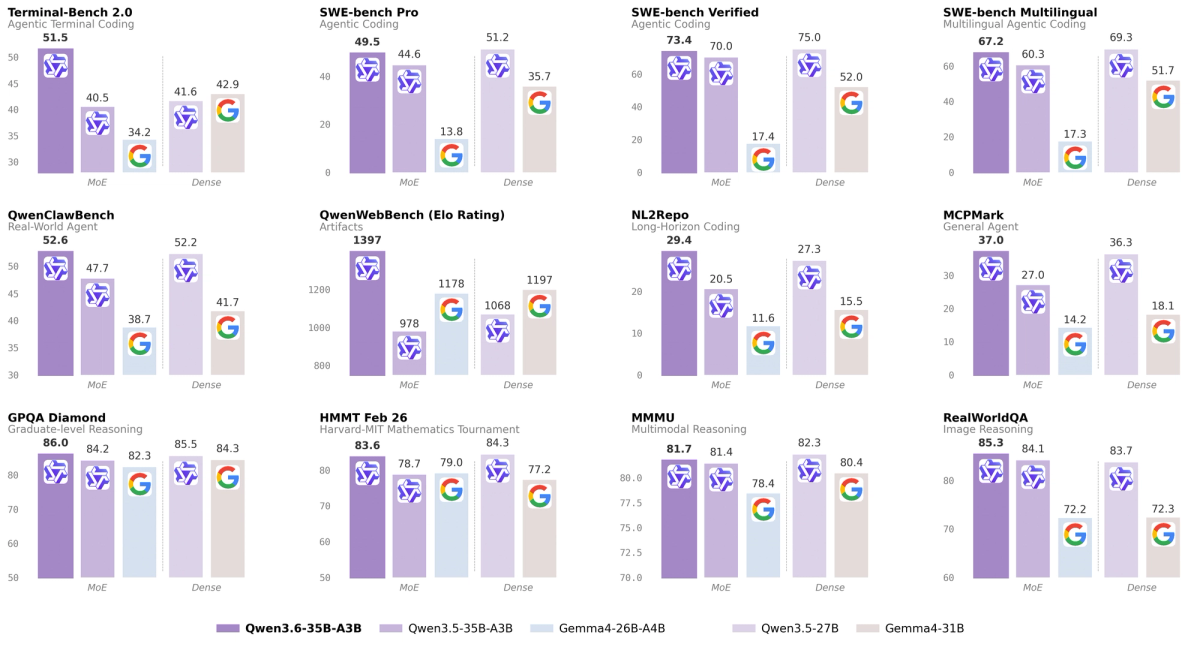
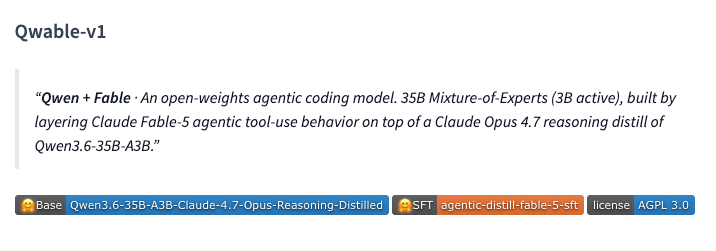
The model card describes Qwable-v1 as a chained distillation: it starts from the (Apache-2.0) Qwen3.6-35B-A3B base, applies supervised fine-tuning on Claude Opus 4.7 reasoning traces, then applies a further round of fine-tuning on Claude Fable-5 agentic tool-use traces. The stated result is a 35B Mixture-of-Experts model (with ~3B active parameters) that thinks in explicit <think> chains-of-thought inherited from the Opus prior, and emits <tool_use> XML blocks for file edits, shell commands, and reads when prompted with an agent-style system prompt. That description — Qwen base, Opus reasoning layer, Fable tool-use layer — is the publisher's account of how it was built. It's a coherent and specific account, which is a point in its favor, but a specific account is still an account, not independent confirmation.
What the Published Provenance Actually Proves (and What It Doesn't)
What the disclosed traces and datasets can confirm
The publisher discloses a fair amount, which is more than many community models offer. The base model (Qwen3.6-35B-A3B) is a known, public, Apache-2.0 release. The Fable-5 trace data is attributed to a named upstream dataset (Glint-Research/Fable-5-traces), and the training scripts are referenced. This disclosure lets you verify some things directly: that the base model is what it's said to be, that the named dataset exists and carries the license claimed, and that the model genuinely emits the described <think> and <tool_use> formats (you can observe that behavior yourself). Disclosed, checkable artifacts are the parts of the provenance you can actually stand on.
Which lineage and timeline claims still need independent confirmation
What the disclosure doesn't prove is that the training happened exactly as described and produced exactly the claimed effects. That the model's behavior derives specifically from Opus 4.7 reasoning traces and Fable-5 tool-use traces (rather than, say, general fine-tuning that resembles them) is a claim about the training process you can't verify from the weights alone. The provenance is documented, not audited — there's no third party confirming the chain. So the honest reading is: the disclosed artifacts (base model, named dataset, observable output format) are confirmable; the causal lineage story (this specific behavior came from those specific traces in that order) rests on the publisher's documentation. Useful, detailed, plausible — but not independently confirmed.
How Tool-Use Behavior Appears in Agent Workflows
When agent prompts trigger structured tool calls
The model card describes the tool-use behavior as system-prompt-conditional: the <tool_use> XML blocks appear when you give the model an agent-style system prompt or supply a preceding tool-result turn, and with a bare prompt and no agent framing, the model falls back to a reasoning-and-explain style. For a builder, this means the agentic behavior is something you opt into through how you prompt it — the model can act like a coding agent when framed as one, emitting structured calls for edits, shell commands, and reads. Whether those calls are correct and useful on your tasks is a separate, empirical question from whether the model emits them in the right format.
What the surrounding harness must still execute and verify
Emitting a <tool_use> block is not the same as doing the work. The model produces structured intentions; your harness still has to parse those blocks, actually execute the file edit or shell command, capture the result, feed it back, and — critically — verify that what the model proposed is safe and correct before acting on it. A model that emits well-formed tool calls into a harness with no validation is a model running unchecked commands. The structured output is the easy half; the harness that executes, sandboxes, and verifies is where the real safety and correctness live, and that's your responsibility regardless of how clean the model's tool-call format is.
Where the Evidence Is Still Missing
Which coding evaluations remain incomplete
The most important gap for a coding decision: the model card's benchmark table is marked as in-progress, with no completed coding-evaluation results published at the time of writing. That means there's no quantified evidence — vendor-reported or otherwise — of how Qwable-v1 actually performs on coding tasks. The lineage claims describe what it's built to do; they don't establish how well it does it. Until evaluations are completed and published (and ideally reproduced independently), any statement about its coding ability is an expectation, not a measured result. Treat the absence of benchmarks as exactly that — an absence — rather than assuming capability from the impressive-sounding provenance.
Why narrow trace data limits generalization claims
There's also a structural limit worth understanding. The publisher notes the Fable-5 trace corpus is a frozen historical dataset (the upstream Fable-5 preview was globally suspended on 2026-06-22 under U.S. export-control directives, with no guaranteed source of new traces). A model fine-tuned on a fixed, narrow trace set may reproduce the patterns in that set well while generalizing poorly to tasks outside its distribution. Behavior that imitates the traces isn't the same as the underlying capability the traces came from — distillation transfers patterns, not necessarily the full reasoning that produced them. So claims that Qwable-v1 has Fable-like or Opus-like ability should be read narrowly: it has been trained to imitate certain traces, which is a specific and limited thing, not evidence of equivalent general capability.
Evaluate Qwable-v1 Before Granting Repo Access
Review the license and dataset provenance first
Start with licensing, because it's a hard constraint, not a preference. Qwable-v1 is published under AGPL-3.0 (inherited from the upstream trace dataset's license), which carries real obligations — notably AGPL §13's source-disclosure requirement for network-accessible services. Beyond that, the underlying Fable-5 trace data is derivative of a suspended Anthropic preview model, and the publisher explicitly advises verifying compliance with the relevant usage policies before building commercial products on it. Read the actual AGPL terms and the dataset provenance before anything else; a license or policy problem makes the model's capabilities irrelevant to your decision.
Sandbox file and shell permissions
Because the model is designed to emit file-edit and shell-command tool calls, treat repository and system access as something to grant narrowly, not by default. Run it in a sandbox where file and shell permissions are scoped to what the task needs, isolated from your real repository and credentials, before you'd consider giving it broader access. A community model emitting shell commands into an unsandboxed environment is a clear risk regardless of how good its provenance looks; the sandbox is what makes evaluation safe.
Verify tool calls, patches, tests, and rollback behavior
Then evaluate the actual behavior on representative tasks in that sandbox: do its tool calls do what they claim, do its patches apply cleanly and pass tests, and can you cleanly roll back what it changes? Check whether the structured calls correspond to correct actions, whether proposed patches survive the project's test suite, and whether your harness can undo changes when the model gets something wrong. This is the empirical evaluation that the missing benchmarks can't substitute for — and it's the evidence that should actually drive your adoption decision, far more than the published lineage.
FAQ
Can Qwable-v1 run through Ollama or LM Studio?
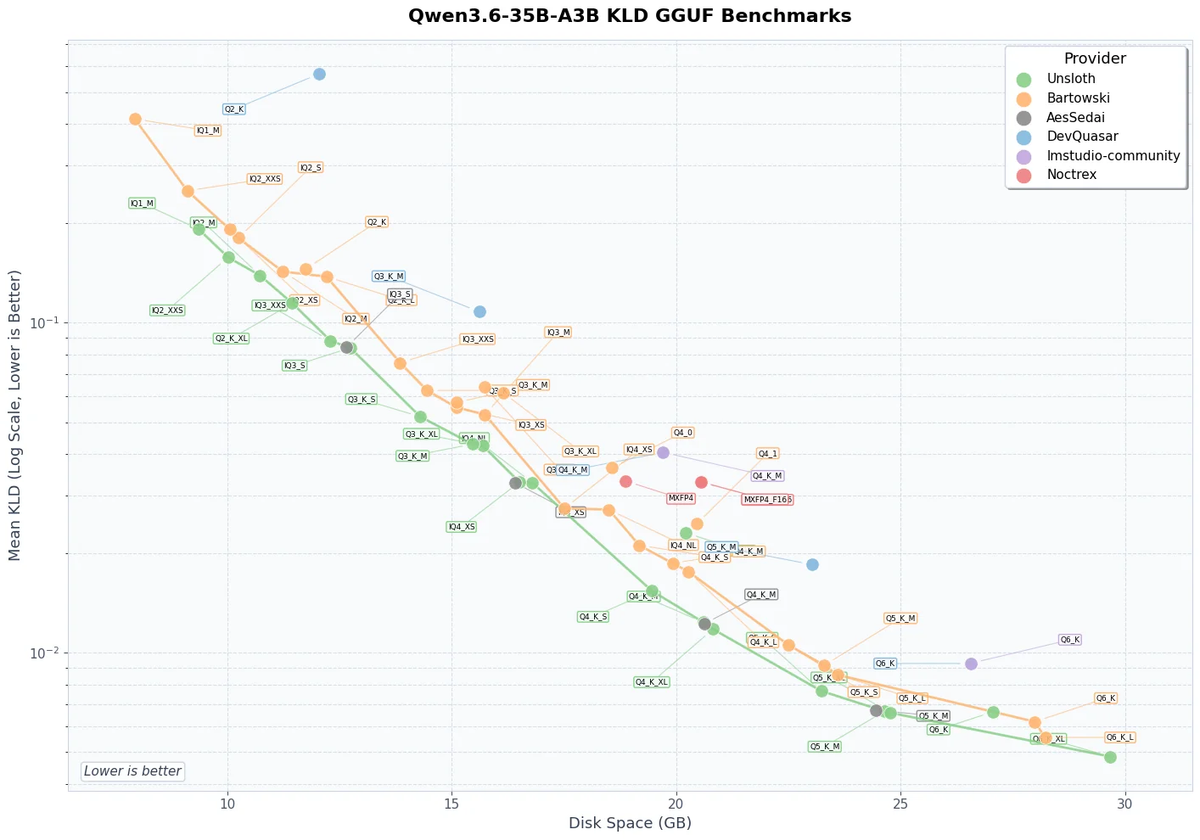
The publisher and community members have released GGUF quantizations of Qwable-v1, which are the format used by llama.cpp-based tools including LM Studio. So running it in LM Studio is feasible via those GGUF files, and llama.cpp-compatible runners generally accept the same format. Availability and the exact quant levels can change as the community uploads variants, so check the current GGUF repositories on Hugging Face for what's published rather than assuming a specific quant exists. Confirm the runner you use supports the model's architecture, since newly released models sometimes need a runner update before they load correctly.
Could future checkpoints change its tool-call format?
It's possible, and the publisher has signaled intent to release further versions (v2, v3) if additional trace data becomes available — so the tool-call format or behavior could shift between versions. The current <tool_use> XML format reflects this specific checkpoint's training; a future checkpoint trained on different or additional data could format calls differently or behave differently in an agent harness. If you build a harness that parses the current format, treat that coupling as version-specific and re-verify the format against any new checkpoint before upgrading. This is a direction to confirm against the model repo rather than assume stable.
Does its license permit commercial coding workflows?
Qwable-v1 is released under AGPL-3.0, which permits commercial use but imposes obligations — most notably the source-disclosure requirement for software offered over a network (AGPL §13). Separately, its training data derives from a suspended Anthropic preview model, and the publisher advises verifying compliance with the applicable usage policies before commercial use. So "permits commercial use" comes with real conditions on both the license and the data-provenance side. Before any commercial deployment, read the full AGPL-3.0 terms and confirm the data-provenance compliance for your specific use case — this is a legal question to resolve against the current license and official policies, not one to infer from the model card summary.
When should Qwable-v1 stay outside production repositories?
When you can't satisfy the conditions that make it safe to adopt: if the AGPL obligations or the data-provenance compliance don't fit your situation, if you need verified performance evidence that the (still-incomplete) benchmarks can't provide, or if you can't sandbox its file and shell access away from production systems. Because it's a community model with unverified lineage claims and no completed coding evaluations, it belongs in evaluation and experimentation contexts until you've independently confirmed it works for your tasks and clears your legal review. Keep it outside production repositories until both the compliance and the capability questions are answered on your own terms.
Conclusion
Qwable-v1 is an interesting community experiment: a documented, chained distillation that layers Claude Opus 4.7 reasoning and Claude Fable-5 tool-use traces onto a Qwen base, producing a model that thinks in explicit chains and emits agent-style tool calls. But read it for what it is — a community release whose lineage and capability claims are the publisher's own, whose coding benchmarks are still incomplete, and whose AGPL license and Anthropic-derived training data raise real compliance questions. None of that means it's bad; it means the evidence isn't in yet. So evaluate it deliberately: confirm the license and provenance, sandbox its file and shell access, and verify its tool calls, patches, and rollback behavior on your own tasks before granting it any repository access. Let your own testing and legal review — not the evocative name or the detailed-sounding provenance — decide whether it earns a place in your workflow.
Related Reading