Most agentic AI examples get vague the moment they leave the demo. For a software team, the useful question is narrower: can the system take a bounded delivery task, inspect real project evidence, use approved tools, leave reviewable artifacts, and stop before it crosses a human-owned decision?
These are observable agentic AI use cases for developers, Tech Leads, and engineering managers deciding what to delegate—and what must remain a human decision.
This article is a documentation-based analysis of public product capabilities checked on September 16, 2026; it is not a hands-on benchmark or customer case study.
What Counts as an Agentic AI Example
An agentic AI example has more than a generated answer. It has a goal, a path for gathering evidence or using tools, a way to evaluate intermediate results, and a boundary for what happens next. A chatbot can suggest a test. A test agent can read the changed files, run an allowed command, preserve a trace, and return a failed assertion for review.
If the workflow cannot name its revision, inputs, tool permissions, artifacts, and stop condition, it is hard to review or recover.
Examples Closest to Software Teams
Coding Agents for Repository Tasks
A coding agent is useful when a task has a concrete change boundary: add validation to an existing endpoint, repair a failing test after a dependency update, or prepare a small refactor on a feature branch. It should first inspect repository instructions, relevant paths, and the acceptance criteria; then make a patch and run the permitted checks.
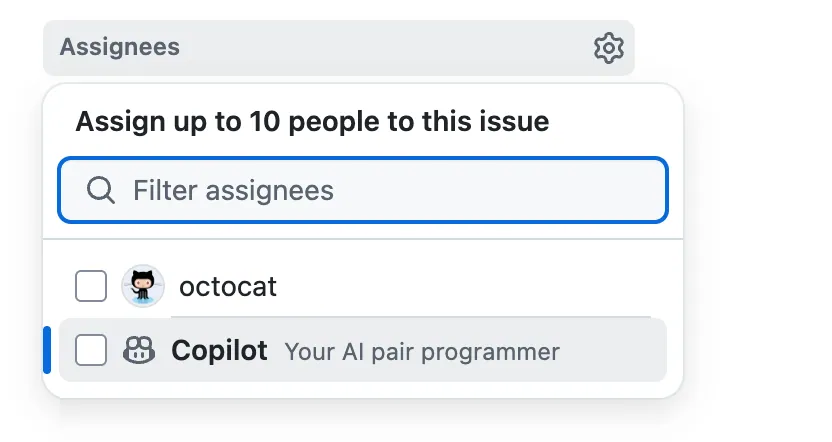
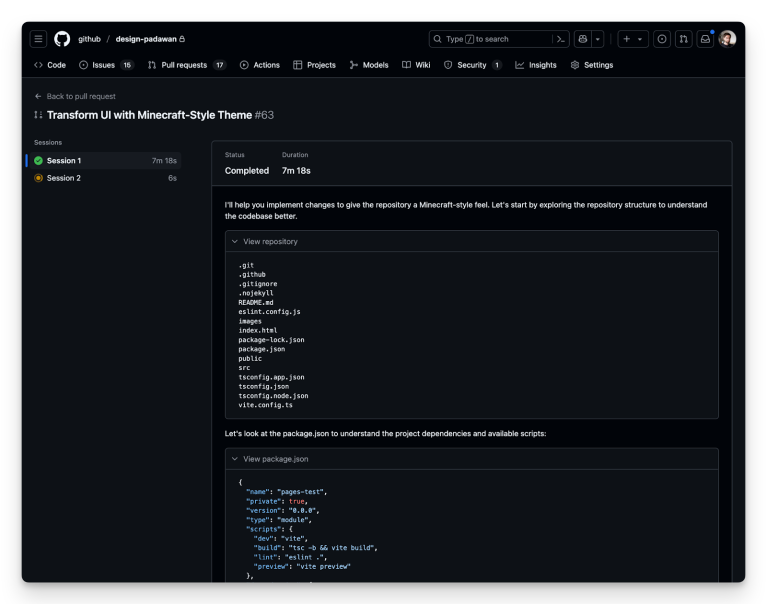
GitHub describes its Copilot cloud agent as able to take an issue, explore a repository, create a branch, and open a pull request. That is a recognizable agentic software development loop because the result is reviewable—not just code in a chat window. A maintainer still accepts or rejects the handoff.
Test and QA Agents
Test agents are strongest when they narrow the next verification step instead of declaring the change safe. One can map modified modules to existing tests, propose missing coverage, run a controlled suite, and attach the failure evidence to the change.
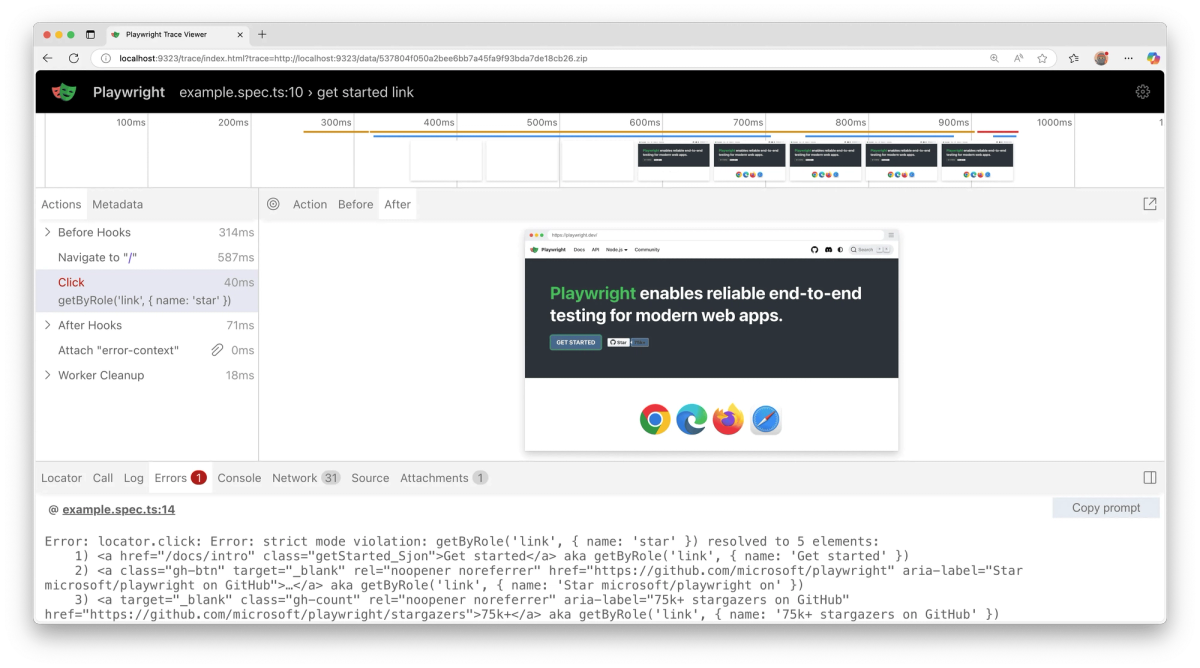
For browser work, Playwright can retain traces on failure or on a first retry, giving a reviewer actions, network context, screenshots, and errors to inspect. An agent can help select that evidence; its own passing run is not independent proof of release readiness.
DevOps and Incident Triage Agents
In DevOps, a sensible agent may collect deployment metadata, correlate an alert with recent revisions, summarize logs, and propose a runbook branch. It should not receive standing rights to restart services, alter infrastructure, or deploy to production.
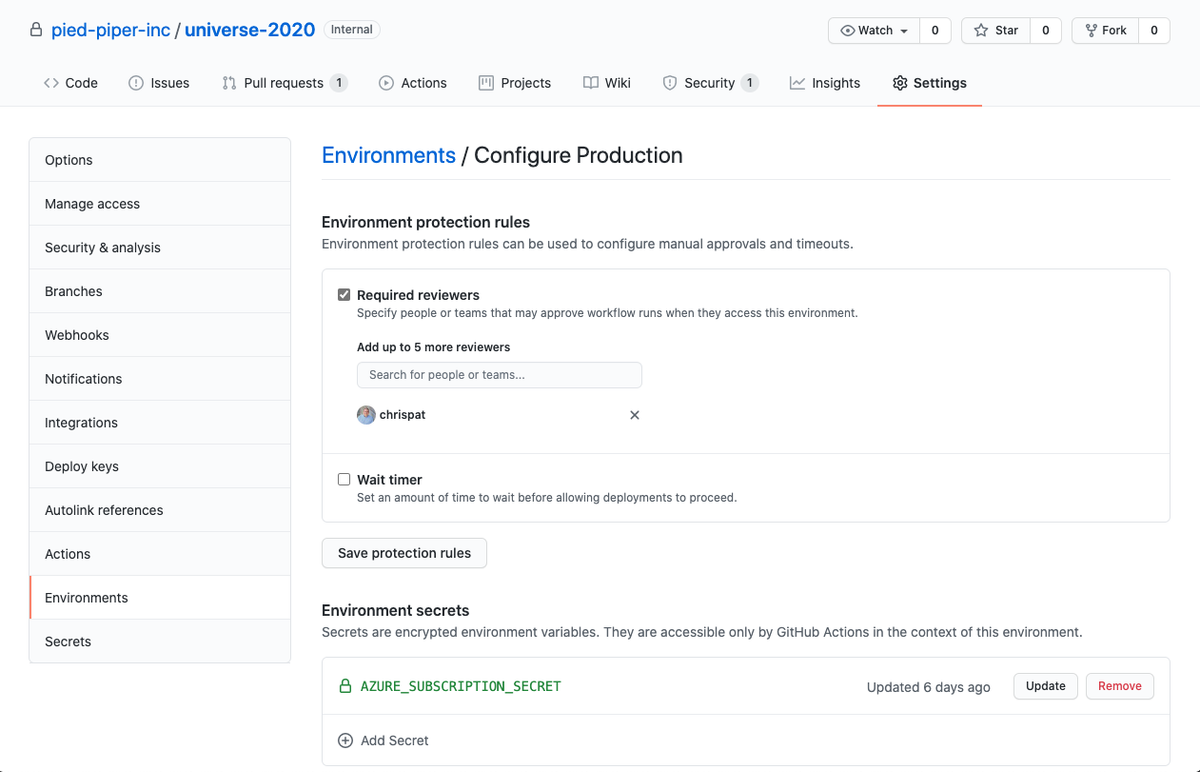
Approval gates make the distinction enforceable. GitHub environments can require reviewers, restrict deployment branches, and keep environment secrets unavailable until approval. Treat that control plane as the authority; the agent prepares evidence and requests a named action, while the release owner decides whether to proceed.
Multi-Agent Project Workflows
Multi-agent workflows make sense when the work naturally splits without overlapping ownership. A planner can create a bounded work plan; a coding worker can prepare a branch; a QA worker can collect checks; and a reviewer can turn the outputs into a concise risk packet. They need a shared contract, not a shared license to edit everything.
GitLab positions its Duo Agent Platform around specialized agents across the software lifecycle, including self-managed deployments under documented prerequisites. That is a platform example, not proof that multi-agent work will improve a team. Each handoff still needs scope, revision, permissions, evidence, and an owner.
What These Examples Have in Common
The durable pattern is small: plan before writes, constrain tools, leave artifacts, evaluate results, and route consequential actions to a person. Planning makes intent inspectable; least privilege contains blast radius; artifacts make a run debuggable; review prevents self-grading.
Parallel workers help only when outputs can be isolated and recombined. Otherwise, the team has traded one uncertain patch for several competing assumptions.
Where Agentic AI Still Needs Human Review
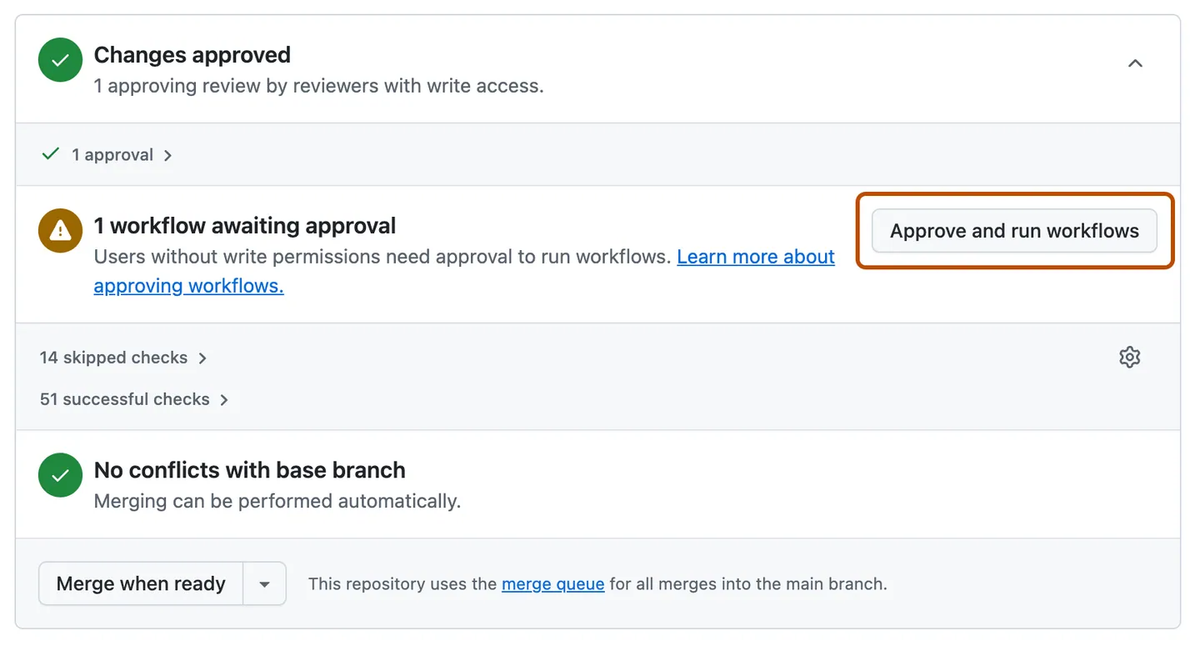
Human review owns requirement fit, architecture tradeoffs, data and security consequences, and the merge or release decision. A model can test the state it created, but it is not an independent reviewer.
For authentication, migrations, secrets, financial effects, or customer-visible releases, require a visible plan, a scoped identity, deterministic checks, and a reviewer who can reject the work. A preserved failed run and clear escalation can be safer than another retry.
How to Evaluate an Agentic Workflow
Evaluate one task class at a time. Start with a low-risk, repeatable change and compare accepted delivery—not impressive activity—against the current process.
Use this review checklist:
- Scope: Can the team name allowed repositories, paths, task types, and exclusions?
- Control: Which identity calls each tool, and which actions require approval?
- Evidence: Does the handoff include the plan, revision, diff, commands, outputs, skipped checks, and unresolved questions?
- Recovery: If a run stops halfway through, can a human safely resume, repair, or discard it without replaying a side effect?
- Outcome: Track reviewer corrections, escaped defects, recovery quality, cost, and time per accepted change—not prompt count or lines generated.
Add specialists only when they remove a real bottleneck and keep the final owner clear.
Walking the Checklist Through One Bounded Task
(illustrative, not drawn from a client engagement)
Suppose the task is adding input validation to an existing endpoint — one of the change types named earlier in this article.
Scope. The team names the repository, the single module containing the endpoint, and excludes migrations, authentication, and anything outside that module.
Control. The coding agent's identity has write access only to a feature branch; opening a pull request and merging remain separate, human-held actions.
Evidence. The handoff includes the plan describing what validation rule was added and why, the diff, the test command that ran, its output, and any check the agent could not complete.
Recovery. If the run stops after the patch but before tests finish, a reviewer can inspect the diff and either resume the test step or discard the branch without side effects, because the change never touched production data.
Outcome. The team records whether a reviewer had to correct the validation logic, whether the same defect reappeared later, and how the total time compares with a person writing the same check by hand.
None of the five questions depends on trusting the agent's own summary. Each has an artifact, or a person, who can confirm the answer independently.
FAQ
These are documentation-based product checks, not legal advice or a statement of rights across contracts or jurisdictions.
Which tools expose audit-log export APIs?
For programmatic retrieval, GitHub Enterprise Cloud exposes enterprise audit-log REST endpoints, while GitLab exposes an Audit Events API with offering, tier, and query-window conditions. GitLab Self-Managed also documents CSV export. Check the plan, event scope, retention, and contract before treating any of them as a complete agent-run record.
Can agents run inside self-hosted repositories?
Some can. GitLab documents its Duo Agent Platform for GitLab Self-Managed, with separate setup for self-hosted models or the AI Gateway. That does not mean every agent vendor can reach every private instance or that processing stays entirely on-premises; confirm the deployment’s execution location, identity, model route, and data terms.
Do tools support branch-level execution policies?
Yes, at repository level. GitHub rulesets target branch patterns; GitLab branch rules govern push, merge, force-push, and Code Owner approval. Pair them with an agent-specific identity and CI policy so a workflow cannot bypass review just because it can create a branch.
Can failed runs resume from saved checkpoints?
Do not assume so. Replit Agent documents checkpoints and rollback of saved project state, including files and Agent context. That is not a promise to automatically resume a failed, side-effecting command; check whether the platform separately saves tool state, idempotency, and pending approval.
Which platforms disclose artifact retention periods?
GitHub Actions documents a default 90-day retention for artifacts and logs, with settings that vary by repository visibility. GitLab CI uses expire_in or an instance default and normally keeps artifacts for the most recent successful pipeline on a ref. Those rules do not answer retention for agent prompts, workspaces, audit events, or source-code copies.
Conclusion
The most useful agentic AI examples in software are not broad claims about autonomous work. They are bounded loops: a coding agent produces a branch, a QA agent produces evidence, an incident agent prepares a diagnosis, and a multi-agent workflow leaves one accountable owner with enough context to decide.
If a workflow cannot be scoped, reviewed, and recovered, more autonomy only makes failure harder to understand.