The wrong scraping stack often works in a demo. It fails later, when an app needs 20,000 records, a JavaScript release empties the response body, or a selector quietly maps prices into product names.
For Python developers and independent app builders, the useful question is not “Which library is best?” It is: which layer should fetch, render, crawl, extract, validate, and retain state for this workflow? Treating those as separate responsibilities keeps a static-page job small—and stops a growing pipeline from becoming one browser script nobody can safely change.
Tool and platform sources were checked on September 15, 2026. This is a documentation-based evaluation, not a matched performance benchmark or legal opinion.
Shortlist for App Data Workflows
Start with the cheapest execution model that returns data you are permitted to collect. Add a browser only for browser state or rendering, and a crawling framework when scheduling, retries, item processing, and resumable state become application concerns.
| Stack or tool | Default fit | What you own | Main reason to move up |
|---|---|---|---|
| HTTPX + Beautiful Soup | Tens or hundreds of static HTML pages, known URLs | Requests, retries, parsing, validation, storage | You need link discovery, durable queues, or many-site policy |
| Scrapy | Large static or mostly static crawl graphs | Spider logic, deployment, schema, monitoring | A meaningful subset needs JavaScript or interaction |
| Playwright | JavaScript-rendered pages and stateful interactions | Browser fleet, selectors, sessions, resource limits | Browser operations dominate maintenance or need managed infrastructure |
| Selenium | Existing WebDriver/Grid estate or broad remote-browser compatibility | Drivers/Grid, waits, selectors, sessions | A new project values Playwright's Python ergonomics more than estate reuse |
| Managed scraping API | Variable targets where browser/proxy operations are not your core product | Vendor contract, usage cost, extraction contract, downstream QA | Volume or control makes self-hosting more predictable |
BeautifulSoup is not a cheaper Scrapy, and Scrapy vs Playwright is not a winner/loser comparison. They solve different layers.
How Python Web Scraping Tools Fit Together
HTTP Clients and Parsers
An HTTP client retrieves bytes; a parser turns them into a navigable document. Separate them so transport failures do not blur into missing-node or malformed-field failures.
HTTPX provides sync and async APIs, connection pooling, and separate connect, read, write, and pool timeouts. Pair it with Beautiful Soup when the response already contains the required HTML.
Beautiful Soup supports traversal and CSS selectors, but parser choice affects malformed markup, so pin lxml, html5lib, or html.parser explicitly.
This pair is easy to test with saved HTML fixtures. It does not execute JavaScript, discover a site at scale, or supply a durable queue; those needs belong to another layer.
Crawling Frameworks
Scrapy is the Python scraping framework to consider when the hard part is coordinating pages rather than parsing one response. Its engine connects a scheduler, downloader, spiders, and item pipelines in an asynchronous request-to-item flow. That gives a project defined places for URL discovery, retry behavior, throttling, duplicate filtering, validation, and storage.
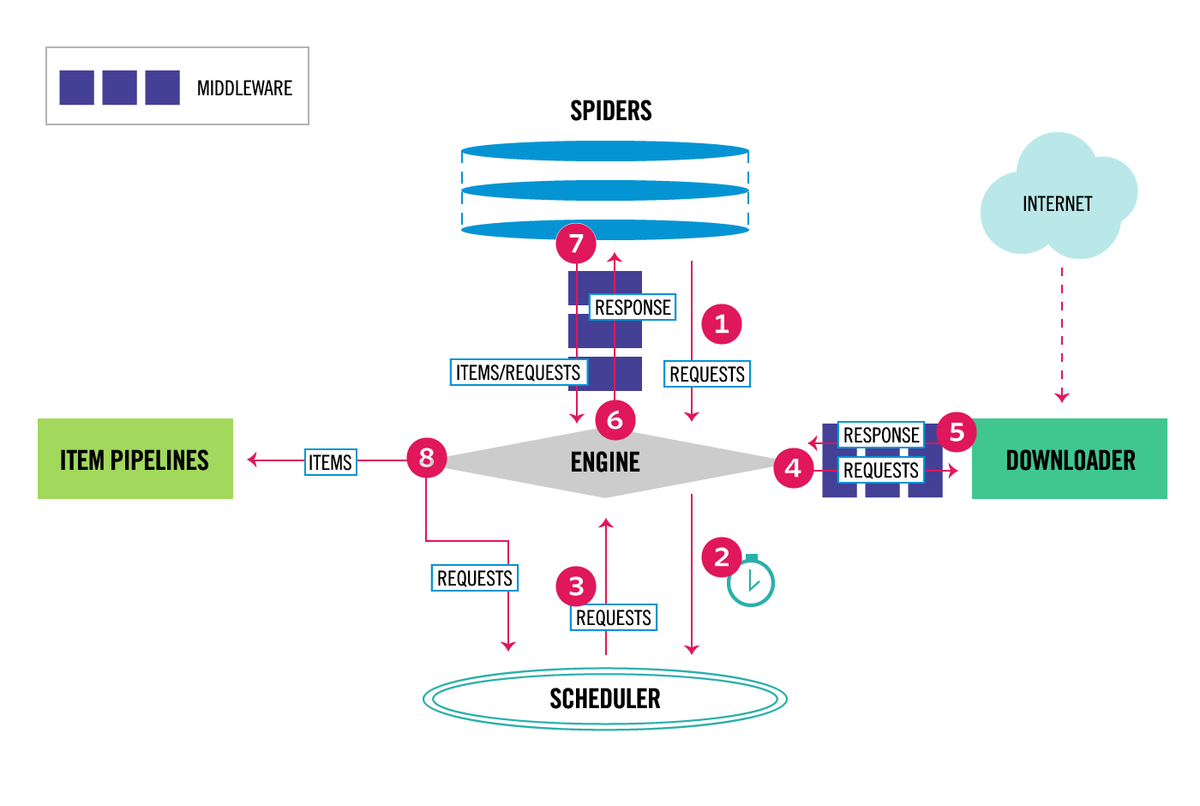
The framework earns its setup cost with thousands of URLs, several page types, domain-level rate controls, or resumable runs. It is excessive for a five-page admin import. Dynamic pages still need a browser integration, sanctioned endpoint, or managed rendering service.
Browser Automation Tools
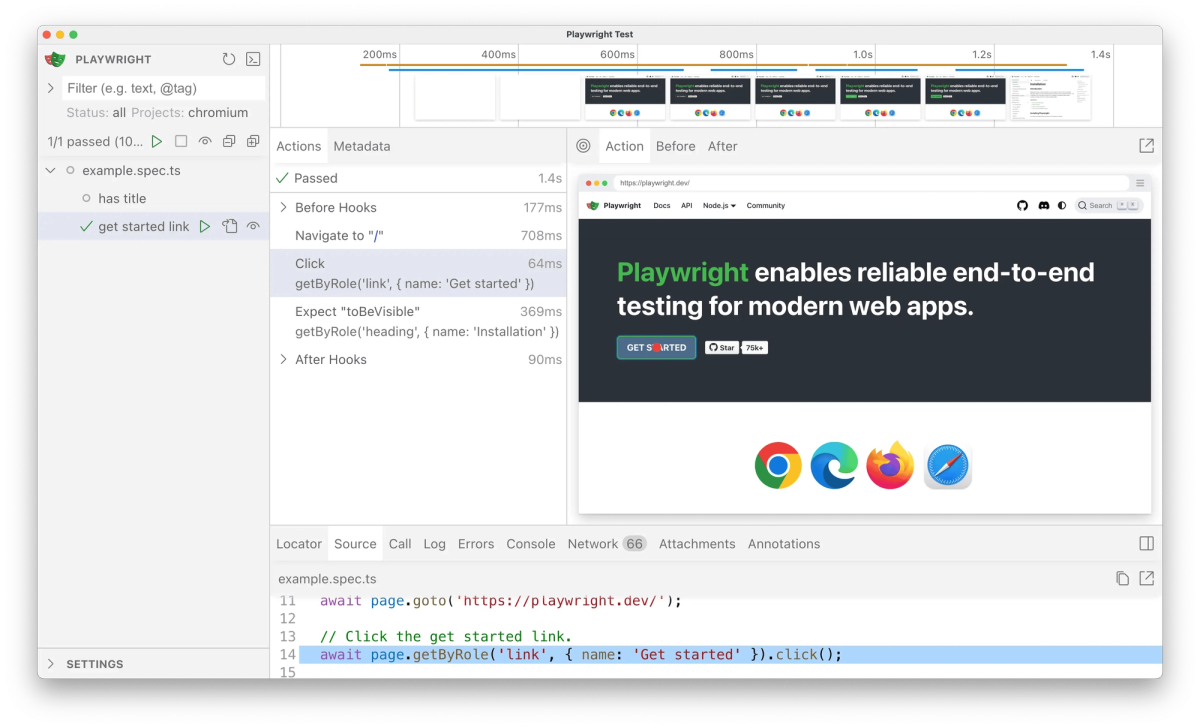
Playwright runs Chromium, Firefox, or WebKit through sync or async Python APIs. Its locators auto-wait for actionable page state, reducing—but not eliminating—timing failures around menus, lazy content, and client-rendered lists.
Choose Playwright when data appears only after rendering or an authorized interaction. Browsers cost more CPU, memory, startup time, and operational attention than direct HTTP, so do not render every page because a few URLs need it.
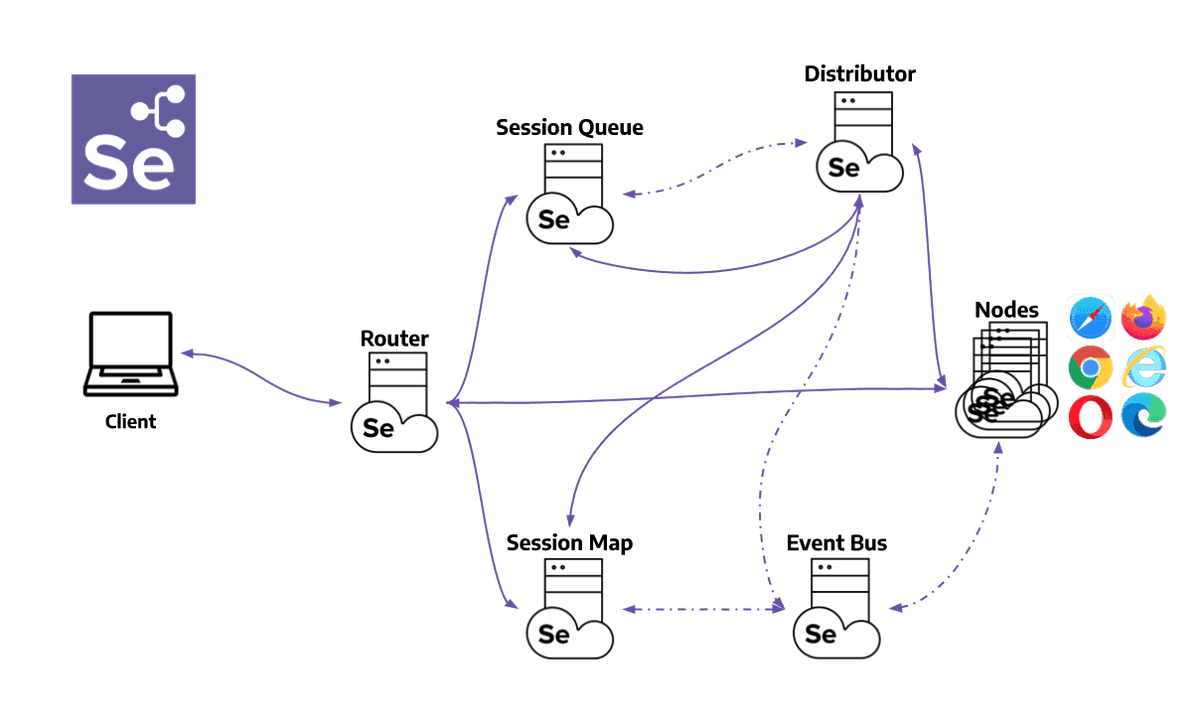
Selenium remains sensible when a team already operates WebDriver or Grid, which distributes browser sessions across machines. For a new Python-only scraper, estate reuse—not maturity as an abstraction—is the clearest reason to choose it over Playwright.
Managed Scraping APIs
A managed API moves browser images, sessions, network infrastructure, and some retry handling onto a vendor bill. That is rational when browser operations should not become the app's second product.
Do not confuse infrastructure outsourcing with correctness. Zyte API can return browser-rendered HTML, screenshots, and action results, with explicit browser action limits. A successful response can still contain the wrong page or stale fields. Keep provider metadata, validate content, and price the normal case plus retries.
Compare Tools by Page Type and Scale
The page tells you what must run. The scale tells you what must persist.
| Page and workload | First candidate | Escalation trigger | Data-quality checkpoint |
|---|---|---|---|
| Static detail pages from a known list | HTTPX + Beautiful Soup | URL count and retry coordination grow | Required fields, canonical URL, content hash |
| Static category tree with pagination | Scrapy | Some branches return client-only shells | Items per page, duplicate rate, crawl depth |
| JavaScript detail page | Playwright | Browser fleet becomes the maintenance bottleneck | Wait condition, rendered-field coverage, screenshot on failure |
| Mixed catalog: static list, dynamic detail | Scrapy plus selective browser retrieval | Browser percentage or failure cost keeps rising | HTTP/browser route, schema version, null-rate by route |
| Irregular multi-site inputs | Managed API plus local validation | Spend, contract, or control no longer fits | Provider status, target status, extraction confidence, rejection reason |
This is where Scrapy vs Playwright becomes concrete. Scrapy owns what is queued, visited, retried, throttled, transformed, and exported; Playwright owns a rendered browser session. A large crawl can route only browser-dependent pages to Playwright, while a small interactive page may need no crawling framework.
Scale is not only request count. Ten authenticated workflows can carry more risk than 100,000 public static pages. Count templates, sessions, update frequency, expected failures, and downstream records exposed to one bad selector.
Choose a Stack for Your App Workflow
Define the import contract before selecting Python web scraping libraries. A product-watch feature might require source_url, external_id, name, price, currency, availability, observed_at, and schema_version, plus rules for rejecting or warning on missing fields.
Then make five decisions:
- Find the least expensive valid source. Prefer a permitted API or static response; render only when required data or an authorized interaction is absent.
- Separate acquisition from extraction. Return one envelope—status, final URL, timestamp, route, and raw-body reference—regardless of fetcher.
- Validate before import. Reject unknown currencies, empty IDs, impossible values, and duplicate keys before app state.
- Persist crawl and business state separately. A queue knows which request ran; the database knows which entity changed or disappeared.
- Budget for drift. Monitor field coverage, item counts, parse errors, and template-specific null rates.
If an agent helps build the stack, give it bounded artifacts rather than “make scraping reliable.” Verdent Manager can split an outcome into stages, dependencies, and acceptance criteria, then return outputs to To Review; that task and review handoff could separate adapters, fixtures, validation, and monitoring. A human still owns source permission, schema acceptance, and diff review.
Limits, Legal Notes, and Maintenance Risks
Code does not create permission to scrape. Before deployment, verify current site terms, robots and platform policies, database or license rights, authentication boundaries, personal-data duties, and applicable law. Get qualified advice when the risk matters; this article is not legal advice.
The Robots Exclusion Protocol says its rules are not access authorization. A permissive file is not a blanket license, and a disallowed path is not a control to bypass. Do not evade access controls, anti-abuse systems, or contractual restrictions.
Maintenance failures are more ordinary. A renamed class can zero a field without an HTTP error; a consent banner can become the only parsed product. Version selectors, tests, session handling, provider configuration, and schema migrations, and assign an owner to failed imports.
FAQ
Do scraping libraries support typed output schemas?
Some provide structure, but not the same guarantee. Scrapy Items restrict unknown field names and accept dataclass or attrs objects; dataclass hints do not enforce runtime types. For imports, use Pydantic or an equivalent validator. Pydantic models enforce output types and constraints after parsing; strict mode and forbidden extra fields can expose drift that coercion might hide.
How should scraped data be validated before import?
Use two gates. Extraction checks required nodes, parseability, and provenance; domain validation checks identifiers, ranges, enums, uniqueness, and app relationships. Quarantine failures with source URL, fetch time, selector/schema versions, and a redacted raw snapshot reference. Never turn a missing value into zero to satisfy a column.
Can scraping jobs run safely in CI?
Yes, if CI runs fixtures or a small, authorized canary—not an unrestricted crawl. Pin dependencies, cap requests and wall time, scope secrets, redact traces, and fail on schema regressions. Playwright's CI setup installs matching browsers and can retain failure traces; control artifact access and retention.
What monitoring catches selector drift early?
Alert on output shape, not only exit status. Track required-field coverage, records per template, null and duplicate rates, parser exceptions, unexpected enums, and fallback share. Run fixtures on selector changes and a permitted live canary on a schedule. A green request count with collapsing field coverage is a failed scraper.
Which tools support incremental crawl state?
Scrapy's JOBDIR persists scheduled and visited requests plus spider state, but a job must resume with the same Scrapy version.
Apify also documents persistent cross-run queues. Neither option replaces app state such as last-seen time, content hash, deletion policy, or source revision.
Conclusion
The right Python web scraping tools for app builders usually form a stack. Use HTTPX and Beautiful Soup for bounded static acquisition; Scrapy when crawl state becomes first-class; Playwright for browser-dependent pages; Selenium when a WebDriver estate matters; and a managed API when browser operations are not worth owning.
Test the final choice against representative pages and an explicit import schema. If it cannot show what was fetched, why a record passed, what state resumes, and which metric exposes drift, it is not ready—even if the demo returned data.