“Free” can mean included model usage, a zero-price client that sends the bill to your API provider, or local inference paid for with hardware and maintenance. Those are different procurement decisions.
For this comparison, an AI free coding agent must expose that boundary before the first real project. The shortlist is GitHub Copilot Free for light IDE use, Cline for an approval-led BYOK editor workflow, and OpenCode for an open-source terminal workflow. Gemini Code Assist for individuals no longer qualifies: Google stopped serving that tier on June 18, 2026.
Choose by access model, then measure the cost of accepted changes rather than prompt count.
Access terms checked August 13, 2026. Free tiers, promotions, and quotas can change.
How We Define a Free AI Coding Agent
A free AI coding assistant has two layers: the client that reads files and runs tools, and the model that reasons over the task. Ask which layer is funded, for how long, under which account, and what happens at the limit.
Free Product Access vs Free Model Usage
Use five labels instead of one vague “free” badge:
- Ongoing free tier: recurring model usage under a cap.
- Free client, paid inference: no client fee; BYOK or built-in usage billing pays for the model.
- Local inference: no per-token invoice, but you supply hardware, electricity, setup, and maintenance.
- Promotion or trial: access ends after a quota or date.
- Eligibility benefit: access depends on student, teacher, or maintainer status.
This distinction prevents the most common comparison error: calling an open-source AI coding agent “free” when only the orchestration client is free.
Usage Caps, BYOK, and Local Compute Costs
One agent task can trigger planning, file reads, edits, terminal commands, tests, and retries. Google makes the accounting problem explicit: one prompt can result in multiple model requests, and work stops when the applicable quota is exhausted.
BYOK is more portable, not automatically cheaper. Long context, repeated tool loops, and output-heavy models can turn a free client into a large API bill. Local models replace that invoice with a capacity question: can your machine deliver adequate tool calling, context, and latency?
My rule is to record client cost, model cost, local compute, and review time separately. “Zero subscription” is not a total-cost metric.
Best Free AI Coding Agents for Different Workflows
GitHub Copilot Free for Limited IDE Agent Use
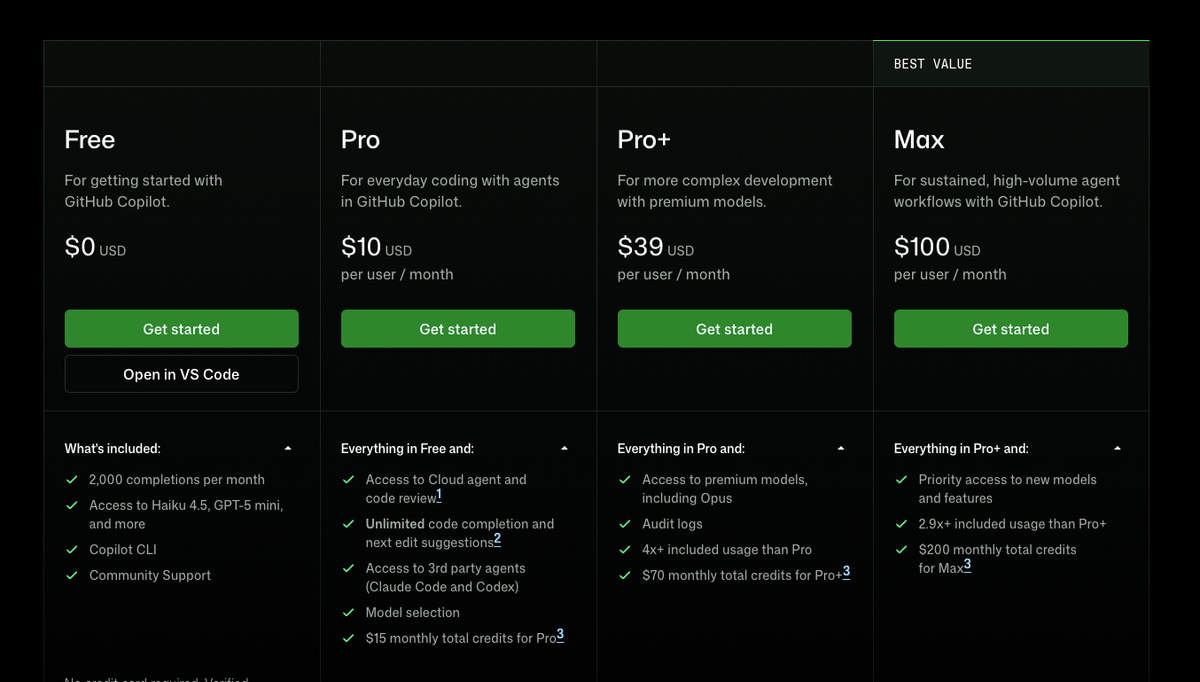
GitHub Copilot Free is the cleanest start when you want familiar IDE integration and no API-key setup. It is available to individual developers without organization or enterprise Copilot access. The current plan includes 2,000 code completions per month, auto-selected models, and limited feature access; chat and agent activity use the plan’s AI-credit allowance.
It fits occasional repository questions, small edits, and IDE-agent evaluation. It is a weak foundation for sustained multi-file work or team standardization, where predictable capacity, policy controls, and organization-owned access matter.
GitHub Copilot Student is free for verified students and includes unlimited completions plus limited chat and agent usage. Verified teachers and maintainers of popular open-source projects may qualify for free Copilot Pro. These are eligibility programs, not Copilot Free features.
Gemini Code Assist for Individual IDE Work
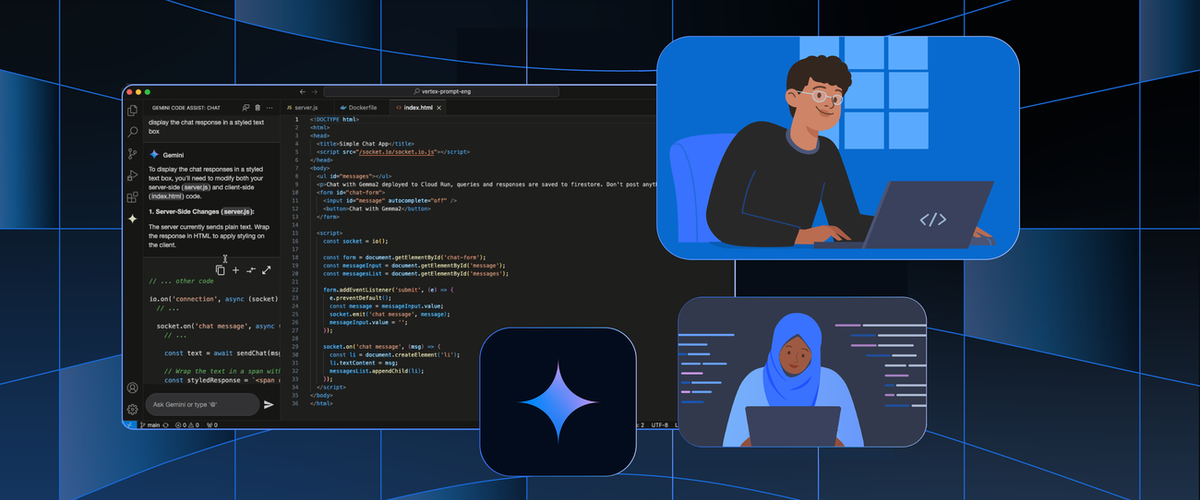
This is no longer a current free recommendation. Google states that Gemini Code Assist IDE extensions and Gemini CLI stopped serving requests for individual, Google AI Pro, and Google AI Ultra tiers on June 18, 2026. Current access requires a Gemini Code Assist Standard or Enterprise license.
The paid Agent Mode remains a Preview feature in VS Code and IntelliJ, can use built-in and MCP tools, and asks for permission before mutating resources unless broader approval is configured. A capable paid agent is not evidence of a continuing free tier.
If an older comparison calls it the best free AI coding assistant, check the verification date. Plan status belongs in the matrix.
Cline for BYOK Editor Workflows
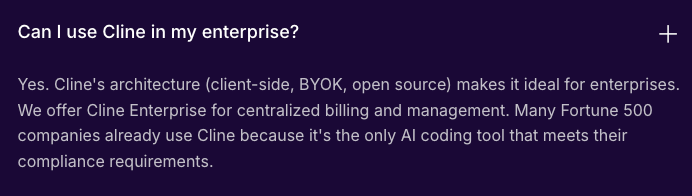
Cline fits developers who want an editor or terminal agent, explicit approvals, and flexible model access. It can read and write files, run commands, and use browser tools while each action remains subject to user approval. Model access can use built-in billing, a subscription, BYOK, or a local runtime.
Cline’s free-tagged models rotate and have limited quotas. After the quota, work moves to paid access, BYOK, or local inference. Free models are limited to the IDE extension and CLI, not the Cline API.
Pick Cline when approval-by-approval control matters more than bundled inference. For client code, decide who owns the key, budgets, logs, and revocation.
OpenCode for Open-Source Terminal Workflows
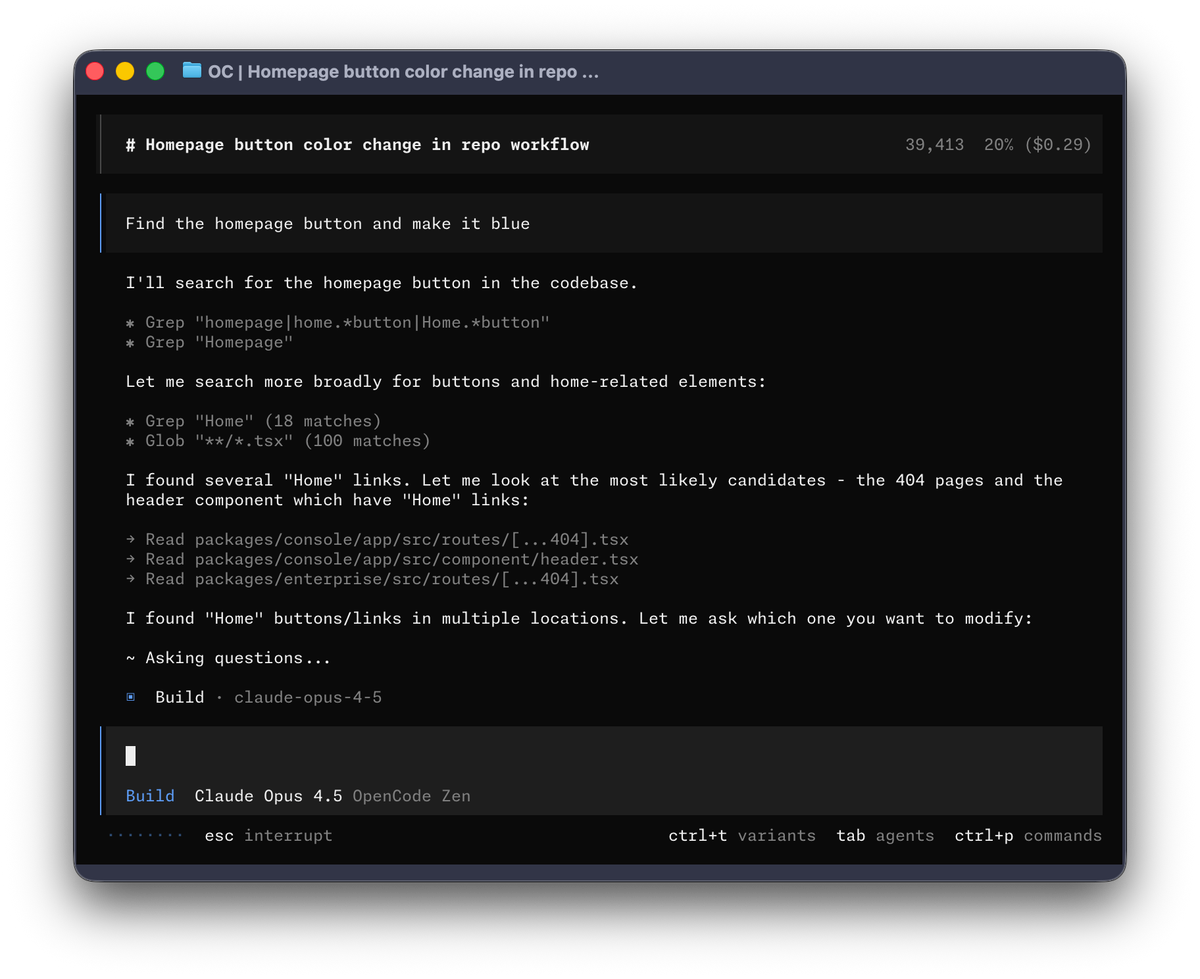
OpenCode separates an open-source terminal, desktop, or IDE client from its model providers. Terminal use requires API keys for the LLM providers you choose, so the client is not permanently free inference.
OpenCode supports more than 75 providers and local models and lets teams narrow the visible model set. Plan mode disables edits; Build mode performs the work, and /undo reverts session changes.
Choose OpenCode for terminal-first, provider-portable work—not solely to avoid spending. Cloud APIs still charge after their allowances; local models shift cost to hardware, latency, maintenance, and quality.
Free-Tier Comparison Matrix
| Tool | Current access model | What is actually free | Main cost trigger | Best workflow fit | Team-standardization fit |
|---|---|---|---|---|---|
| GitHub Copilot Free | Ongoing individual tier | Included models; 2,000 completions/month | AI credits or paid features | Light IDE agent work | Low; personal access |
| Gemini Code Assist | No individual free tier | Former consumer tier ended | Paid license | Paid Google Cloud IDE use | High under managed licensing |
| Cline | Free client; promotions, BYOK, local, or paid models | Client and limited promotional quota | API, subscription, or compute | Approval-led editor work | Medium; you govern keys and telemetry |
| OpenCode | Open-source client; BYOK, local, or paid models | Client and configuration | API, service, or compute | Terminal-first portability | Medium; you supply governance |
The matrix is not a quality ranking. It shows who funds inference, who owns credentials, and when the workflow crosses into paid or self-managed operations.
What Stops Being Free in Real Projects
The first cost jump comes from task shape, not seat price. Repository work sends more context, invokes more tools, and produces more retries than autocomplete.
Four thresholds matter:
- The included quota no longer covers accepted work. Track cost per merged, tested change—not prompts or generated lines.
- BYOK becomes shared infrastructure. The moment several people use provider keys, you need ownership, budgets, rotation, offboarding, and incident response.
- Local inference becomes an operations job. Hardware capacity, model updates, latency, and tool-call reliability consume engineering time even without a token bill.
- The team needs a control plane. Central policy, managed identities, audit evidence, support, and predictable capacity are paid product requirements or internal platform work.
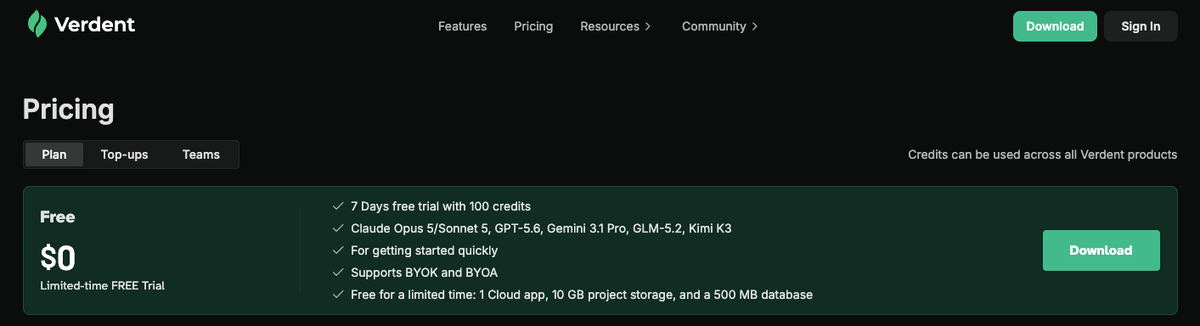
When the need becomes parallel work, shared usage visibility, isolated execution, and managed seats, a paid suite is a different category. Evaluate Verdent’s paid multi-agent plans against that requirement. Verdent is not a free pick, and a seven-day trial is not a continuing free tier.
How to Choose Without Locking In
Run the same three tasks through every finalist: a bounded bug fix, a multi-file change with tests, and a failure requiring recovery. Record accepted output, reviewer corrections, model cost, time, and retained artifacts.
Then preserve the parts you may need to move:
- Keep project instructions in repository-controlled Markdown.
- Document the provider, model class, and budget separately from the client.
- Use organization-owned credentials for company repositories.
- Keep tests, diffs, plans, and acceptance criteria in Git and CI.
- Inventory local sessions, provider logs, shared links, and telemetry before switching.
The best AI agent for coding is the one you can replace without losing the project’s rules, evidence, or access controls. A cheap first week is useful. A portable workflow is worth more.
FAQ
Can teams standardize on individual free accounts?
Not as a durable team standard. Individual free accounts can support a pilot, but they do not give the company reliable capacity, centralized policy, consistent offboarding, or clean ownership of usage. Standardize the repository rules and acceptance tests first; if the workflow survives the pilot, move access, billing, and identities under the organization.
Who should own API keys in a BYOK setup?
The organization that owns the repository and pays for the work should own the provider account and keys. Store them in an approved secret manager, issue scoped credentials where possible, set budgets and alerts, and rotate them during offboarding. Developers should not fund client work through untracked personal API accounts.
Can contractors use personal plans on client repositories?
Only when the client’s contract, security policy, data rules, and tool terms explicitly allow it. The safer default is a client- or company-managed identity with repository-specific access, an approved provider, and a clear offboarding date. Personal plans blur who owns prompts, logs, charges, and the right to retrieve records after the engagement.
What happens to logs after a free plan changes?
Do not assume that losing free access deletes logs. A coding-agent workflow may leave local session data, provider-side request records, shared conversation links, Git history, CI output, or enterprise telemetry. Map each storage surface and its retention owner before adoption; export required evidence and revoke sharing separately from changing the subscription.
Should students use education benefits instead of free plans?
Usually, yes—if the benefit’s eligibility, repository rules, and data terms fit the work. GitHub’s current Student plan provides more than Copilot Free, but it remains an individual entitlement. Do not use an education benefit as an unofficial team license or for commercial client work without confirming the applicable terms and owner policy.
The best free AI coding assistant is therefore conditional: Copilot Free minimizes setup for light IDE work, Cline gives editor-based control with flexible model access, and OpenCode maximizes terminal and provider portability. Recheck the plan on publication day, then choose the boundary you are prepared to own when the project stops being free.
Related Reading
- Use Models.dev metadata in OpenCode to separate model capabilities from provider availability.
- Design a coding-agent loop with explicit checks, stopping rules, and recovery paths.
- Compare how AgentsView represents multiple coding-agent sessions before buying a coordination layer.