Two different things get sold under the same phrase. One is a person: a CTO who owns technical strategy, hires engineers, and answers when something breaks at 3am. The other is a tool: an agent that takes bounded technical work off a founder's plate and hands back something reviewable. This page is about the second, and it is not a substitute for the first.
So the question is narrower than replacement: which technical decisions can you hand over and still check the answer yourself?
What an AI CTO Means for a Software Founder
An AI technical partner is an agent that plans work, implements it, and returns evidence a non-specialist can inspect — options with trade-offs, a plan, a diff, a test run. It produces artifacts. A CTO produces commitments, to a customer, an auditor, or a hire.
That distinction is the whole boundary. AI technical leadership, in the sense of owning the consequences of a choice, does not transfer to software. Technical decision support does. An AI CTO agent can tell you what moving session handling to a hosted identity provider costs in migration time and vendor dependency. It cannot decide whether your company should accept that dependency.
Technical Work an Agent Can Support
Two categories carry most of the weight for a small team with no senior engineer in the room.
Architecture Options and Implementation Plans
Ask for options, not a recommendation. A useful request names the constraint you actually have — a launch date, a compliance requirement, one person who will maintain this — and asks for two or three approaches with what each forecloses.
Then write the choice down. An architecture decision record is an append-only log where a changed decision becomes a new record superseding the old one rather than an edit, which is the property you need six months later when nobody remembers why the queue is where it is.
The limit is input: an agent does not know your runway, your churn, or the customer who threatened to leave over latency unless you say so.
Code Changes and Verification Evidence
The unit to review is not the code. It is the diff plus the evidence: which files changed, which tests ran, what failed first, and what the fix was.
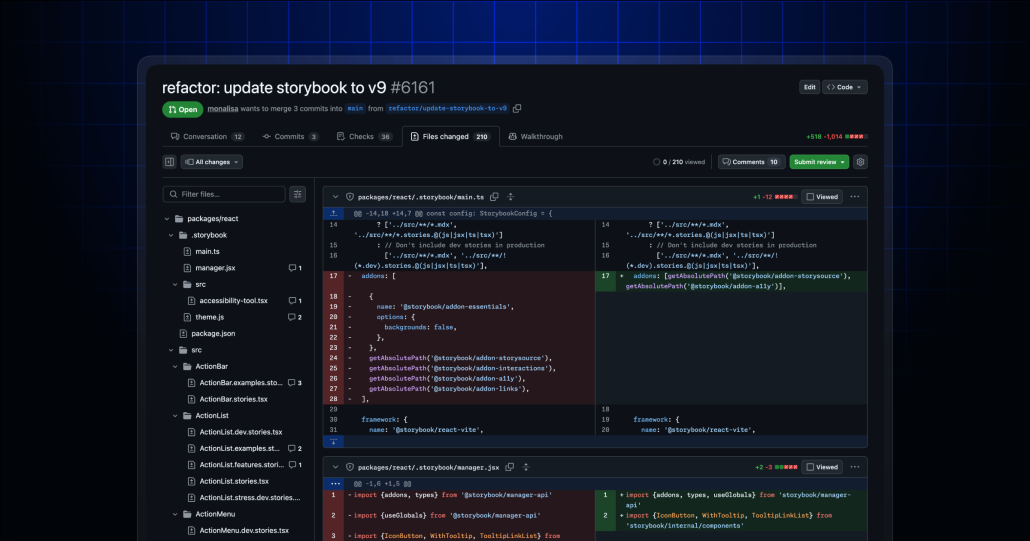
You can make that evidence mandatory rather than optional. Repository rulesets can require every configured status check to pass before anyone merges into a protected branch, and can require approval from someone other than the last person who pushed. For a founder working with agents, the second setting is the more interesting one.
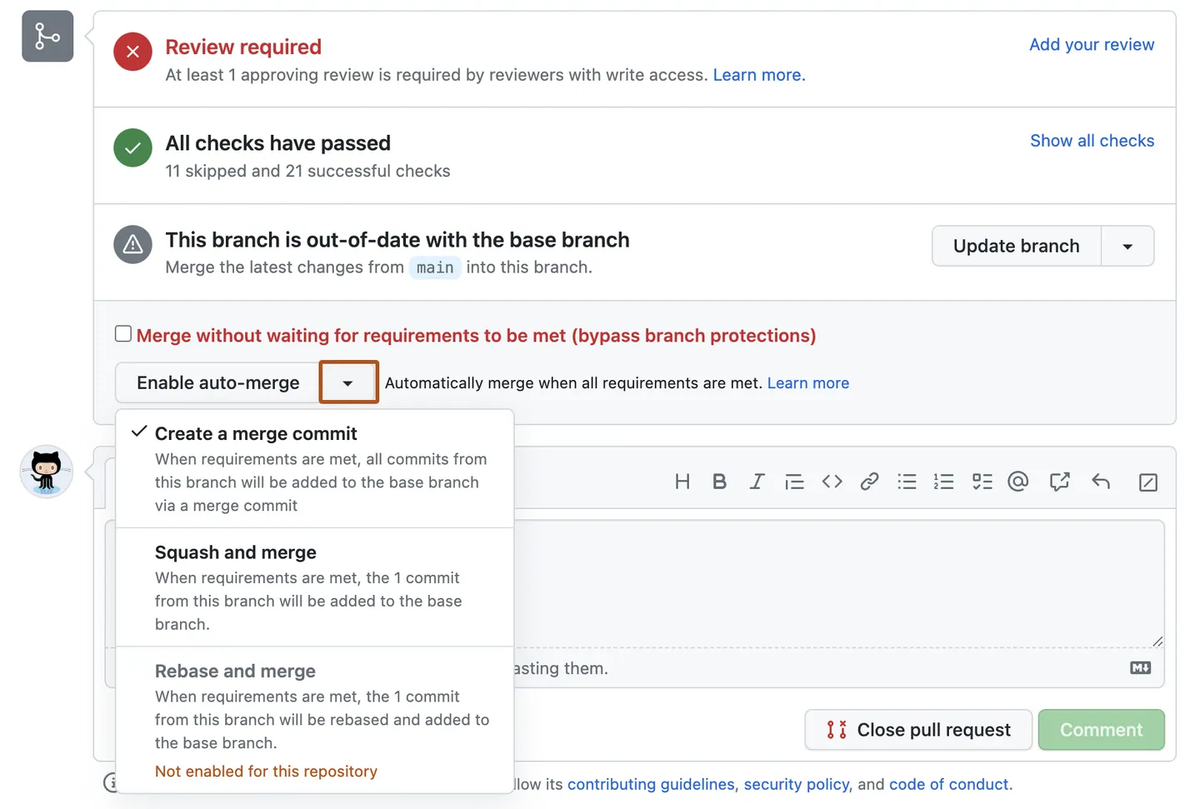
Green tests are not proof that the tests are right. They are proof the change did not break the checks you thought to write.
Decisions That Remain With People
Some things stay yours regardless of how good the agent gets: accepting risk, handling customer data, anything expensive to reverse, anything attached to a promise you already made, and hiring.
Here is the harder version of that rule. If you cannot say why the rejected option was rejected, you did not make a decision — you accepted one. It happens quietly. The plan reads well, nothing in it looks wrong, and the trade-off you never examined arrives eighteen months later as a migration.
Routing, permissions, and approval steps can be enforced by a control layer sitting between the agent and your systems, worth building once you run more than one agent. It does not change ownership: a gate you configured is still a decision you made.
Choosing a Bounded First Assignment
Four conditions make a first delegation checkable: it is reversible, one person owns it, it has a test that can fail, and being wrong costs about a day.
A worked example, illustrative rather than drawn from a client engagement: a founder wants email and Google sign-in added to an existing app. The input is the current auth code paths, the two endpoints that touch sessions, a requirement that user records stay in the existing database, and a two-week window. The agent returns two approaches — a hosted identity provider versus extending the current session logic — with migration cost and failure modes for each, then implements the approved one behind a flag, with tests for session expiry and account linking.
The founder still decides whether an external identity vendor is acceptable, reads the rollback path, and confirms the tests describe what customers were promised. That is about an hour, and it is the hour that matters.
Applying the Idea in Verdent
Verdent's Manager is built around stating an outcome rather than a task list. It defines the stages, splits them into subtasks with dependencies and acceptance criteria, and runs what it can in parallel. Finished work arrives with the plan, the files it touched, and a summary of what changed, gathered in a To Review queue; at a fork that needs a human answer it asks inline and keeps the rest of the run moving. It also carries long-term memory of your stack choices and past decisions — the same problem memory files solve for coding agents generally.
You can run more than one Manager, each with its own memory, tools, and work state, up to twenty. That separation cuts both ways: a decision explained to the planning Manager is not known to the execution one.
None of this moves accountability. To Review is a place where work waits for a person.
FAQ
Can an AI CTO assess a codebase it did not create?
Yes, given access: read permission on the repository, build and test commands that actually work, secret handling that keeps credentials out of context, and whatever conventions file the project uses. Without a runnable test suite, the result is a reading of the code, not a check of its behavior.
How should conflicting architecture decisions be reconciled?
Trace both to their source first. Decisions made in a chat session with no record are the ones that conflict, because nobody can reconstruct the constraint behind them. With decision records the reconciliation is mechanical: the newer record supersedes the older one, links to it, and states why the direction changed.
Can two AI CTO agents advise on the same repository?
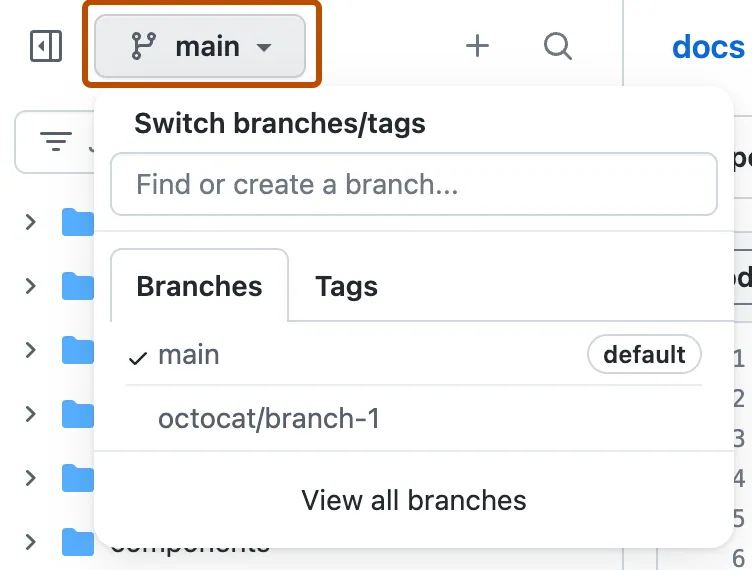
Advising is fine; editing overlapping parts of the same files at once can create merge conflicts. Git blocks one related failure mode — by default, git worktree add refuses to create a worktree for a branch already checked out in another worktree unless --force is used. Give each agent its own branch and, where practical, separate file ownership, then integrate through review.
What should a founder hand over when a human tech lead joins?
The decision records, the live flags and rollback paths, the agent's permissions and memory, and an honest list of what was approved without being fully understood. That last item is the one people skip, and it sets how long the handover really takes.
How can a founder check whether an agent used outdated dependency guidance?
Check the registry, not the model. npm outdated compares what is installed against your declared range and against the version currently tagged as latest in the registry — though that tag is a publishing choice, not automatically the newest release. Ask the agent which version it assumed, then compare against your lockfile.
Start With One Reviewable Technical Decision
Come back to the two meanings. Hiring a CTO buys judgment and accountability, and no agent sells either. Delegating to an AI CTO agent buys throughput on work you can still inspect, and the limit is your review capacity rather than the model's capability.
Pick one decision you have been deferring because it needs a technical opinion. Ask for options and their costs, write down what you chose and what you gave up, and keep the change reversible. If the review takes an hour and you can still explain the rejected option afterward, delegate the next one. If you cannot, the task was too big.