Adding a second agent does not automatically give a software team agentic AI. It gives the team another execution loop—and a coordination problem that now needs an owner.
For software teams comparing agentic AI vs AI agents, the practical boundary is this: use an AI agent as a bounded actor for a defined task; use an agentic AI system when the work needs a control layer to coordinate actors, tools, project state, approvals, and recovery. Start with one agent. Make orchestration earn its extra cost.
This 2027 selection guide is based on public product and framework material checked on September 15, 2026. It describes an engineering decision model, not unreleased 2027 features or a production benchmark.
Quick Difference for Software Teams
An AI agent is an actor: a model-driven component that can choose tools, act, inspect results, and continue within a run. Agentic AI describes the control structure around that work.
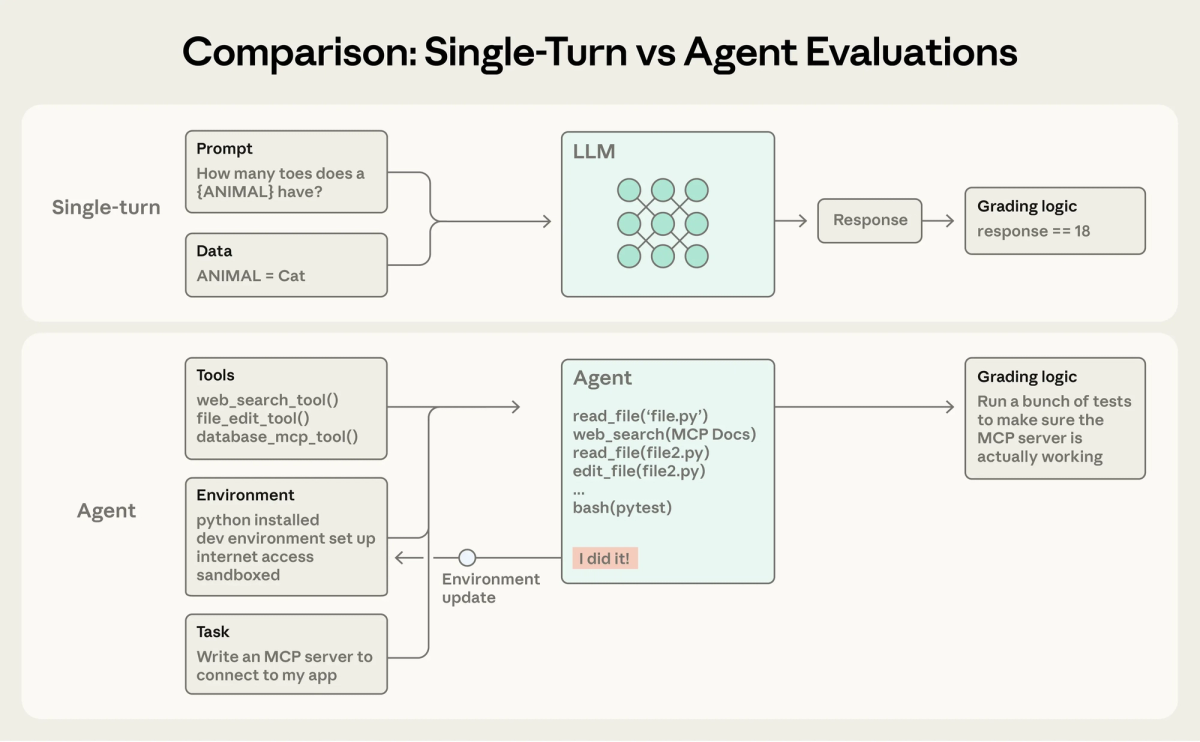
That is an operational distinction, not an industry standard. Anthropic groups workflows and agents under “agentic systems” while distinguishing predefined orchestration from dynamic agent control. OpenAI’s current agent orchestration patterns separate managers, handoffs, model-directed routing, and code-directed flow. The labels overlap; the control decisions do not.
| Engineering question | AI agent | Agentic AI system |
|---|---|---|
| Unit you operate | One actor pursuing a bounded goal | The delivery path coordinating actors, tools, state, and gates |
| Who chooses the next step? | Usually the agent inside a defined loop | A manager agent, another specialist, workflow code, or a combination |
| Best first use | One repository task with clear acceptance criteria | Work that must adapt across dependent tasks or systems |
| Main cost | Model calls, tool use, and review for one run | Those costs plus routing, synchronization, retries, state, and observability |
| Failure question | Did this actor produce an acceptable result? | Which component failed, what committed, and where can the run safely resume? |
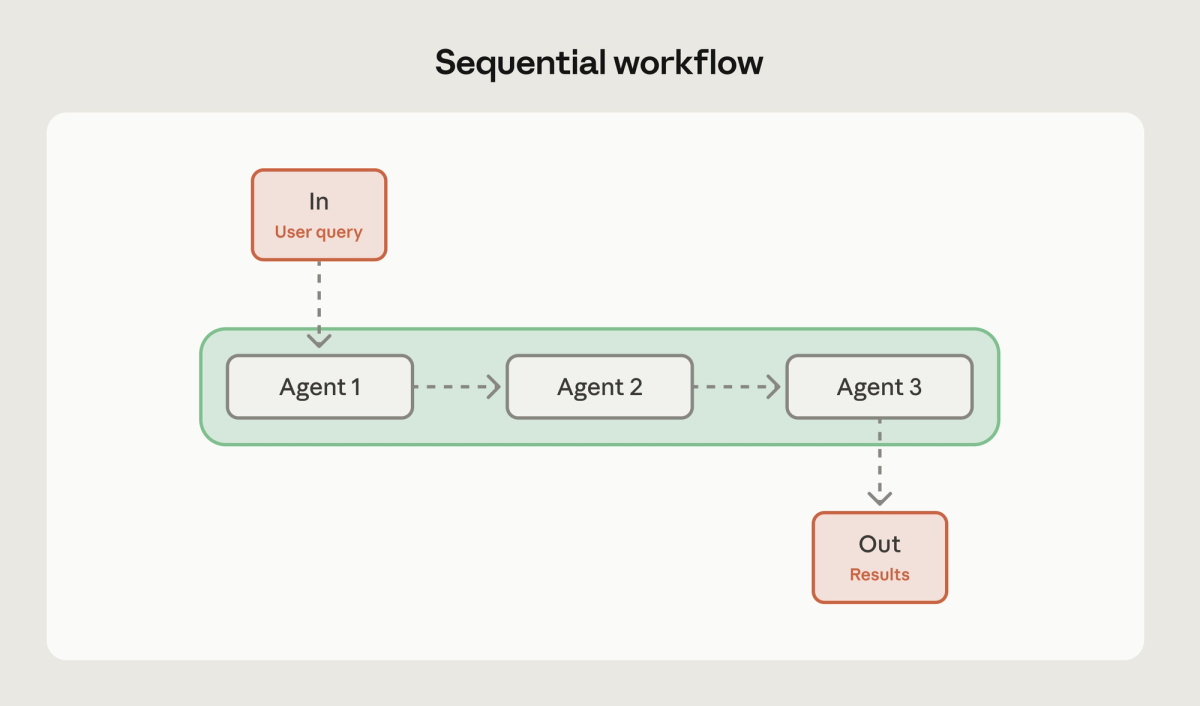
A deterministic chain of three model calls is not necessarily more agentic than one capable agent. Google’s Agent Development Kit makes this concrete: its sequential workflow runs sub-agents in a fixed order without model-controlled orchestration. “Single versus multiple” is less useful than “bounded versus coordinated.”
When You Need an AI Agent
Choose one AI agent when one owner can state the goal, constrain the action surface, and review one coherent handoff. A second actor is not free quality; someone must reconcile its context, tool path, and output.
Bounded Repository Tasks
A good single-agent task has a narrow change boundary and a visible definition of done: add validation to one endpoint, update a dependency and repair affected tests, or trace a reproducible error to a small set of modules.
Give the agent the relevant paths, exclusions, repository instructions, test command, and expected deliverable. If the agent discovers that the change also requires a schema migration or a public API decision, that is a scope escalation—not permission to redesign the task.
One agent is enough when one context can hold the goal, current evidence, and acceptance criteria without competing owners or hidden cross-system state.
Tool Use Inside a Defined Scope
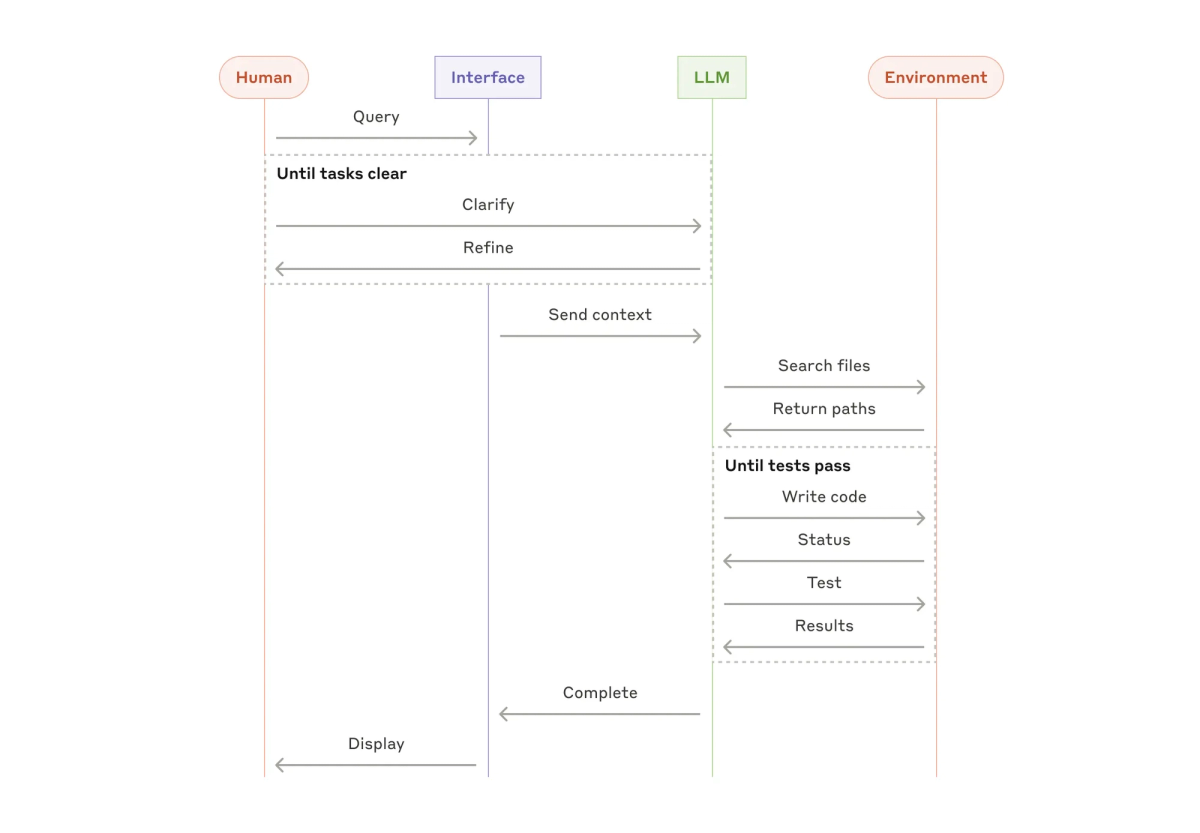
Tool access does not justify orchestration. One agent can inspect files, edit a branch, and run tests within the task’s resources.
Define the envelope outside the prompt: writable paths, network destinations, credentials, run ceilings, and approval actions. “Do not touch production” is weaker than an environment that cannot reach production. Make send, delete, publish, deploy, or access changes interruptible.
OpenAI’s current human-in-the-loop pattern shows the mechanism clearly: sensitive tool calls can pause a run, preserve its state, and resume after approval. The useful feature is not a confirmation dialog. It is that the approval applies to a specific action with recorded arguments and survives the pause.
Human Review Before Merge
The agent’s final message is a handoff, not a merge decision. Review the submitted revision, diff, executed commands, outputs, skipped checks, assumptions, and permission exceptions.
An agent-generated review is not independent evidence when the same context shaped implementation and review criteria. A specialist can improve coverage, but a human owns requirement fit and merge authority.
When You Need Agentic AI
Move toward agentic AI when coordination itself is part of the problem: decomposition, routing, handoff state, and the point where a run stops or returns to a person.
Multi-Step Planning
Multi-step planning earns orchestration when useful subtasks cannot all be known before inspection. A cross-service change may reveal client, infrastructure, and migration constraints only after separate components are examined.
An orchestrator can then dispatch bounded work and synthesize the results. Anthropic places orchestrator-worker workflows in tasks where subtasks vary with the input, such as complex multi-file coding. If the same steps run every time, ordinary workflow code is usually cheaper and easier to debug.
Cross-Tool Orchestration
Use AI agent orchestration when a deliverable crosses systems with different owners or side effects. Route each action through the correct identity and approval policy; do not hand one general credential to every agent.
Give each boundary typed input, expected output, an idempotency rule, timeout, retry class, and owner. Parallel work helps only when outputs can recombine without racing on the same file, environment, or decision.
Persistent Project Context
Agentic AI systems often need more context than one run can safely carry. The requirement is not more memory; it is scoped, versioned state.
Separate run state, task state, and durable project memory. Tool results may expire after one attempt; acceptance criteria live until closure; conventions can persist but must not outrank current evidence or cross project boundaries.
Attach provenance and freshness to retrieved context, and refresh live evidence after material changes. Persistent memory without invalidation turns yesterday’s correct decision into today’s confident drift.

Compare the Risks Before You Choose
Agentic AI is not a maturity upgrade. Adopt its larger operating surface only when adaptive coordination exceeds the added control cost.
Autonomy and Control
Multi-agent workflows may leave a manager, workers, approvals, and retries in different states. Define delegated depth, concurrency, stop conditions, and actions that fail closed.
Approval must follow the action, not the job title of the component requesting it. A reviewer agent should not gain write access merely because its name contains “reviewer,” and a handoff should not reset the permissions established for the task.
Memory and Context Drift
Every handoff can omit a constraint or carry stale material forward. Shared memory can make several agents repeat the same bad assumption, so agreement is not independent verification.
Pass the smallest complete context package: goal, revision, accepted decisions, exclusions, evidence, and output contract. After a long pause, compare saved state with current code before allowing new writes.
Security and Auditability
The security question is not “can the model call tools?” It is “which identity can perform which action against which resource, and can the team reconstruct the result?”
Capture actor, model configuration, input version, tool arguments, outputs, approvals, retries, changed artifacts, and terminal state. Use scoped credentials, isolation, redaction, retention limits, and an incident path; never log secrets merely to complete a trace.
More agents widen the attack and failure surface through delegation. They do not remove the need for deterministic checks or human acceptance.
How to Choose the Right Pattern in 2027
Begin with the smallest design that can complete the task. For one bounded change, that is usually a single agent with scoped tools and a human acceptance gate. Add agentic AI only after naming the coordination work it will perform.
Use this decision sequence:
- Define the deliverable: artifact, revision, checks, exclusions, and approving owner.
- Locate uncertainty: stay single-agent if one context can resolve it; orchestrate for independent specialties or dynamically discovered branches.
- Choose who controls flow: code for stable routing, model decisions for genuinely variable decomposition.
- Map every side effect: tool scope, credentials, approval, timeout, and idempotency.
- Design failure first: what is saved, can retry, must not replay, or falls back to a human.
- Measure accepted work: cost, elapsed time, review effort, defects, exceptions, and recovery per accepted change—not agents launched.
Verdent is one project-level agentic coding suite, not an industry definition. Its Manager material describes stages, dependencies, parallel Workers, task-attached questions, and a To Review handoff. That supports evaluating a coordinated delivery surface—not assuming every task needs multiple agents or that completed Worker output is merge-ready.
Compare one agent and the orchestrated pattern on the same task class, permissions, acceptance criteria, and review standard. If orchestration adds more reconciliation than useful specialization, remove it.
FAQ
Do vendor docs separate planner, executor, and reviewer roles?
Sometimes, but not under one shared schema. Google ADK names Code Writer, Code Reviewer, and Code Refactorer roles; Anthropic uses lead agent, subagent, orchestrator-worker, and evaluator-optimizer; OpenAI uses manager, specialist, and triage agent. Verify each role’s tools, authority, and output contract.
Can a system expose handoffs between single-agent and multi-agent modes?
Yes. OpenAI lets a manager call specialists as tools, transfer control through handoffs, or combine both. Record the active owner, context passed, permissions retained, and return condition; otherwise the team cannot tell who owns the final result.
Which products publish limits for autonomous task duration?
Published controls are not a comparable wall-clock metric. OpenAI exposes max_turns plus model and tool timeouts. Claude Code exposes --max-turns, while Anthropic’s Managed Agents publish hard session cost budgets. These bound turns, calls, or cost—not universal autonomous minutes. Ask separately about wall-clock, idle, approval-wait, retry, and spend limits.
How do systems define fallback when orchestration fails?
There is no safe universal fallback. Define it by failure class: retry a transient model call only when replay is safe; resume from a durable checkpoint after approval; route a malformed result to a typed error handler; or stop and return the preserved artifacts to a human. OpenAI’s current retry guidance blocks unsafe replays by default, which is the right principle for tools with side effects.
What terminology do vendor docs use for agentic workflows?
Common terms include agentic system, workflow, routing, orchestrator-worker, evaluator-optimizer, manager, agents-as-tools, handoff, subagent, sequential agent, and parallel agent. These terms describe different choices about control flow and ownership. Compare the running architecture—who decides, acts, remembers, approves, retries, and returns the result—rather than matching a vendor’s label to a supposedly universal category.
Conclusion
The useful answer to agentic AI vs AI agents is not “more agents for harder work.” Use one AI agent when a bounded actor can complete a repository task under fixed tools, evidence requirements, and human review. Use an agentic AI system when the team truly needs adaptive decomposition, cross-tool coordination, persistent scoped state, and explicit recovery across several actors.
By 2027, the stronger buying question will be less impressive and more revealing: if the orchestration stops halfway through, can your team see what happened, prevent unsafe replay, and finish or discard the work without guessing? If not, the system has more autonomy than control.