Changelog

Stay up to date with the latest improvements and features.

Verdent Desktop

Bug Fixes

Fixed a series of bugs and improved the overall experience.

Model Update: Kimi K2.6

Kimi K2.6 improves long and complex coding tasks, with more reliable results across languages like Rust, Go, and Python, and areas such as front-end, DevOps, and performance optimization. It can turn simple prompts into complete interfaces with structured layouts, interactive elements, and animations, while generating more consistent visual assets. It also extends to simple full-stack workflows, supporting basic authentication, user interaction, and lightweight database operations.

Meet Verdent Manager

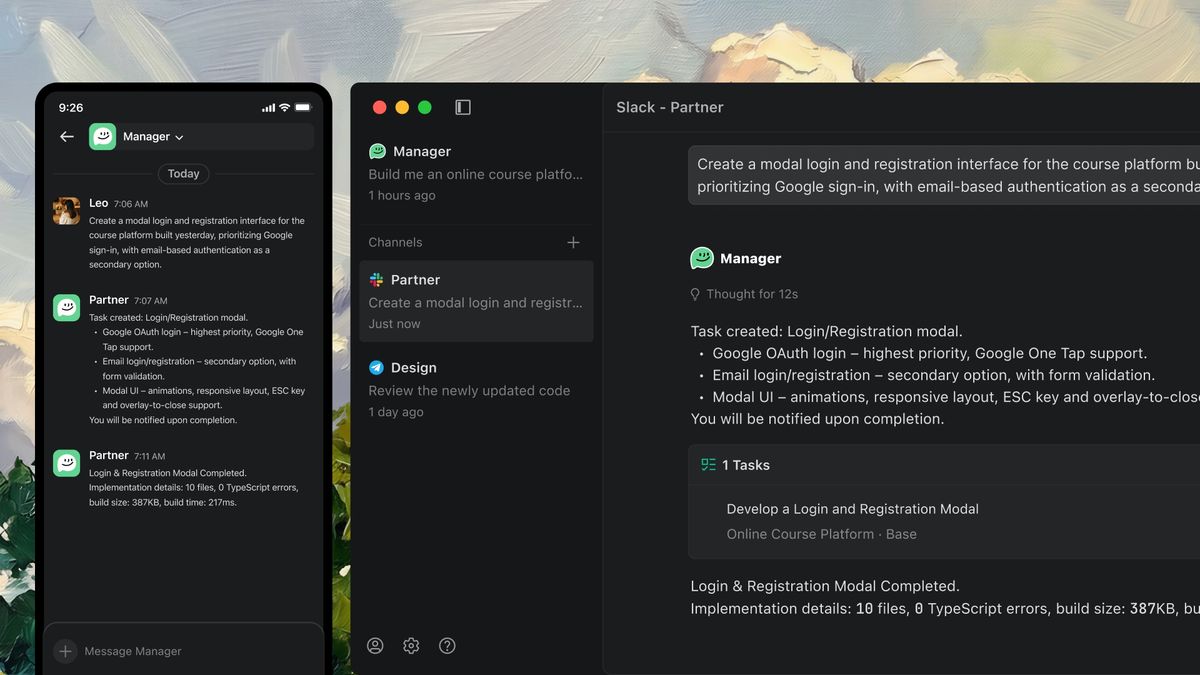
Verdent Manager is a new feature built to take work off your plate. It does more than help with tasks. From planning and execution to follow through, it acts more like an AI technical cofounder that can keep projects moving without needing your constant supervision.

Let Manager Handle the Complexity

Manager keeps your projects and tasks in one place, so work stays organized and nothing slips through the cracks. Give it a goal, and it breaks the work into clear next steps, runs tasks in parallel, and updates progress as things move. You can always see what is in motion, what is blocked, and what is done without chasing updates or jumping between tools all day.

Make It Work the Way You Work

Most tools make you adapt to their workflow. Manager adapts to yours. With Pulse, Verdent can turn your tasks and instructions into the right view for the job, whether that is a simple board, a progress dashboard, or a more structured project view. You can also bring your own API keys or agents to control cost and execution. Manager keeps track of your project, your standards, and how you like things done, so the more you use it, the more naturally it works with you.

Keep Work Moving When You Step Away

Work does not have to stop when you are away from your desk. Send a message from Slack or Telegram, and Manager keeps things moving. It can turn requests into scheduled or automated workflows, execute across tools like GitHub, Notion, Stripe, and Supabase, and report back with results. Whether you are in meetings, commuting, or asleep, your projects can keep moving forward.

1

Model Update: Opus 4.7

Opus 4.7 is the latest model in the Claude Opus family and is optimized for long-running, asynchronous agent workflows. It extends the coding and agentic strengths of Opus 4.6 with stronger performance on complex, multi-step tasks and more reliable end-to-end execution.

With Opus 4.7 in Verdent, planning becomes sharper — breaking down ambiguous requirements into structured, actionable steps with fewer missteps. Code reviews catch more edge cases and produce more specific, contextual feedback. Long-running tasks stay on track across dozens of tool calls without losing coherence or drifting from the original goal. Whether you're orchestrating a multi-file refactor, running a deep audit, or iterating on a complex feature — Opus 4.7 delivers results you can trust with less hand-holding.

Performance & Stability Update

  • Improved overall performance for a faster and smoother experience
  • Fixed a series of bugs to enhance system stability
  • General improvements to enhance overall user experience

More Control, More Flexibility

Eco Mode

You can keep working without spending credits. Verdent now offers Eco Mode—a lower-cost option that lets you continue your workflow using efficient models at zero credit cost. It's designed for longer sessions, iterative tasks, and exploratory work. Just toggle it from the model selector anytime—no setup needed.

BYOK (Bring Your Own Key)

You can use your own API keys for full control over model usage and cost. Verdent now supports Anthropic, OpenAI, and OpenRouter as providers. Add your key in Settings → Models → Configure Models. BYOK models appear alongside built-in models in the chat selector, presets, subagents, and reviewer—so you can switch seamlessly without changing your workflow.

Dashboard Upgrade

Your credits are now updated in real time, with clearer and more detailed breakdowns.

Smarter Workflow, Zero Friction

Smart Suggestions

You get smarter guidance on what to do next. Building on prompt suggestions after task completion, Verdent now proactively recommends product features during and after your workflow—such as Multi-Model Plan, Skills, New Task, and Task Changes. You don't need any setup; Verdent automatically suggests the best actions based on your current task, helping you move faster and reduce decision-making overhead.

SSH Remote Connection Support

You can connect to remote servers without switching tools. Run, debug, and manage tasks directly within Verdent, keeping your workflow seamless and efficient.

UI Layout Enhancements

You get a smoother and more intuitive experience. The overall layout is clearer, panel controls are more flexible, and the personal center and shortcuts are easier to use—so you can stay focused on your tasks.

Improved Onboarding

You can get started faster with fewer mistakes. The installation flow and onboarding experience have been improved, with in-product guidance for key features to help you quickly understand and use Verdent more effectively.

Bash command experience

Cleaner Bash command styling for clearer task flows, plus improved command interception

Subscription Streak Bonus

You’ll now earn bonus credits every time you renew your subscription.

  • Each renewal increases your Subscription Streak
  • Higher streak → higher bonus (up to +20%)
  • Bonus applies to your subscription credits each billing cycle
  • If your subscription ends, your streak resets

Model Update: Minimax M2.7

Verdent supports Minimax M2.7, optimized for complex tasks requiring coordination across dozens of skills. It reliably handles task decomposition and execution in long, multi-step Agent workflows. Featuring Agent Teams, Tool Search, and various Agent scaffolding capabilities, it makes building complex multi-Agent systems easier. In real-world engineering scenarios, it excels at log analysis, bug localization, code refactoring, and demonstrates significantly enhanced multi-role collaboration and role-playing capabilities.

Multi-Repo & Multi-Model Workflows

Multi-Repo Support

You can now open and manage multiple repositories within a single project. Verdent lets you view and edit code across frontend, backend, and service repositories in one workspace, while each repository keeps its own Git history and commits. This makes cross-repository development much easier and keeps your entire project moving forward together.

Multi-Model Compare

Run multiple models on the same task simultaneously. Verdent generates multiple outputs side by side, making it easy to compare results and evaluate different approaches. This helps you quickly identify the best response, improve decision-making, and get more reliable outcomes for complex tasks.

Multi-Model Planner (Subagent)

Users can directly invoke the @Mult-Model Planner subagent to actively run multi-model planning. This allows complex tasks to benefit from multiple models during the planning stage for stronger reasoning and better task decomposition.

GPT-5.4 Support

Verdent now supports GPT-5.4, a flagship model designed for professional work. It combines advanced reasoning, strong coding capabilities, and agentic workflows to handle complex tasks across development tools and office environments.With improved problem-solving ability and deeper context understanding, GPT-5.4 can plan multi-step tasks, write and analyze code, and coordinate tool usage more effectively. This makes it well suited for workflows such as code generation, research, debugging, documentation, and task automation.Overall, GPT-5.4 helps users complete complex work faster while maintaining higher reliability and better output quality.

Verdent Team Now Available

Verdent Team

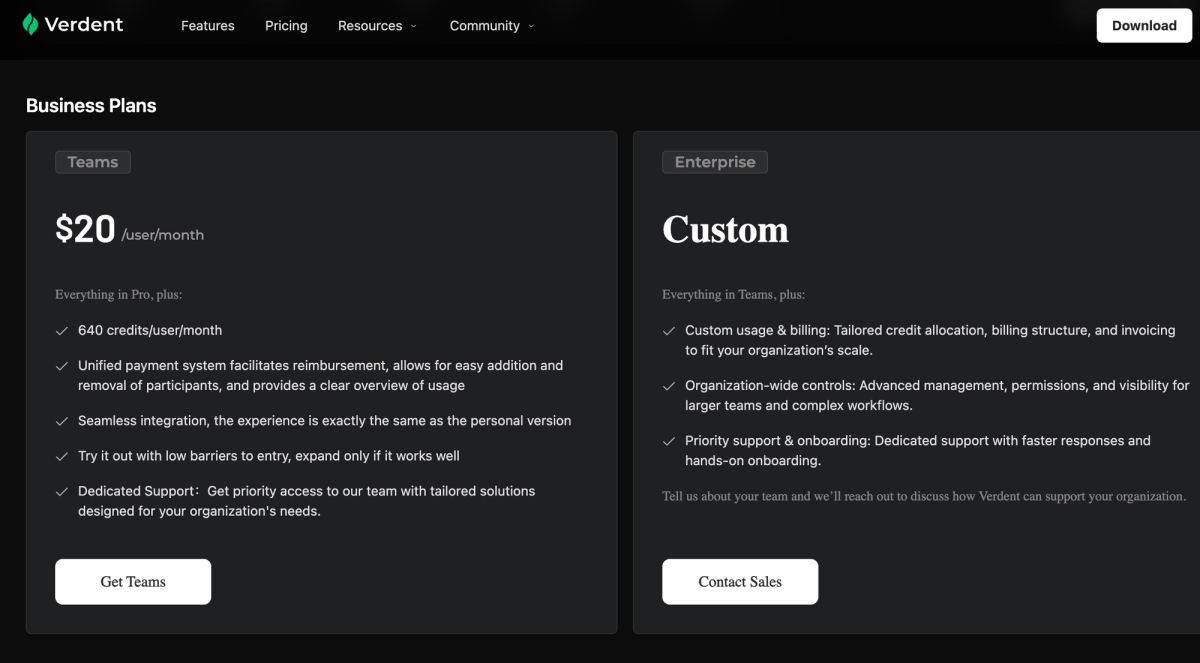
Pay once and manage your team in one place: a single account handles invoices, payments, and seats that scale automatically, track overall and individual usage, manage credits per seat with a shared pool, and keep access clean as the team evolves — all with no long contracts or complicated setup.

1

Terminal Copy and "Add to Chat" Support

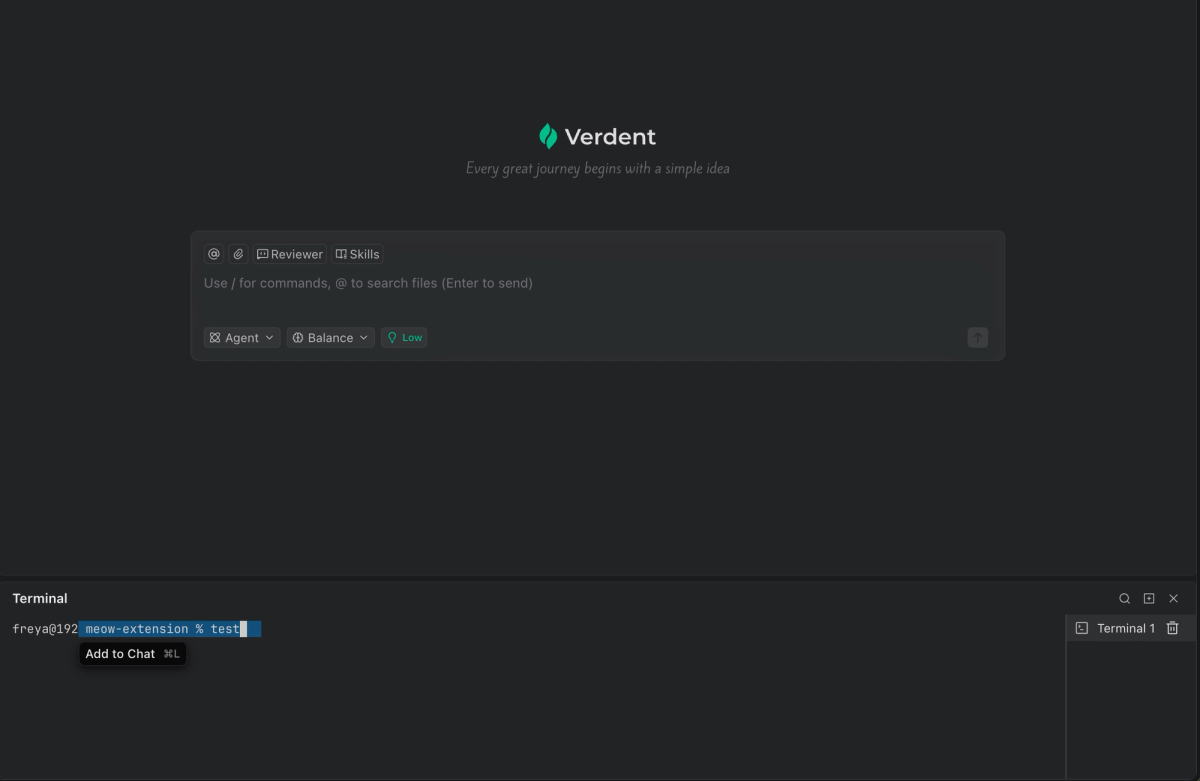
You can now directly copy content from the terminal output, improving debugging and code workflow efficiency. Easily insert terminal output into the chat with one click. This reduces manual copy-paste steps and streamlines troubleshooting and collaboration.

2

Enhanced Review Parallel Layout

Improved the visual structure and layout of multi-model parallel views, making comparisons clearer and analysis more intuitive.

Smarter Multi-Model Planning & Review

We've upgraded the overall capabilities of Multi-Model Plan and Code Review to make complex tasks smarter and more controllable.

Verdent Review: #1 in AI Code Review

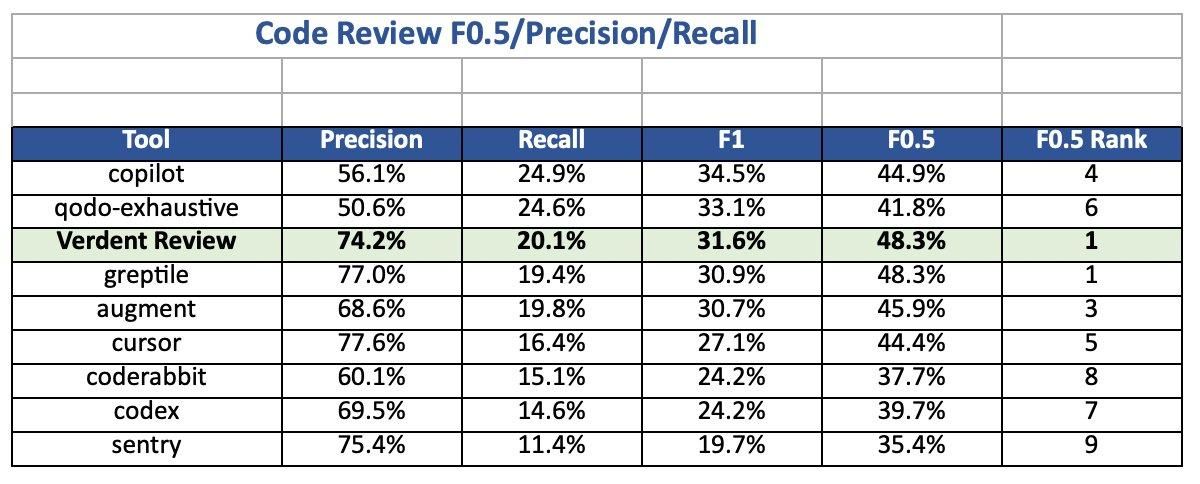
We benchmarked 9 leading AI code review tools on precision and recall. Verdent Review comes out on top, achieving #1 ranking on F0.5, with an impressive 74.2% precision while maintaining 20.1% recall. This means Verdent Review is highly accurate in identifying real issues, effectively reducing false positives and ensuring developers spend less time investigating unnecessary problems—thereby enabling more efficient and reliable code reviews.

1

Intelligent Triggering for Multi-Model Plan & Review

You no longer need to manually enable multi-model mode. Verdent automatically determines whether multi-model collaboration is required for planning or code review based on task complexity. Specifically, when code changes become more complex, Verdent will intelligently recommend enabling Multi-Model Review to ensure more comprehensive analysis and more reliable decisions. When you select the Performance configuration, the system will automatically invoke the Multi-Model Plan tool based on task complexity.

More Powerful Review Customization

We've enhanced the customization capabilities of Code Review and introduced a brand-new Review Settings page. For optimal results, we provide a preset best-in-class review model while balancing performance and cost based on your needs. You can also customize a dedicated model specifically for review.The independent Multi-Model Review toggle lets you enable cross-model review for complex code scenarios, improving coverage and rigor. Additionally, you can define custom Review Rules—such as coding standards, security checks, and performance optimization guidelines—ensuring that code review aligns with your team's standards, maintains consistency across contributors, increases review efficiency, and reduces subjective or ad-hoc feedback.

Model Update: GPT-5.3-Codex

Verdent now supports GPT-5.3-Codex. Built on the programming capabilities of GPT-5.2-Codex and enhanced with GPT-5.2’s reasoning and domain knowledge, GPT-5.3-Codex delivers about 25% faster performance and supports long-running research tasks and tool-driven execution. It provides real-time guidance while maintaining context and extends beyond a traditional code assistant into a more comprehensive AI helper. It is not just a coding model, but also a tool to assist developers and professionals with a wider range of tasks on a computer.

Model Update: Gemini 3.1 Pro

Verdent now supports Gemini 3.1 Pro —the most advanced reasoning Gemini model, built to tackle complex, multi-step problems with strong analytical depth.With its powerful long-context capabilities, Gemini 3.1 Pro can comprehend vast datasets and synthesize information across multiple sources — including text, audio, images, video, PDFs, and even entire code repositories. This makes it especially well suited for large-scale debugging, research-heavy workflows, system design, and cross-modal knowledge tasks.Now available in Verdent, you can leverage Gemini 3.1 Pro for deeper reasoning, broader context understanding, and more reliable execution across demanding workflows.

Model Update: Claude Sonnet 4.6

Verdent now supports Claude Sonnet 4.6 — the most capable Sonnet model to date. Sonnet 4.6 delivers a full upgrade across coding, computer use, long-context reasoning, agent planning, knowledge work, and design. With Sonnet 4.6 in Verdent, you can plan more effectively, code more reliably, and run parallel workflows with greater consistency and execution quality — all while keeping the same credit cost as Sonnet 4.5. In this release, Claude Sonnet 4.6 is now the default model for Agent and Plan in Verdent. The Sonnet 4.6 1M context window (Beta) is also supported. This upgrade brings Opus-level performance to more everyday workflows — without increasing your credit usage.

Less Setup, More Momentum

Model Update: MiniMax M2.5

  • MiniMax M2.5 is now available in Verdent.It’s strong in coding, Excel workflows, deep research, and document summarization, with fast and efficient reasoning.You can now select MiniMax 2.5 in your model settings.

Enhanced Document Support

  • Stronger native support for PDFs, PPTs, Excel, and Word files. Generate, read, and process common document formats more reliably — making Verdent more capable in real-world workflows.

Next Action

  • You always know what to do next. You get intelligent next-action prompt recommendations directly in the feed, so you don't stall wondering "what's next?". This cuts decision fatigue and helps you move tasks forward faster and with better outcomes.

Skills Marketplace

  • Start real work immediately — no setup tax. Install curated Skills from the new Skills Marketplace with one click and activate them directly from the input box. Less configuration, more actual progress.

Task tagging & organization

  • Keep complex work organized and easy to find. Tag tasks, group them, and quickly filter them in the chat list. No more endless scrolling or mental bookkeeping when juggling multiple threads.


Simplified Workspace Creation

  • Create a Workspace without Git if you prefer. You can now start from an empty Workspace and add structure later — more flexibility, less ceremony.

Core experience improvements

  • Code indexing upgrades: Add an “Always Allow” option for code indexing and a new visual Verdent Ignore, reducing permission friction and giving you clearer control over what Verdent can read.
  • Mermaid diagrams are now supported in the Task, with one-click fullscreen view and live code editing + preview
  • Clear, actionable alerts when low disk space causes runtime issues, helping you fix problems faster

Model Update: GLM-5

GLM-5 is now available in Verdent. Built for system-level engineering, GLM-5 excels at long-running tasks that require sustained reasoning and precise execution across complex codebases. It aligns closely with Verdent’s support for long-running, asynchronous, and parallel execution, making it well suited for workflows such as system architecture design, deep debugging, and end-to-end automation. In these scenarios, the model must analyze dependencies, carefully follow execution paths, and iterate reliably across parallel steps without drifting—making GLM-5 a strong choice for production-oriented, large-scale engineering problems.

Smarter Reviews, Stronger Plans

Multi-model Code Review

  • Code Review helps you catch issues earlier and fix them faster, reducing rework and release risk. Verdent uses multi-model cross-review to examine code from multiple perspectives, covering logic errors, edge cases, and potential risks for more accurate and reliable results. After the review, you can auto-fix common issues with one click, batch-resolve multiple findings, and review everything directly in the editor with minimal context switching.
  • Internal benchmarks show Verdent outperforms Codex Connector, with 3.5× higher issue detection and a 73.0% Final Resolve Rate, compared to Codex’s 66.0%.

Multi-model Planning

  • When generating a plan, Verdent no longer relies on a single line of reasoning. Instead, it orchestrates multiple leading AI models to think in parallel, bringing together different perspectives, assumptions, and trade-offs. The resulting plans are more robust, more balanced, and better prepared for real-world complexity. It’s like having a senior engineering team propose multiple viable approaches at once—so you can compare options, understand risks upfront, and confidently choose the best path forward.

Simplified Workspace Creation

  • We've streamlined task sending creation when no project is open, helping you move into real work faster. You can now send tasks even without opening or selecting a project path, and Verdent will automatically recommend a sensible default.

Concurrent Edit Conflict Awareness

  • When different tasks within the same Workspace modify overlapping regions of the same file, Verdent automatically detects potential conflicts and prompts the relevant agents to re-check the affected code. This helps prevent silent overwrites in parallel development, reduces hidden risks, and lowers the cost of late-stage conflict resolution.

Core Experience Improvements

  • The code editor now supports full-screen mode with a new full-screen toggle, enabling focused reading and editing and easy exit when needed.
  • The chat input supports up and down arrow keys to quickly recall previous commands, reducing repetitive typing during iterative workflows.
  • Search has been enhanced to support keyword search across repository files directly within the editor, with fast open and navigation.
  • New users are now automatically matched to their preferred language upon first activation, reducing setup friction and improving onboarding.

Now Supported: Opus 4.6

Opus 4.6 is now available in Verdent. It’s noticeably better at long-running tasks and careful code review — the kind where you want the model to stay focused, follow the plan, and not drift halfway through a big change.

With support for a 1M-token context, Opus 4.6 can reason across large repos and long histories more reliably, making it a strong fit for Verdent’s plan-first workflows and long-running, consistent execution — helping it deliver high-quality, reliable outputs at its full potential.

Pricing Note: Opus 4.6 follows the same pricing as Opus 4.5, with no additional charges.

Stay in Flow. Trust the Output.

Code Intelligence

Spend less time searching and debugging, more time building. Powered by the Language Server Protocol, Verdent gives you instant go-to-definition, accurate reference lookup, and fast symbol search directly in the editor. After every edit, it automatically detects type errors, missing dependencies, and syntax issues, so problems are caught early—before they slow you down.

Message Queue

To make collaboration with Agents smoother, we've introduced Message Queue. You can insert new tasks or add context at any time without interrupting execution. Verdent automatically understands the context and dynamically adjusts the execution path, keeping complex tasks moving continuously—no dropped balls, just a smoother flow.

Kimi 2.5 Support

Verdent now supports Kimi K2.5 — a native multimodal model pretrained on ~15T text and visual tokens, delivering top-tier coding, vision, and agent-swarm intelligence.

Code Review Upgrade (Preview)

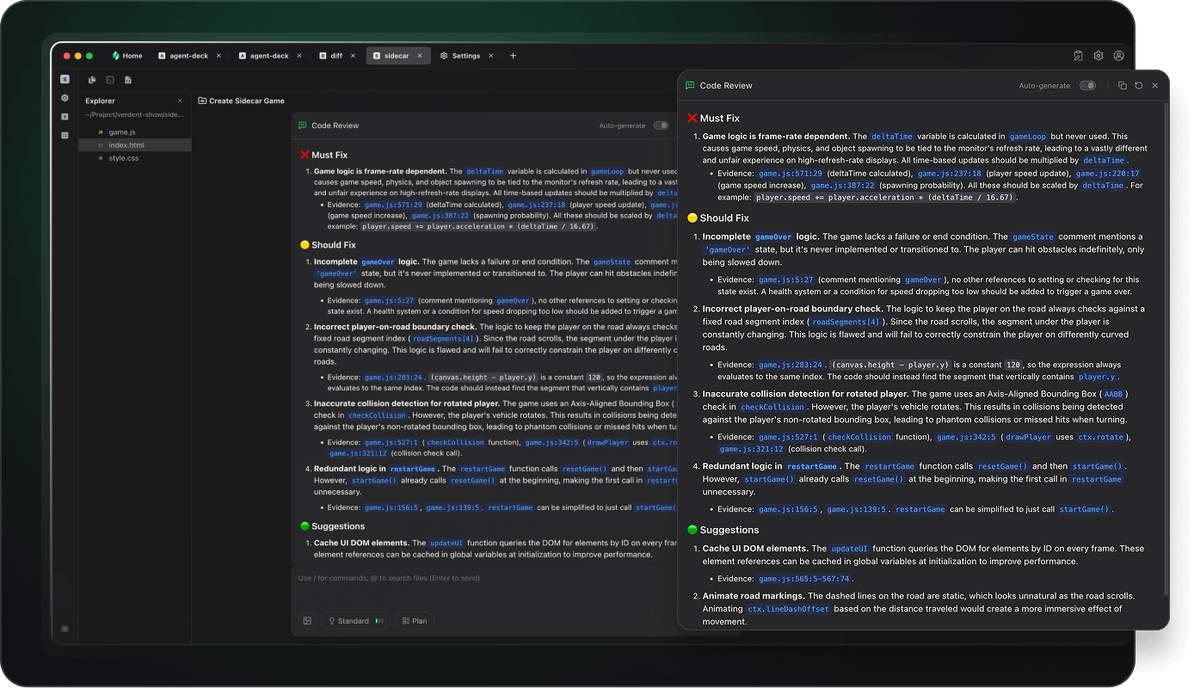
To more reliably validate task results, we've launched a new Review Subagent this week. Using an agentic approach, it intelligently selects three top-tier models (Gemini 3 Pro, Opus 4.5, and GPT 5.2) to cross-review the same task, validating logic, edge cases, and risks from multiple perspectives for more robust conclusions. We've also rebuilt the interaction experience: one-click Fix, batch fixes via multi-select, and an editor view that lets you easily inspect the Code Review’s reasoning and execution process.

Smarter Memory

We improved how Verdent remembers long and complex tasks. Important things like your plans, todos, files, and questions are always kept, while unnecessary details are automatically cleaned up—so context stays clear and reliable, even in long sessions.

Drag & Drop File Import

Simply drag external files into the file tree or editor to add or open content instantly. No manual import steps, just a faster path to getting real work done.

Build Faster with Better Context & Planning

Codebase indexing

Get faster, more accurate results while using 5–10% fewer credits. With your permission, Verdent indexes your codebase to focus on the most relevant context, helping it understand your project better. Codebase indexing is free for a limited time, and your code remains secure and private. Learn more in our Privacy Policy: https://www.verdent.ai/privacy

Skills

Consistent results, less effort. Skills turn best practices into reusable abilities, enabling Verdent to automatically follow your standards and execute complex coding and workflow tasks with predictable, reliable outcomes.

Plan Rules

Generate higher-quality Plans instantly with built-in rules for Frontend, QA and Product Manager workflows. You can also create custom rules to match your personal or team preferences, giving you full control over how Plans are structured.

Duplicate Task

Easily explore alternative implementations without impacting your current work. You can duplicate any point in a conversation into a new Workspace, carrying over the full context and code for safe experimentation.

Pin & Mark as Unread

When you have a lot of tasks, some things just can't get buried. You can use Pin to keep important tasks at the top — always visible, always easy to reach. When you’re done, just unpin it, and everything falls back into place.And when something isn’t done yet, Mark as Unread lets you mark a task to check later, so nothing important gets forgotten.

Experience improvements

A series of bug fixes and basic experience improvements, such as support for changing code theme colors, file drag-and-drop, and other features.

1

Ask Anything. Plan Better. In Your Language.

AI Bar

AI Bar lets you ask Verdent anything, anytime. Just highlight what you're looking at and keep going. You can drop it into your current task or start a new one without losing focus. Inside a Plan, you can ask about anything that’s unclear or let Verdent adjust and refine it for you. You can also split a Plan into multiple workspaces and work on them in parallel, all without affecting your codebase. It's safe, flexible, and designed to keep you moving instead of slowing you down.

Plan Mode Upgrade

Plan Mode has been upgraded with a smoother, more intuitive interaction experience. You can now visualize your plans using Mermaid diagrams, quickly @mention a Plan, and move through common actions with far less friction. The flow from planning to execution now feels faster, clearer, and more natural.

Multi-language Support

Verdent now supports English, 简体中文 (Chinese Simplified), 繁體中文 (Chinese Traditional), 日本語 (Japanese), 한국어 (Korean), Español (Spanish), Português (Portuguese), Français (French), Deutsch (German), Italiano (Italian), and Türkçe (Turkish) — so you can work in the language that feels most natural to you.

Model Preset

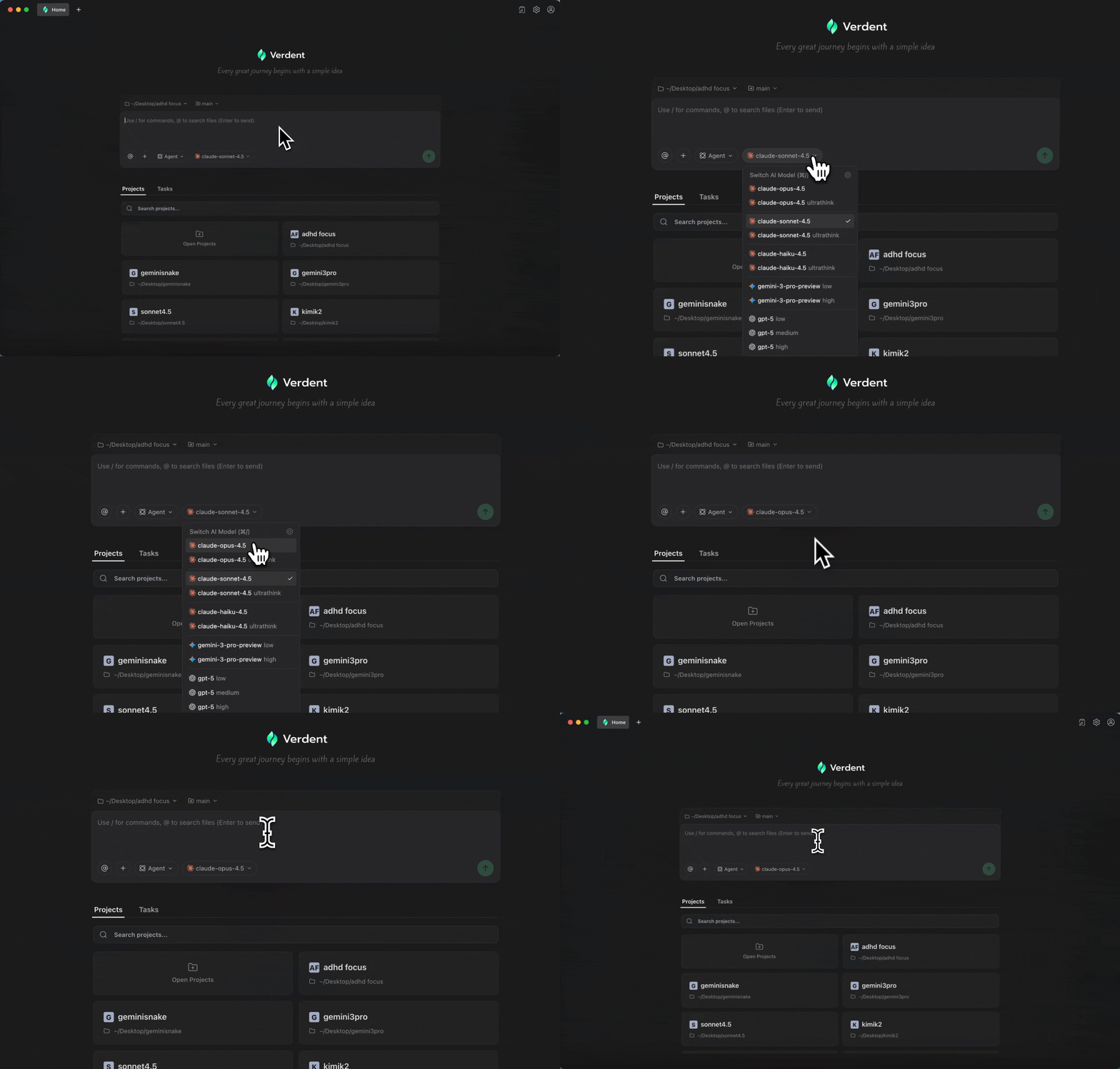
Model selection is now easier with Model Presets. Quickly switch between preset configurations for different scenarios — for example, best performance or a balanced mode. Each preset clearly shows credit usage and details. Advanced users can also create custom presets. Additionally, you can choose which model or preset is used by default in your chats.

User Interface Updates

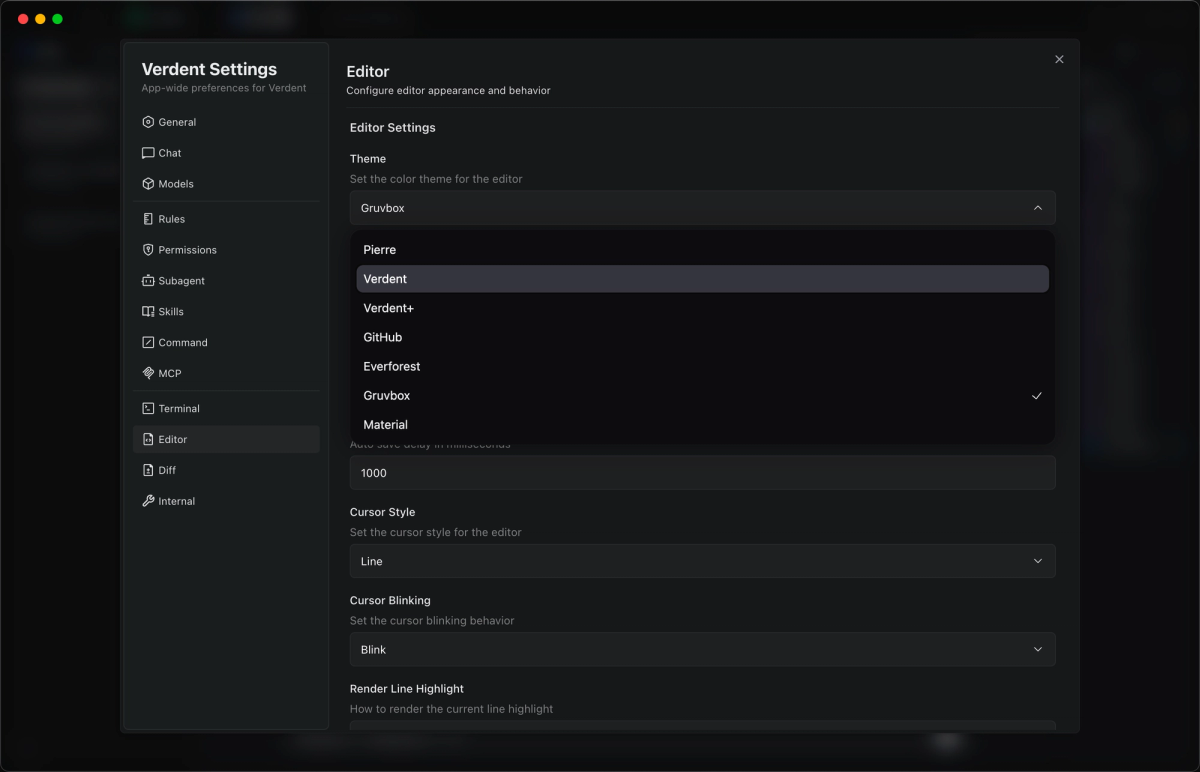
Both Light and Dark modes have been refined, featuring a more compact layout, a clearer interface, and improved visual hierarchy for a smoother experience.

Bug fixes

This release also includes a series of bug fixes and general usability improvements.

New Models, Better Performance

GLM-4.7 Now Available

You now have access to GLM-4.7, delivering stronger agentic coding, tool use, UI generation, and complex reasoning. With reliable think-before-act execution, it’s built for more structured and predictable workflows — fewer surprises, more results.

Improvements

A series of bug fixes and stability enhancements for a smoother, more reliable experience.

GLM 4.7

Turn Ambiguity into Reliable Plans

Requirement Clarification in Plan Mode

In Plan mode, Verdent now proactively asks clarifying questions when requirements are ambiguous. Based on your initial proposal, Verdent fills in missing details, identifies potential risks, and organizes everything into clear, executable, and deliverable plans.


Full-Screen Plan Editor with Execution Model Selection

Plan editing is now available in a full-screen, focused editor, making it easier to review and refine complex plans. You can also conveniently choose different models to execute the Plan, depending on your needs.


Clearer Rollback Impact Preview

Before rolling back, Verdent now clearly shows which files will be affected, helping you understand the impact upfront and avoid accidental changes.

Duplicate Freely, Merge with Confidence

Duplicate Chat

Duplicate a conversation from any point and continue without losing context. Safely explore alternatives, try new ideas, or take a different direction without starting over.

One-Click Git Installation

New to Git? Get up and running with a single click. Verdent automatically guides you through Git installation, removing setup friction so you can start building right away.

AI-Assisted Merge Conflict Resolution

Merge conflicts are now visualized clearly, with AI-assisted suggestions to help you resolve conflicts faster and with more confidence.


Improvements & Fixes

  • Workspace keyboard shortcuts are now shown at the top, so switching contexts is faster and more discoverable.
  • Diff View Experience improvements
  • Windows Experience improvements

Turning Remote Branches into Workspaces

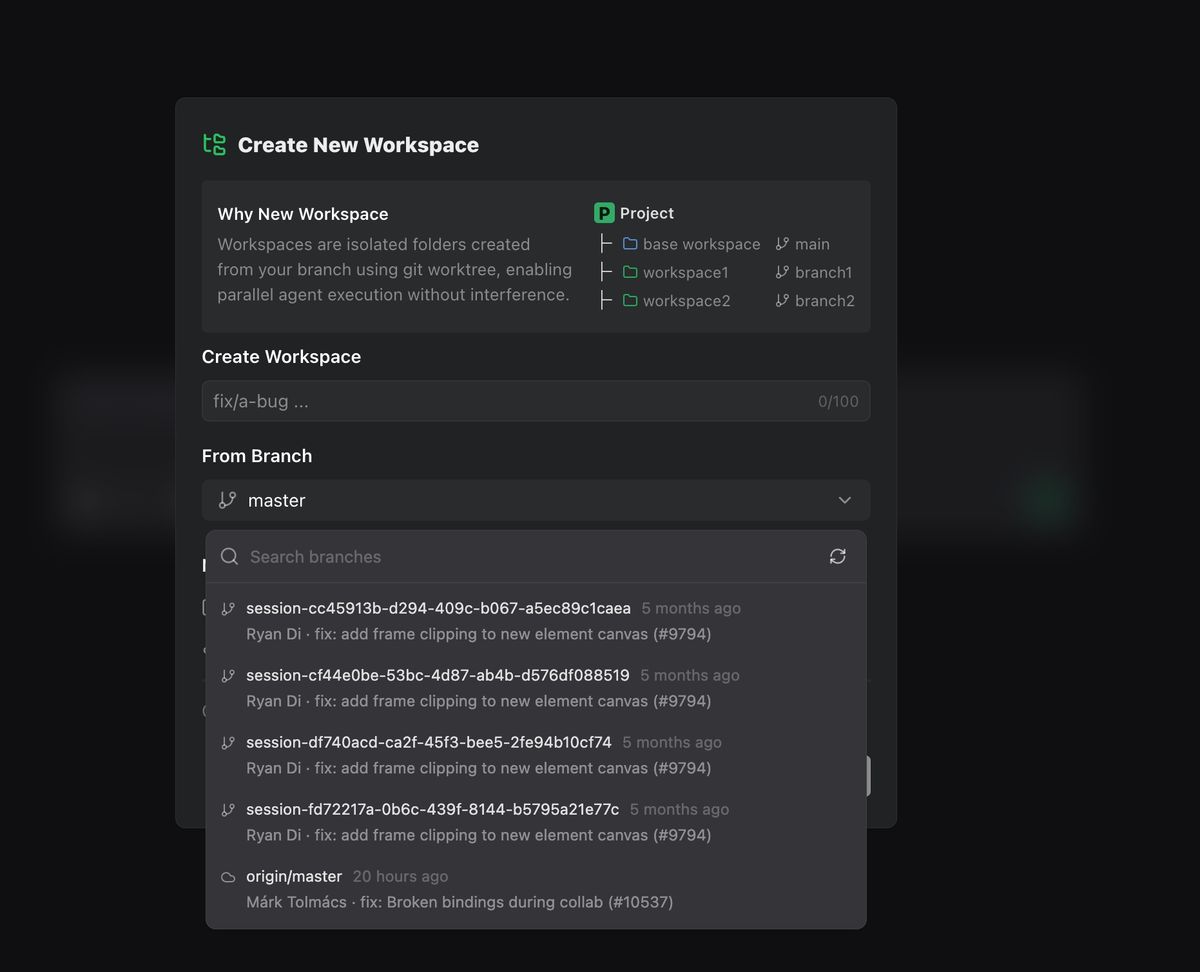
Create workspaces directly from remote branches

You can now pull a workspace from an existing remote branch, making it easier to explore, review, or continue work across branches.

remote workspace

DiffLens & Code Review Improvements

Smoother interactions and clearer visual feedback during review generation.


Better file navigation experience

Opening a file now automatically reveals its location in the file tree, making it easier to stay oriented in larger projects.

Diff, Plan, and Workspace Experience Improvements

Improvements

  • Diff View Experience Upgrades: Improved click-to-jump navigation, smoother scrolling, and more responsive expand/collapse interactions for large diffs.
  • Plan Window Enhancements: Added syntax highlighting for the Plan preview window.
  • Workspace Navigation: Supported cmd + number shortcut to quickly switch between workspaces.

Bug Fixes

  • Multiple stability and reliability improvements across Plan, file operations, and UI components.
  • More consistent retry and error handling for smoother workflows.

Clearer Conversations, More Structured Plans

Conversation Flow Improvements

We refined the entire conversation flow during task execution. Each action is now grouped and displayed more clearly, allowing you to see every step of the agent’s process and results at a glance. Tasks become easier to follow, faster to scan, and more transparent.

Structured & Readable Plan Layout

Plan Mode now uses a more structured, readable layout that makes every plan easier to understand. Goals, reasoning, and execution steps are neatly organized, helping you review and adjust plans more confidently before running them.

Built for parallel tasks, clean isolation, and seamless multitasking.

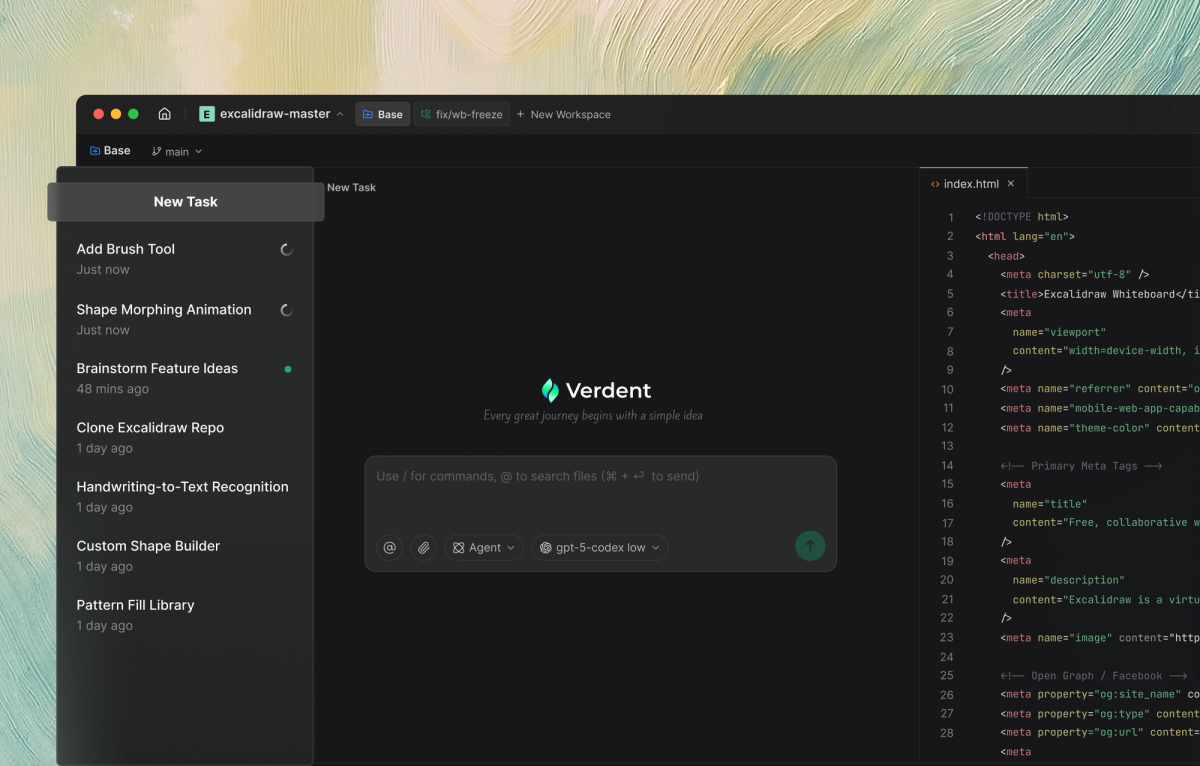
Introducing a fully redesigned workspace engine that transforms how Verdent handles context, parallelism, and long-running tasks. Developers can now build features, debug issues, and explore ideas all at once — without interference, without losing context, and without breaking flow.


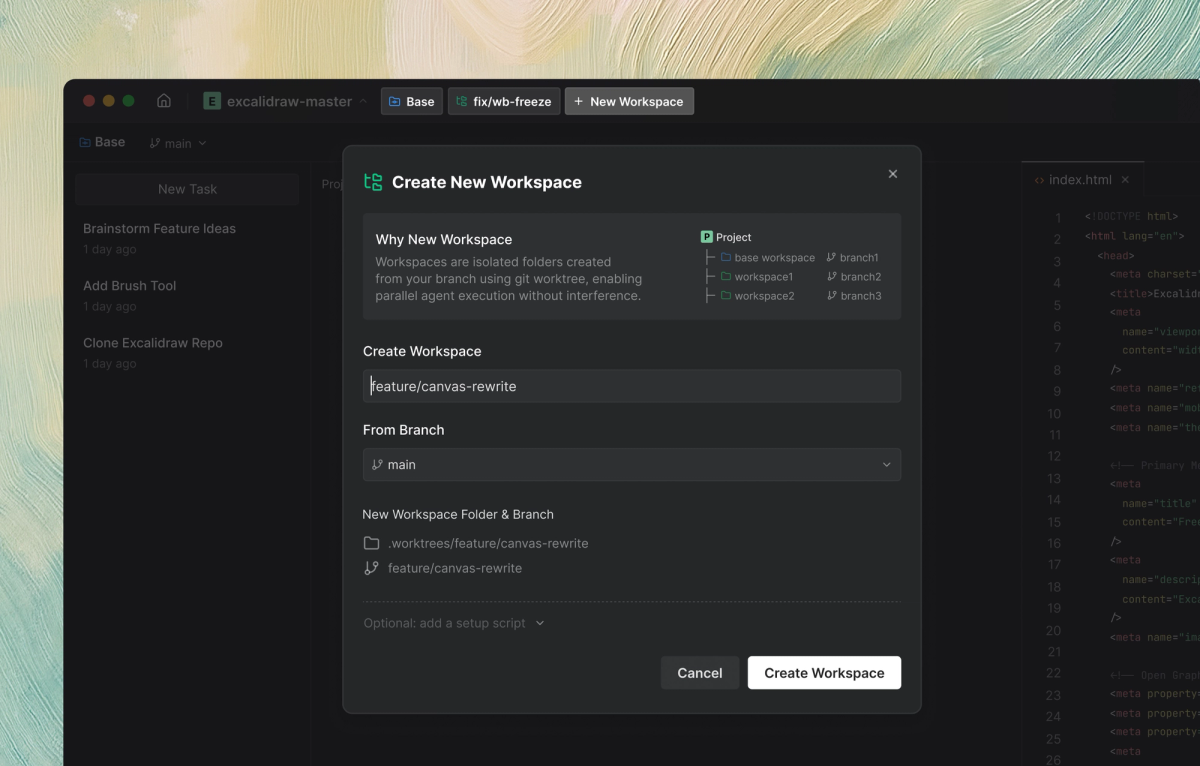
Isolated Parallel Workspaces

Workspaces let you run tasks in parallel without interference. Each workspace is an isolated folder created from your branch. Full context preserved across every task. Switch instantly between features, and bug fixes—Verdent keeps everything alive, so you never lose momentum.

workspace

In-workspace Multitasking

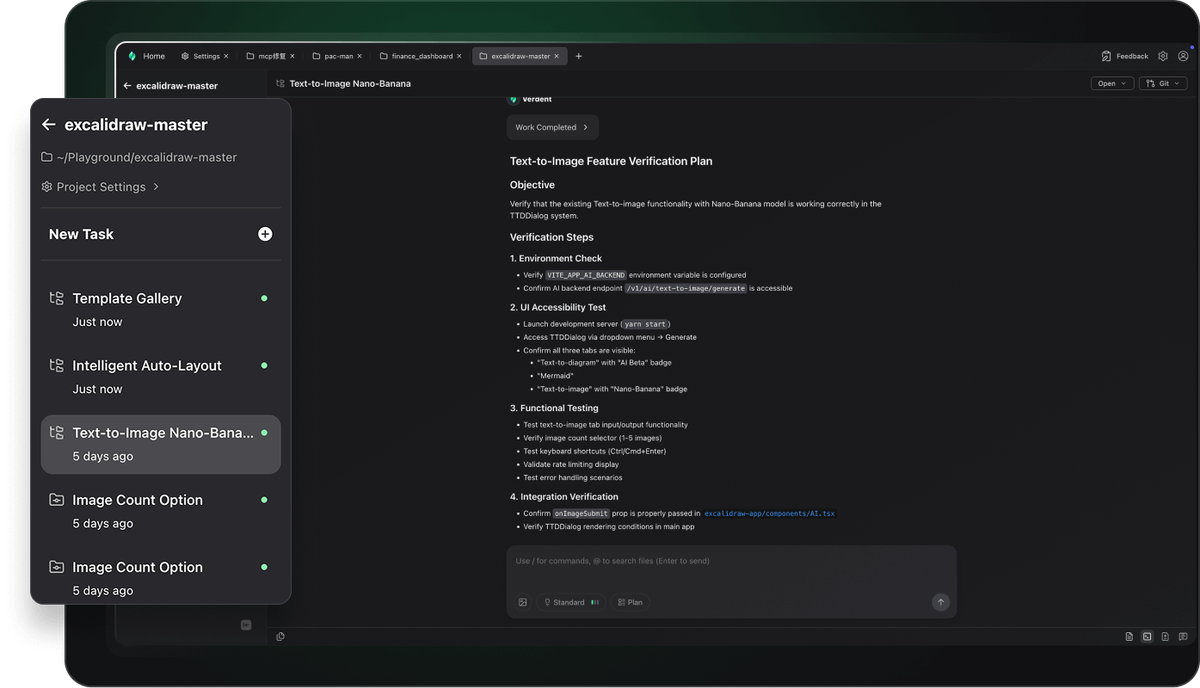
You can now quickly create and switch between multiple tasks within the same workspace, making it easy to handle related goals like planning, coding, and reviewing.

multitasking

Fast Project Switching

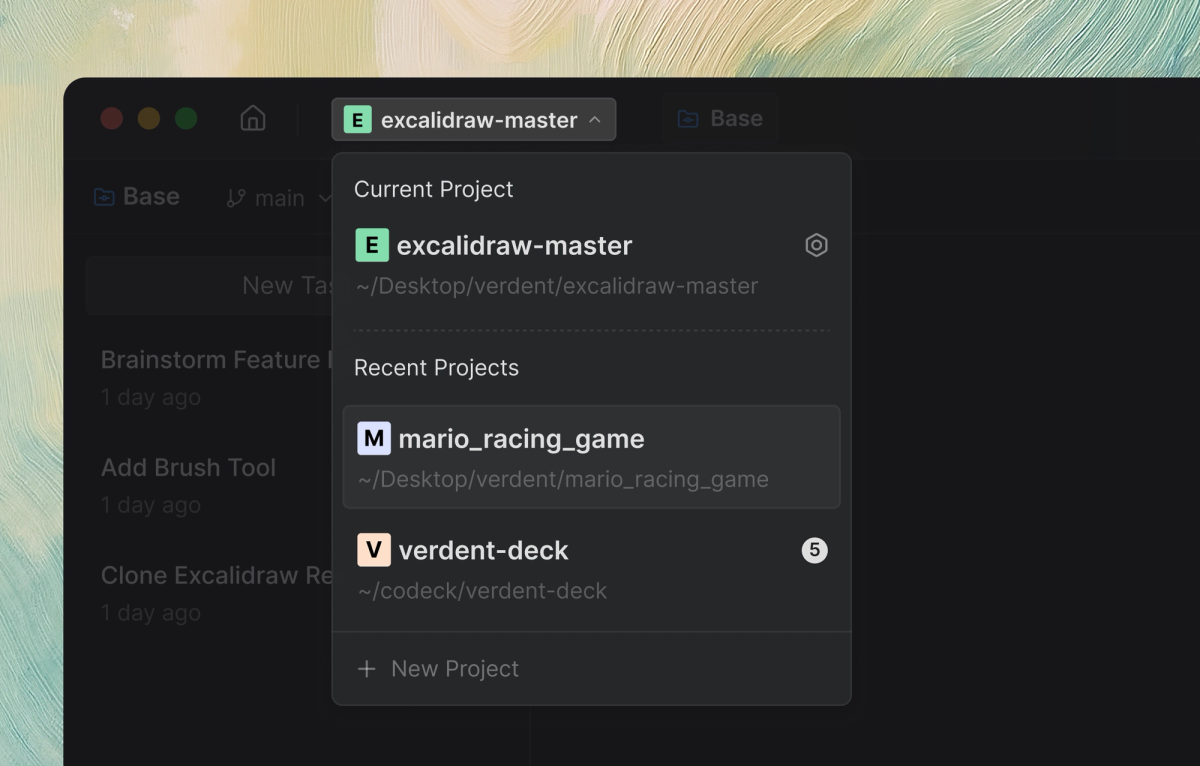
Verdent keeps all workspace states alive, allowing you to jump between projects instantly. Whether you’re handling multiple clients or switching between a side project and your main repo, you can move fluidly without any setup delay or lost state.

project

Claude Opus 4.5 Support

Now supports the Claude Opus 4.5 model, fully integrated with the latest flagship model, enabling high-precision coding, long-context reasoning, and autonomous task flows.

Claude Opus 4.5

Bug Fixes

  • Fixed several Gemini 3–related issues to improve stability and execution reliability.

Bug Fixes & UI Refinements

Bug Fixes

  • Fixed an issue where Git commands containing special characters could cause execution errors.
  • Resolved inconsistent state switching for the Git Commit button.
  • Fixed layout issues in Code Review cards on narrow screens.
  • Corrected the Diff view where diff blocks did not auto-adjust height, leaving unnecessary blank areas.
  • Unified default font sizes across Diff, Terminal, and Editor for more consistent readability.

Real-Time Awareness and Expanded Platform Support

New Features

  • Task Completion Notifications: Receive real-time alerts when tasks finish — set a task once, stay focused, and let the system notify you when it’s done.
  • Windows Support: Now available on Windows (Beta) with compatibility for Windows 10 and Windows 11, bringing parallel workflows and agent execution to more environments.
  • Intel Mac Support: Supports Intel-based macOS devices, ensuring a smoother experience across both Apple Silicon and Intel platforms.

Smarter Subagents, Frontier Models, and Smoother Parallel Workflows

New Features

  • Subagents
    • Added built-in Verifier subagent for effortless, automated code reviews.
    • Support for custom subagents, allowing you to define specialized workers with their own behaviors, tools, and models. Each subagent runs independently, enabling a streamlined workflow from planning to delivery.
  • Frontier Model Switching
    • Now supports leading frontier models — Claude Sonnet 4.5, GPT-5, and GPT-5-Codex.
    • Switch models freely to optimize for performance, accuracy, or cost depending on your task.
  • Git Worktree Enhancements
    • Improved git worktree integration for smoother, more reliable parallel development across isolated workspaces.

Parallel Development with Task Isolation — No Interference, More Flow

  • Parallel Agents: Run multiple agents at the same time to accelerate development and maximize productivity.
Parallel Agents
  • Task Isolation: Each task operates in a dedicated Git worktree, ensuring clean boundaries and zero interference between concurrent workflows.
Task Isolation
  • Plan First: Capture requirements upfront and let Verdent break them into clear, actionable tasks before code is generated — reducing rework from the start.
Verdent plan
  • Code Review: Receive structured, contextual feedback and improvement suggestions based on Verdent’s execution results.
Verdent code review
  • DiffLens Insight: Instantly inspect code changes, understand their impact, and follow transparent execution steps — no black boxes.
Difflens
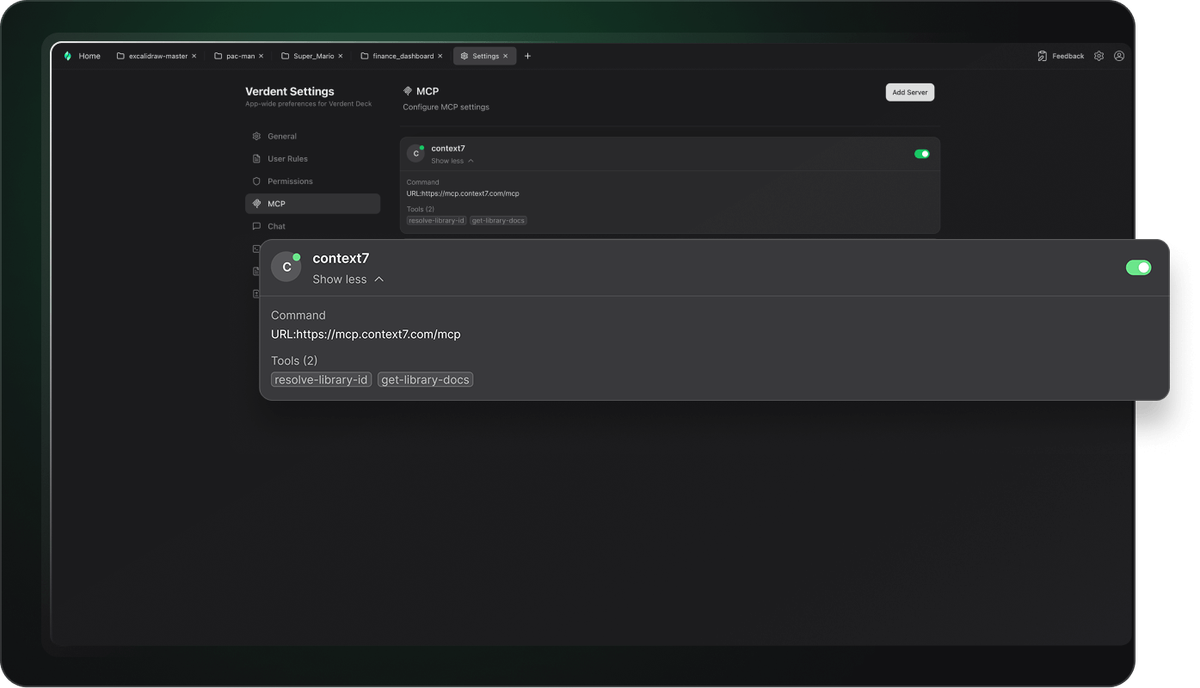
  • MCP Integration: Seamlessly connect with MCP tools and extend functionality through toolchains and custom plugins.
mcp
  • Optimized Interface: A redesigned interface built for smooth concurrent execution, making it easier to view, run, and manage multiple tasks at once.
Optimized Interface

Verdent for VS Code

Model Update: Kimi K2.6&GLM-5.1

Kimi K2.6 improves long and complex coding tasks, with more reliable results across languages like Rust, Go, and Python, and areas such as front-end, DevOps, and performance optimization. It can turn simple prompts into complete interfaces with structured layouts, interactive elements, and animations, while generating more consistent visual assets. It also extends to simple full-stack workflows, supporting basic authentication, user interaction, and lightweight database operations.

GLM-5.1 is a next-generation coding model built for long, complex software engineering tasks. It performs better in repository-level development, debugging, and multi-step system design, with stronger stability over long sessions. It also supports agent-style workflows, including tool use, structured outputs, and long-context reasoning, making it suitable for real-world development and automation scenarios.

Model Update: Opus 4.7

Opus 4.7 is the latest model in the Claude Opus family and is optimized for long-running, asynchronous agent workflows. It extends the coding and agentic strengths of Opus 4.6 with stronger performance on complex, multi-step tasks and more reliable end-to-end execution.

With Opus 4.7 in Verdent, planning becomes sharper — breaking down ambiguous requirements into structured, actionable steps with fewer missteps. Code reviews catch more edge cases and produce more specific, contextual feedback. Long-running tasks stay on track across dozens of tool calls without losing coherence or drifting from the original goal. Whether you're orchestrating a multi-file refactor, running a deep audit, or iterating on a complex feature — Opus 4.7 delivers results you can trust with less hand-holding.

Model Update: Minimax M2.7

Verdent for VS Code supports Minimax M2.7, optimized for complex tasks requiring coordination across dozens of skills. It reliably handles task decomposition and execution in long, multi-step Agent workflows. Featuring Agent Teams, Tool Search, and various Agent scaffolding capabilities, it makes building complex multi-Agent systems easier. In real-world engineering scenarios, it excels at log analysis, bug localization, code refactoring, and demonstrates significantly enhanced multi-role collaboration and role-playing capabilities.

Skills & GPT-5.4 Support

Create Custom Skills
You can now create your own Skills to package domain knowledge, prompts, and workflows for repeated use.

@Skills in Chat
Mention Skills directly in conversations using @Skills to quickly apply specialized capabilities to your task.

More Professional Task Execution
By leveraging targeted Skills, the agent can handle tasks with deeper context and more specialized expertise, improving the quality and consistency of results.

GPT-5.4 Support

Verdent for VS Code now supports GPT-5.4, a flagship model designed for professional work. It combines advanced reasoning, strong coding capabilities, and agentic workflows to handle complex tasks across development tools and office environments.With improved problem-solving ability and deeper context understanding, GPT-5.4 can plan multi-step tasks, write and analyze code, and coordinate tool usage more effectively.

Model Update: GPT-5.3-Codex

Verdent for VS Code now supports GPT-5.3-Codex. Built on the programming capabilities of GPT-5.2-Codex and enhanced with GPT-5.2's reasoning and domain knowledge, GPT-5.3-Codex delivers about 25% faster performance and supports long-running research tasks and tool-driven execution. It provides real-time guidance while maintaining context and extends beyond a traditional code assistant into a more comprehensive AI helper. It is not just a coding model, but also a tool to assist developers and professionals with a wider range of tasks on a computer.

Model Update: Gemini 3.1 Pro

Verdent for VS Code now supports Gemini 3.1 Pro —the most advanced reasoning Gemini model, built to tackle complex, multi-step problems with strong analytical depth.With its powerful long-context capabilities, Gemini 3.1 Pro can comprehend vast datasets and synthesize information across multiple sources — including text, audio, images, video, PDFs, and even entire code repositories. This makes it especially well suited for large-scale debugging, research-heavy workflows, system design, and cross-modal knowledge tasks.Now available in Verdent, you can leverage Gemini 3.1 Pro for deeper reasoning, broader context understanding, and more reliable execution across demanding workflows.

Model Update: Claude Sonnet 4.6

Verdent for VS Code now supports Claude Sonnet 4.6 — the most capable Sonnet model to date. Sonnet 4.6 delivers a full upgrade across coding, computer use, long-context reasoning, agent planning, knowledge work, and design. With Sonnet 4.6 in Verdent, you can plan more effectively, code more reliably, and run parallel workflows with greater consistency and execution quality — all while keeping the same credit cost as Sonnet 4.5. In this release, Claude Sonnet 4.6 is now the default model for Agent and Plan in Verdent. The Sonnet 4.6 1M context window (Beta) is also supported. This upgrade brings Opus-level performance to more everyday workflows — without increasing your credit usage.

Model Update: MiniMax M2.5

MiniMax M2.5 is now available in Verdent for VS Code. It’s strong in coding, Excel workflows, deep research, and document summarization, with fast and efficient reasoning. You can now select MiniMax 2.5 in your model settings.


Model Update: GLM-5

GLM-5 is now available in Verdent. Built for system-level engineering, GLM-5 excels at long-running tasks that require sustained reasoning and precise execution across complex codebases. It aligns closely with Verdent’s support for long-running, asynchronous, and parallel execution, making it well suited for workflows such as system architecture design, deep debugging, and end-to-end automation. In these scenarios, the model must analyze dependencies, carefully follow execution paths, and iterate reliably across parallel steps without drifting—making GLM-5 a strong choice for production-oriented, large-scale engineering problems.

Now Supported: Opus 4.6

Opus 4.6 is now available in Verdent for VS Code. It’s noticeably better at long-running tasks and careful code review — the kind where you want the model to stay focused, follow the plan, and not drift halfway through a big change.

With support for a 1M-token context, Opus 4.6 can reason across large repos and long histories more reliably, making it a strong fit for Verdent’s plan-first workflows and long-running, consistent execution — helping it deliver high-quality, reliable outputs at its full potential.

Pricing Note: Opus 4.6 follows the same pricing as Opus 4.5, with no additional charges.

Faster Streams. Cleaner Tasks.

  • Improved chat loading and streaming state handling for smoother conversations
  • Optimized task-switch loading indicators and strengthened state isolation in multi-task mode
  • Fixed sub-agent display and task-related issues
  • Enhanced markdown streaming performance for faster, more stable output

Kimi 2.5 Support

Verdent now supports Kimi K2.5 — a native multimodal model pretrained on ~15T text and visual tokens, delivering top-tier coding, vision, and agent-swarm intelligence.

GPT-5.2 Codex Support

GPT-5.2 Codex is here — smarter code reasoning, stronger agent execution, and better results at scale.

  • Improved performance on complex codebases, multi-file reasoning, and long-context tasks
  • Enhanced accuracy in code completion, bug detection, and edge-case analysis
  • Better alignment with agent workflows, enabling more reliable task execution and delegation

Smoother Chat & Task Experience

  • You can now type and interact while a response is being generated—no more waiting for completion.
  • Switching between top tabs is faster and smoother, so you can find what you need without losing focus.
  • Chat streaming is more fluid, letting you follow the conversation naturally.
  • Task switching now shows a clear loading indicator, so you always know what’s happening.
  • General experience improvements and bug fixes to make your workflow more reliable and enjoyable.

GPT-5.2 Support

GPT-5.2 delivers smarter reasoning, steadier output, and a noticeably smoother experience.

  • Improved performance on long-context conversations and complex multi-step tasks
  • Enhanced stability in streaming outputs with faster first-token response
  • Better alignment with multi-task and agent-based workflows

Less Friction, More Flow

Parallel Sessions: You can now work on multiple tasks in parallel, with each conversation running in its own independent session. This means you can break down requirements in one chat, draft a solution in another, and ask AI to modify code in a third.

1

Quick @Plan Access: For long-term projects and iterative work, you can quickly @plan within a conversation to reference existing plans. There’s no need to restate background or rebuild context from scratch—your previous thinking is always one mention away, making plans reusable instead of disposable.

2

Improved History: The history page has been made clearer and easier to navigate. Conversations are better structured, and searching through past discussions is faster and more intuitive, so finding that “important chat from last week” no longer breaks your flow.

3

Auto-Generated Titles: Every conversation now comes with an automatically generated title. Instead of a long list of “New Chat,” you can immediately see whether a conversation is about requirement review, technical discussion, or a quick question, keeping your workspace readable as it grows.

4

AI Commit Messages: Commit messages are now generated automatically by AI. Based on your code changes, clear and meaningful commit messages are created for you, removing one of those small but surprisingly annoying tasks and letting you stay focused on the work that actually matters.

5

Improvements

  • Plan Mode experience improvements
  • Enhanced GPT-5 model performance
  • Refined User Center
  • Fixed a series of bugs

Experience Improvements & Bug Fixes

  • Improved clarification flow: supports streaming output and adds a confirmation step when rolling back.
  • Fixed several bugs.

Sub-Agent & Context Fixes

  • Fixed an issue where sub-agents weren’t sorting or deleting correctly.
  • Resolved a rare bug that caused occasional context loss.

Smarter Planning, Better Collaboration, and Smoother Conversations

New Features:

  • Clarification Loop: In Plan mode, you can now discuss and refine your requirements continuously with AI. This feature lets you collaboratively confirm your plans and provides new interactions, including modifying clarification options, skipping clarifications, rolling back changes and resubmit.
  • Plan Rules: In Plan mode, you can adjust how clarifications and plans are presented based on your role and professional background. Choose from role templates or customize content to get professional, personalized plans that match your thinking style and work habits.
  • Plan Download: You can now easily save your plans to your current workspace or local code repository, making it convenient to store and reference your work.

Experience Improvements:

  • Conversation Flow Optimization: You can give feedback on AI-generated content with thumbs up/down and see timestamps for each conversation.
  • Bug Fixes: We've fixed issues that affected your experience, including login interface optimization, handling of long inputs, black screens when opening history messages, navigation errors, and “thinking” messages that blocked further conversation.

Verdent for VS Code now supports the Claude Opus 4.5 model

  • Fully integrated with the latest flagship model, enabling high-precision coding, long-context reasoning, and autonomous task flows.
  • In the Performance setting, both Plan and Agent modes will migrate from Claude 4.5 Sonnet to Claude 4.5 Opus.
Performance

Gemini-3-Pro-Preview model

  • Now supporting the latest Gemini-3-Pro-Preview model, delivering faster and more capable agent execution.
Gemini-3-Pro-Preview

K2 Model Support

  • Support for selecting the Kimi K2 model.
  • Optimized agent login issues, file updates, message cancellation, and other bug fixes.
K2

Enhancements & Key Fixes

Improvements

  • Added Markdown rendering support in Thinking tool.
  • Improved quick-insert actions in the input box; Up/Down arrows now navigate your input history.
  • Refined Model Tips design for easier browsing of models and credit usage.
  • Added login event logging for better tracking.

Bug Fixes

  • Fixed Markdown display issues in the large view.
  • Improved message-storage logic to prevent data loss when viewing history.
  • Resolved a login expiration issue that caused repeated re-login loops.
  • Improved network stability and new-session initialization.
  • Reduced repeated user-error alerts.
  • Enhanced the overall new-session experience.

Switch, Chat, Explore — Faster, Smoother, Smarter

New Features

  • Model Switching: Seamlessly switch between Claude, GPT, and MiniMax-m2 models without restarting your workspace.
  • Chat Support: Engage directly with Verdent through an integrated chat interface.
  • Explore & Code Reviewer Subagents: Discover new contexts and get automated reviews with specialized subagents.

Experience Improvements

  • Complete redesign of the Home and Chat interfaces for a more intuitive workflow.
  • Performance Optimization: Faster response, reduced latency, and smoother interactions.
  • Smaller Package Size for quicker installation and updates.
  • Multiple bug fixes for improved stability.

Model switching:

Subagents:

Chat mode:

Faster, Safer, and More Reliable Coding

This update brings better stability, smarter exception handling, and a smoother user experience, including a new Free Trial mode. Designed to handle your coding tasks more efficiently.

New Features

  • Browser tool: added copy functionality
  • Network retry optimization: increased reliability against short-term network failures
  • Files with no diffs can now be opened in concurrent scenarios
  • Optimized memory management for smoother performance

Bug Fixes

  • Fixed virtual scroll errors when switching large messages via the history list
  • Fixed data resend issues during Clarify + Plan reconnection after network loss
  • Fixed deletion failures of historical messages in directories outside the workspace
  • Fixed unprocessed messages under network failure conditions
  • De-duplicated global uncaught exception data
  • Improved Think Hard display styling
  • Clean up old socket instances when switching accounts to ensure tokens are tied to the latest account

Smoother Workflow, Safer Git, and Enhanced UX

We cleaned up some rough edges: more accurate behavior, faster response times, quicker navigation, and safer Git.

Fixes

  • Terminal scrollbar overlay → fixed
  • Clear History is now workspace-scoped
  • Empty metadata is handled safely
  • Add to Verdent path → correct & openable
  • git diff excludes .verdent / .git
  • Persisted files can be opened immediately

Manual Mode & Telemetry

  • Rollback triggers on user-rejected actions
  • Support for reviewing changes in Manual Mode
  • More precise checkpoint-failure instrumentation
  • git push confirmation dialog

UX Polish

  • Virtualized scrolling for History and Messages
  • Support for custom themes in VS Code
  • Dynamic @ indexes new files; @folder jump
  • Auto-retry on transient network failures

Critical Bug Fixes and Improved Reliability

Bug Fixes:

  1. Resolved the sign-up issue in registration and login.
  2. Fixed the image URL issue in the plugin marketplace.
  3. Added support for compressing images larger than 5 MB and improved error message callbacks.
  4. Fixed the initial-letter display error when using the Pinyin input method.
  5. Fixed the issue where context icons were missing.
  6. Disabled browser error message pop-ups.

Efficient, Transparent, and Intelligent Coding Workflow

  • Sub-agent Scheduling: Assign specialized sub-agents to different tasks. The main agent orchestrates them and integrates results, reducing context load.
Sub-agent Scheduling
  • Parallel Task Execution: Supports breaking down complex requirements into parallelizable subtasks to improve overall development efficiency.
Parallel Task Execution
  • Plan First, Then Execute: After receiving a requirement, the system first generates a clear task outline and execution plan. Users can confirm or adjust it before entering the coding phase, reducing unnecessary rework.
Plan First, Then Execute
  • Verify Before Delivery: Uses fail-fast code checks to provide rapid feedback and ensure correctness before final output.
Verify Before Delivery
  • Transparent Process with Controllable Details: Code generation unfolds step by step with interpretable reasoning at each stage. Users can intervene at any time to inspect logic, adjust the workflow, or switch approaches.
Transparent Process with Controllable Details
  • MCP (Model Context Protocol): Seamlessly integrates external tools and services, supports existing toolchains, and allows custom extensions. Works collaboratively with sub-agents to complete tasks.
Model Context Protocol
  • Adaptive Context Compression: Automatically distills key information and removes redundant history, maintaining “long-term memory + efficient short-term reasoning” to keep large projects running smoothly.
  • Context-Aware Programming: Continuously tracks the codebase, task goals, and conversation history to avoid forgetting or duplication. It intelligently detects dependencies across code modules to maintain overall consistency during edits.

Verdent for JetBrains

Model Update: Kimi K2.6&GLM-5.1

Kimi K2.6 improves long and complex coding tasks, with more reliable results across languages like Rust, Go, and Python, and areas such as front-end, DevOps, and performance optimization. It can turn simple prompts into complete interfaces with structured layouts, interactive elements, and animations, while generating more consistent visual assets. It also extends to simple full-stack workflows, supporting basic authentication, user interaction, and lightweight database operations.

GLM-5.1 is a next-generation coding model built for long, complex software engineering tasks. It performs better in repository-level development, debugging, and multi-step system design, with stronger stability over long sessions. It also supports agent-style workflows, including tool use, structured outputs, and long-context reasoning, making it suitable for real-world development and automation scenarios.

Model Update: Opus 4.7

Opus 4.7 is the latest model in the Claude Opus family and is optimized for long-running, asynchronous agent workflows. It extends the coding and agentic strengths of Opus 4.6 with stronger performance on complex, multi-step tasks and more reliable end-to-end execution.

With Opus 4.7 in Verdent, planning becomes sharper — breaking down ambiguous requirements into structured, actionable steps with fewer missteps. Code reviews catch more edge cases and produce more specific, contextual feedback. Long-running tasks stay on track across dozens of tool calls without losing coherence or drifting from the original goal. Whether you're orchestrating a multi-file refactor, running a deep audit, or iterating on a complex feature — Opus 4.7 delivers results you can trust with less hand-holding.

Model Update: Minimax M2.7

Verdent for JetBrains supports Minimax M2.7, optimized for complex tasks requiring coordination across dozens of skills. It reliably handles task decomposition and execution in long, multi-step Agent workflows. Featuring Agent Teams, Tool Search, and various Agent scaffolding capabilities, it makes building complex multi-Agent systems easier. In real-world engineering scenarios, it excels at log analysis, bug localization, code refactoring, and demonstrates significantly enhanced multi-role collaboration and role-playing capabilities.

Stability & Feature Update

WebSocket & Connectivity

  • Handshake Stability Improved
    The connection handshake now waits for server confirmation before sending additional messages, preventing tool results from being lost after reconnection.
  • Better Connection Reliability
    Added a registerPendingHandshake mechanism to properly coordinate the asynchronous handshake process and improve connection stability.

Referral Feature

  • Invite Friends
    Added a referral entry in user settings, allowing you to easily invite friends (aligned with the VSCode version).
  • Referral Reward Badge
    A “+2000/mo” reward badge is now displayed with your referral link, making the incentive clearer and easier to share.

Diff View

  • No More Duplicate Diff Tabs
    When opening a diff for the same file, Verdent will now navigate to the existing tab instead of creating duplicates.
  • Improved New File Handling
    Newly created files can now be correctly located and opened in the Review Changes panel.

Bug Fixes

  • Fixed an issue where the model tooltip displayed a hardcoded version instead of the API-provided name.
  • Fixed an issue where the Review Changes panel did not respond when clicking newly created files.
  • Fixed an issue that could cause duplicate diff tabs to open for the same file.

Model Update: GPT-5.3-Codex

Verdent for JetBrains now supports GPT-5.3-Codex. Built on the programming capabilities of GPT-5.2-Codex and enhanced with GPT-5.2's reasoning and domain knowledge, GPT-5.3-Codex delivers about 25% faster performance and supports long-running research tasks and tool-driven execution. It provides real-time guidance while maintaining context and extends beyond a traditional code assistant into a more comprehensive AI helper. It is not just a coding model, but also a tool to assist developers and professionals with a wider range of tasks on a computer.

Model Update: Gemini 3.1 Pro

Verdent for JetBrains now supports Gemini 3.1 Pro —the most advanced reasoning Gemini model, built to tackle complex, multi-step problems with strong analytical depth.With its powerful long-context capabilities, Gemini 3.1 Pro can comprehend vast datasets and synthesize information across multiple sources — including text, audio, images, video, PDFs, and even entire code repositories. This makes it especially well suited for large-scale debugging, research-heavy workflows, system design, and cross-modal knowledge tasks.Now available in Verdent, you can leverage Gemini 3.1 Pro for deeper reasoning, broader context understanding, and more reliable execution across demanding workflows.

Model Update: Claude Sonnet 4.6

Verdent for JetBrains now supports Claude Sonnet 4.6 — the most capable Sonnet model to date. Sonnet 4.6 delivers a full upgrade across coding, computer use, long-context reasoning, agent planning, knowledge work, and design. With Sonnet 4.6 in Verdent, you can plan more effectively, code more reliably, and run parallel workflows with greater consistency and execution quality — all while keeping the same credit cost as Sonnet 4.5. In this release, Claude Sonnet 4.6 is now the default model for Agent and Plan in Verdent. The Sonnet 4.6 1M context window (Beta) is also supported. This upgrade brings Opus-level performance to more everyday workflows — without increasing your credit usage.

Model Update: MiniMax M2.5

MiniMax M2.5 is now available in Verdent.It’s strong in coding, Excel workflows, deep research, and document summarization, with fast and efficient reasoning.You can now select MiniMax 2.5 in your model settings.


Model Update: GLM-5

GLM-5 is now available in Verdent for JetBrains. Built for system-level engineering, GLM-5 excels at long-running tasks that require sustained reasoning and precise execution across complex codebases. It aligns closely with Verdent’s support for long-running, asynchronous, and parallel execution, making it well suited for workflows such as system architecture design, deep debugging, and end-to-end automation. In these scenarios, the model must analyze dependencies, carefully follow execution paths, and iterate reliably across parallel steps without drifting—making GLM-5 a strong choice for production-oriented, large-scale engineering problems.

Introducing Verdent for JetBrains — Now Officially Released

Multi-Session Workflows

  • Terminal-Style Sessions
    Open multiple sessions like terminal tabs to run tasks in parallel. Compare approaches, delegate work, or keep long-running tasks running without blocking your main flow.
  • Multi-Session Chat Support
    Run multiple AI conversations in parallel across tabs, with each session using its own model to avoid interference when switching between features, experiments, or code contexts.
  • Session-Level Configuration
    Each session keeps its own mode, model, and auto-run preferences, so you can tune behavior per task instead of constantly reconfiguring.

Agents & Workflows

  • Flexible Sub-Agents
    Each sub-agent can independently choose its MCPs, skills, and base model, making it easier to compose specialized agents for complex tasks.
  • Plan / Code / Verify Workflows
    Built-in support for structured agent workflows helps you move smoothly from planning to implementation and validation with less manual coordination.
  • Cross-Session Content Retrieval
    Quickly search and reuse conversation content across sessions, reducing repeated prompts and accelerating iteration.

MCP & Marketplace

  • Improved MCP State Management
    More reliable lifecycle and state handling reduces unexpected behavior during long or complex workflows.
  • MCP Marketplace Support
    Discover and adopt MCPs directly from the marketplace, lowering the friction to extend capabilities.
  • Skills Marketplace & Framework
    End-to-end support for skills—from discovery to execution—makes it easier to reuse, share, and operationalize agent capabilities.

Editor & UI

  • Plan Mode Editor
    A real-time Markdown editor with split-view preview makes plans easier to write, review, and refine.
  • Global Search Integration
    Search chat history directly from the IDE’s global search (Shift + Shift), keeping important context one keystroke away.
  • PlantUML Vector Rendering
    Diagrams now render natively as SVGs, delivering crisp visuals on Retina displays and making them easier to edit and export.
  • Enhanced Skills & Sub-Agent Feedback
    Dynamically loaded sub-agents with clearer execution states help you understand what’s running, blocked, or completed.
  • Full Internationalization
    All UI components are fully localized, enabling teams across regions to work comfortably in their preferred language.