Three weeks ago I had five feature branches, two urgent bugs, and one very finite number of brain cells. What saved my sprint wasn't shipping faster — it was finally setting up a proper multi-agent workflow and genuinely stepping back. One agent mapped dependencies across repos, another drafted the spec, two more wrote the code in parallel worktrees, and a fourth ran tests while I reviewed the first diff. By 2026, this isn't a flex — it's just how the most effective engineers work.
But here's the problem nobody tells you: the multi-agent coding tools landscape is a mess to navigate. Some tools are dev-facing coding agents. Others are workflow orchestration frameworks. A few are both. If you've been staring at a comparison spreadsheet trying to figure out which one to actually install, this breakdown is for you. I've tested all five of the tools below on real production work — not demos.
What Are Multi-Agent Coding Tools?
A multi-agent coding tool is any platform that lets you run more than one AI agent on your codebase simultaneously, with each agent handling a distinct role or task. The key word is simultaneously — not just multiple chat windows, but genuinely parallel, isolated execution.
The category splits into two types worth keeping straight:
Dev-facing coding agents (Tonkotsu, Verdent, Zencoder) are installed by individual developers or teams and plugged directly into your IDE or desktop workflow. You define the tasks, the agents write and verify code, and you review diffs before anything merges.
Orchestration frameworks (CrewAI, Claude Code in agentic mode) are lower-level platforms where you define agent roles, tools, and handoffs in code or config. More flexible, more powerful, more work to set up.
By end of 2025, roughly 85% of developers regularly used AI tools for coding, but most were still using them as single-agent assistants. The multi-agent coding shift happening in early 2026 is a genuine architectural change — not just a marketing rebrand of "chat with your codebase."
Why Multi-Agent > Single-Agent
Parallel Task Execution
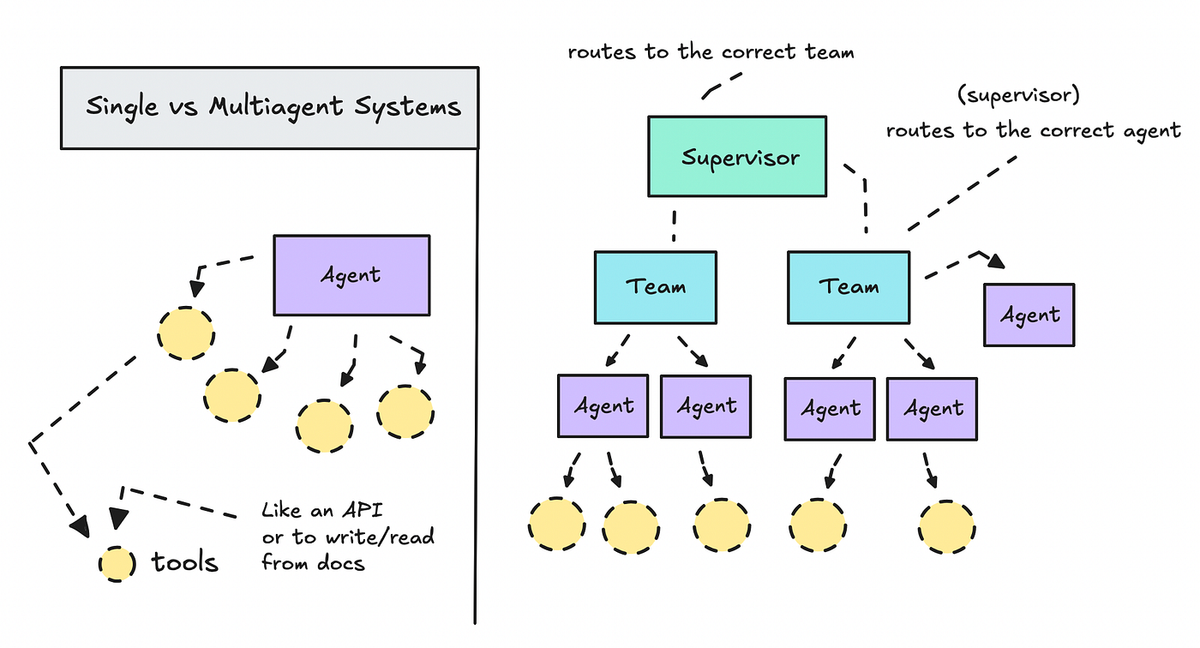
This is the reason everything else exists. A single agent runs tasks sequentially: finish one thing, start the next. A multi-agent system runs them simultaneously in isolated environments.
The practical math: if a feature branch, a test suite update, and a dependency audit each take 20 minutes single-agent, sequential execution takes 60 minutes. Three parallel agents take 20 minutes. That's not a hypothetical — it's what actually happens when you have proper task isolation preventing conflicts.
Real parallelism requires code isolation. Without it, two agents editing the same files cause chaos. That's why the tools worth using all implement some form of environment isolation — git worktrees, isolated repo clones, or sandboxed containers. Tonkotsu, Verdent, and Zencoder all handle this natively; CrewAI delegates it to the developer.
Role Specialization
Here's another thing worth understanding: not every coding task benefits from the same type of reasoning. A migration safety audit needs conservative, risk-focused analysis. A test generator needs coverage-optimized, pattern-matching thinking. A feature spec needs architectural creativity.
Multi-agent tools let you assign specialized roles to specific agents — and route those agents to the model best suited for each task. Verdent's orchestrator routes tasks across Claude Sonnet 4.5, GPT-5, and Gemini 3 Pro depending on the task type. Zencoder's Auto+ model multiplier gives you explicit quality-vs-speed control per agent. You stop paying for frontier-model reasoning on tasks that don't need it.
Top Multi-Agent Tools Compared
Tonkotsu AI
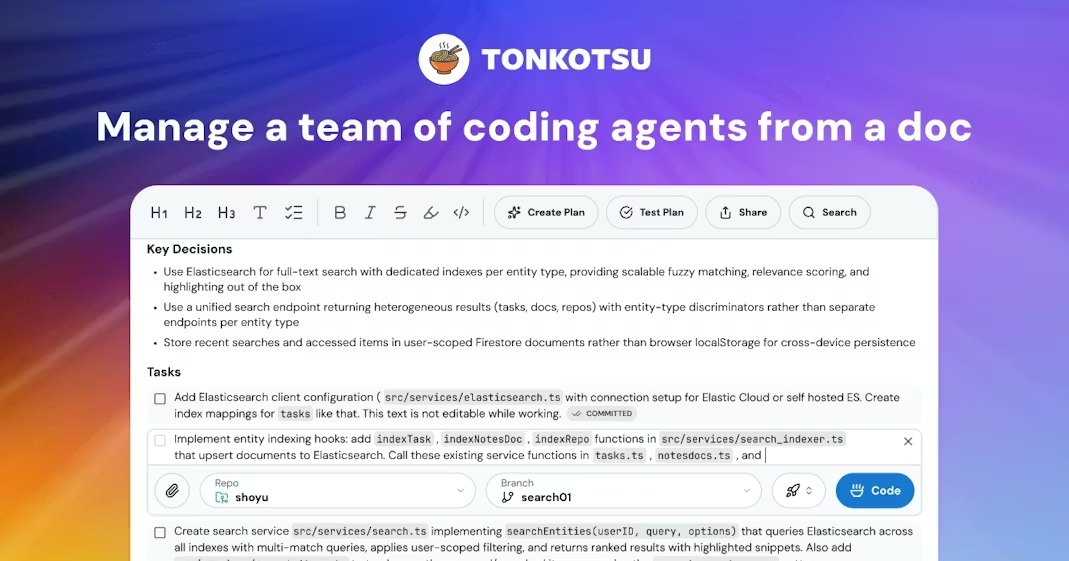
Tonkotsu's framing is the most honest in the category: it explicitly positions you as a tech lead managing a team of AI coding agents. The workflow is Plan → Code → Verify, and no commits happen until you explicitly approve them.
What makes Tonkotsu stand out right now is the combination of multi-repo support and task dependency management. You can delegate dozens of tasks at once across multiple repositories, specify which tasks depend on which, and Tonkotsu coordinates sequencing without you micromanaging it. Agents run in isolated repo clones directly on your machine — your code never leaves your dev environment.
One user with 30 years of programming experience called it the biggest single productivity jump from any tool they'd encountered. That's a strong signal from someone who's seen everything.
The catch: Tonkotsu runs on Claude Code, so you need an existing Anthropic plan. It's currently in early access and free — the company is building the user base before introducing paid tiers. Also macOS and Windows only; Linux support isn't announced yet.
Best for: Individual developers and small teams who want a lightweight, plan-driven interface for parallel Claude Code agents without setting up infrastructure.
Verdent AI
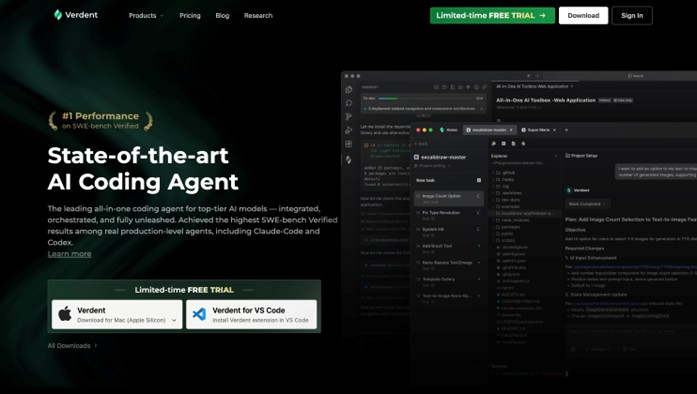
Verdent is the most fully-featured coding-specific multi-agent platform I've used. The core differentiation is genuine multi-model routing: the orchestrator automatically dispatches tasks to Claude Sonnet 4.5, GPT-5, GPT-5-Codex, or Gemini 3 Pro depending on task type. You're not committing to one model's strengths and weaknesses.
Custom subagents are defined as Markdown files in ~/.verdent/subagents/, each with their own system prompt, invocation policy, and tool scope. The built-in @Verifier, @Explorer, and @Code-reviewer subagents cover the most common specializations; you extend them for domain-specific work. Git worktree isolation ensures parallel agents never conflict on the same files.
The SWE-bench Verified benchmark result of 76.1% resolution rate is the most credible technical proof point in this category — a standardized, independent test of real-world software engineering problem solving.
Pricing runs $19/month (Starter, 640 credits), $59/month (Pro, 2,000 credits), or $179/month (Max, 6,000 credits). The credit system can feel opaque at first, but the Verdent dashboard shows per-task consumption so you can calibrate.
Best for: Developers who want multi-model routing, custom subagents, and strong benchmark verification in a single product.
Zencoder
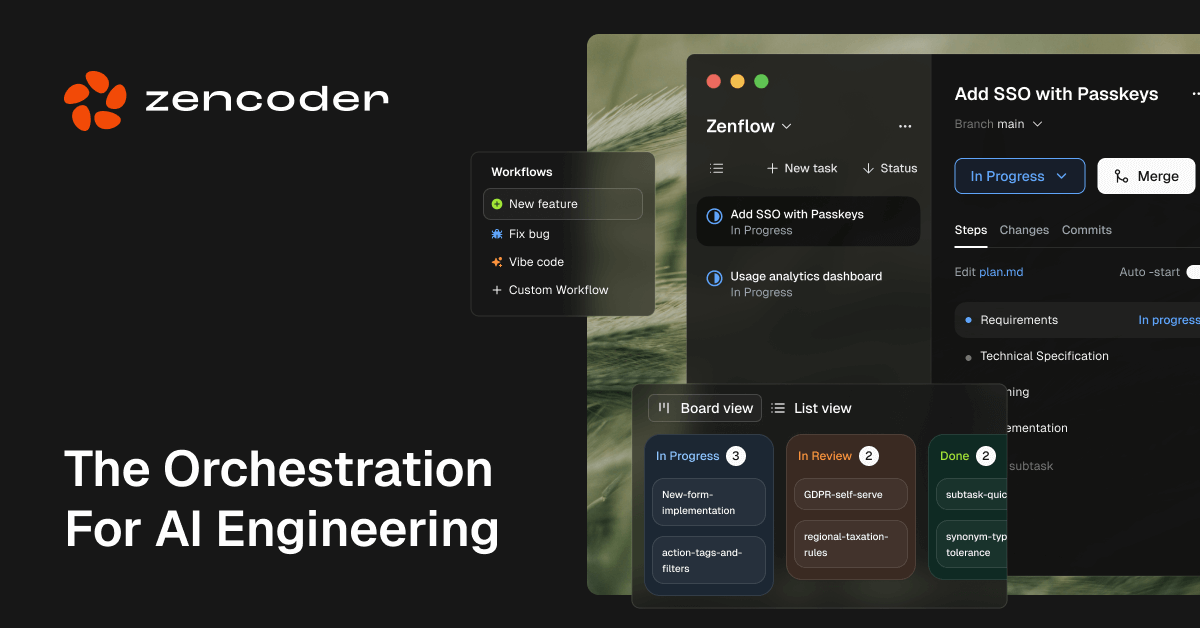
Zencoder is the enterprise play. Its product has split into two layers: Zencoder (the coding agent) and Zenflow (the orchestration layer), which Zencoder launched on Product Hunt on January 22, 2026. Zenflow enforces Spec-Driven Development — agents draft and review specifications before writing a single line of code, then execute tasks in parallel with automated verification loops. This eliminates "prompt drift," where agent outputs gradually diverge from what you actually wanted.
The multi-repo capability is real and differentiated. I tested it on a project with four interconnected microservices, and Zencoder understood dependencies across repositories — a level of codebase comprehension that most tools fake with shallow context windows. It also integrates natively with 100+ dev tools including GitHub, GitLab, Jira, Sentry, and CircleCI.
Compliance is a genuine advantage: ISO 27001, GDPR, CCPA, SOC 2. For enterprise teams with procurement requirements, this matters.
Pricing is $49/month (Starter, 7-day free trial) up to $119/month (Advanced, billed monthly), with a Max tier at $250/month and custom enterprise pricing. BYOK (Bring Your Own Key) is available on all paid plans, removing daily call limits and giving data-residency control.
Best for: Enterprise and team-scale deployments needing spec-driven workflows, multi-repo intelligence, and compliance certification.
Claude Code
Claude Code from Anthropic is a terminal-first agentic coding tool. It doesn't have a GUI — it runs in your CLI — but in agentic mode it can autonomously edit files, run commands, create git commits, and chain multi-step workflows from a single instruction.
The key multi-agent capability is subagent spawning: Claude Code can launch parallel subagents for independent tasks. Paired with AGENTS.md project files and the Agent Skills open standard, you can encode team-wide rules, workflows, and specialist behaviors that any compatible tool can use — including Verdent and Codex.
Claude Code is limited to Anthropic models, which is a real constraint if you want multi-model routing. Cost can escalate fast in heavy agentic sessions. That said, for developers already deep in terminal workflows who want maximum composability with the broader agentic ecosystem, it's uniquely powerful.
Pricing is usage-based via Anthropic API — no flat subscription. You pay per token, per model. Claude Pro ($20/month) and Claude Max ($100/month) subscriptions include usage credits if you want predictable billing.
Best for: CLI-native developers who want maximum composability and tight integration with the Anthropic model ecosystem.
CrewAI
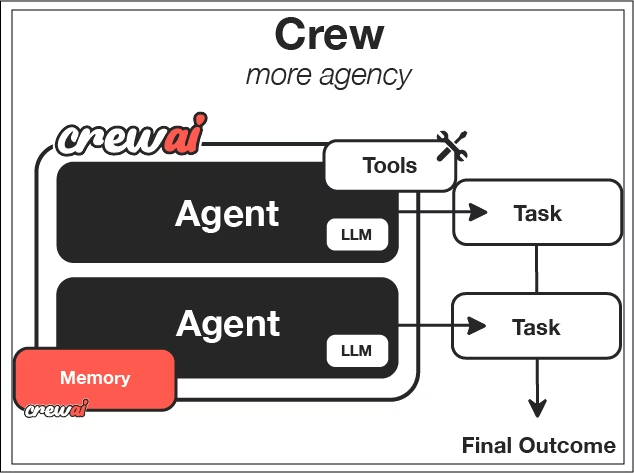
CrewAI sits in a different category from the four tools above. It's an open-source Python orchestration framework for building multi-agent systems — not a ready-made coding tool you install and use. You define agents, assign roles and tools in Python, wire up tasks and handoffs, and deploy the resulting crew.
The payoff for that setup overhead is complete flexibility. CrewAI's architecture separates Crews (autonomous agent teams) from Flows (event-driven workflow pipelines) — you use both together for production-grade systems. With over 100,000 certified developers and documented cases like PwC boosting code-generation accuracy from 10% to 70%, the platform's track record at enterprise scale is established.
The framework executes 5.76x faster than LangGraph in comparable workflows. The open-source core is free; the hosted CrewAI AMP suite starts at $99/month for the Basic plan, jumping to $6,000/year for Standard — a pricing cliff that hurts teams who've outgrown Basic.
Best for: Engineering teams with Python expertise who need to build fully custom multi-agent systems for complex, non-standard workflows.
Comparison Table
| Tool | Type | Multi-Repo | Parallel Agents | Code Isolation | Pricing (entry) | Best For |
|---|---|---|---|---|---|---|
| Tonkotsu | Desktop app (Mac/Win) | ✅ | ✅ | Isolated repo clones | Free (early access) | Solo devs, plan-driven workflow |
| Verdent | VS Code ext + desktop app | ✅ | ✅ | Git worktrees | $19/mo | Multi-model routing, custom subagents |
| Zencoder | VS Code ext + web | ✅ | ✅ | Isolated agent environments | $49/mo | Enterprise, spec-driven, compliance |
| Claude Code | CLI terminal | Limited | ✅ (subagents) | Git worktrees | Usage-based | CLI-native, composable ecosystems |
| CrewAI | Python framework | Custom | ✅ | Developer-managed | Free OSS / $99/mo hosted | Custom workflow builders, enterprise AI |
How to Choose
Okay, here's where I stop describing and start advising.
If you're a solo developer or small startup and want to get into multi-agent workflows with minimal setup, start with Tonkotsu. It's free, the Plan → Code → Verify loop is intuitive, and the fact that it runs on your machine means no data residency concerns. The only cost is your existing Anthropic plan.
If you want multi-model routing and a production-ready subagent system, Verdent is the right call. The credit pricing is manageable once you understand consumption patterns, and the SWE-bench benchmark gives you objective confidence in output quality.
If you're in an enterprise context with compliance requirements, multi-repo microservices architecture, or a team that needs spec-driven governance, Zencoder is built for you. The BYOK option and ISO 27001 certification address the requirements procurement teams actually ask about.
If you're already CLI-native and want to stay that way, Claude Code with proper AGENTS.md configuration gives you the most composable setup in the ecosystem. Use it as the backbone; layer in Verdent or Tonkotsu for the GUI management layer.
If your use case is custom — automating non-standard workflows, building internal AI tooling, or orchestrating agents across your entire engineering org — invest in CrewAI. The framework overhead is real, but the flexibility ceiling is genuinely higher than any packaged tool.
One rule that applies across all of them: don't try to run all your agents on the highest-capability model. Route light research and exploration tasks to cheaper models; save frontier-model reasoning for generation and verification. The cost difference is significant, and the quality difference for simple tasks is not.
Setting Up Your First Multi-Agent Workflow
Here's the most practical "day one" workflow I've landed on, using Tonkotsu or Verdent as the management layer:
Step 1: Write your AGENTS.md
Start by creating a project-level AGENTS.md at your repo root. This file encodes your team's standards for every agent that touches this codebase:
# AGENTS.md

## Code Standards
- All functions must have JSDoc comments
- No `any` types in TypeScript; use explicit interfaces
- Run `npm test` after every code change

## Parallel Execution Rules
- Never modify files in /config without explicit approval
- Database migrations require @migration-reviewer sign-off
- PRs require passing tests before creation

## Preferred Stack
- Frontend: React 19, TypeScript 5.x, Tailwind
- Backend: Node 22, Fastify, Prisma
- Testing: Vitest, Playwright for E2E
Step 2: Define your task breakdown
Multi-agent efficiency lives and dies on how well you decompose tasks before delegation. A vague task wastes tokens. A specific task with clear success criteria runs cleanly.
Good: "Refactor UserService.ts to extract email validation into a standalone EmailValidator class. Write unit tests for all extracted methods. Do not modify the public API of UserService."
Bad: "Clean up the user service."
Step 3: Assign roles and set isolation
In Tonkotsu: create tasks in the planning doc, specify dependencies, and delegate. Each task runs in an isolated repo clone on your machine.
In Verdent: use @ to invoke specific subagents per task. Example:
@Explorer map all files that reference UserService
@Code-reviewer review the refactored UserService.ts for breaking changes
@Verifier run the test suite and flag any failures
Step 4: Review and merge
Neither Tonkotsu nor Verdent commits anything without your approval. Review the diffs, run your own spot checks, then merge. The goal is that you're reviewing finished work, not supervising in-progress work.
That's the shift. You're a tech lead reviewing PRs from your AI team, not a babysitter watching individual keystrokes.
FAQ
Q: Can I use multiple tools at the same time?
Yes, and many developers do. A common hybrid: Verdent for day-to-day parallel execution, Claude Code CLI for deep refactors, Tonkotsu for planning sessions. As long as your AGENTS.md is consistent, the rules carry across compatible tools.
Q: Are multi-agent tools safe for production codebases?
All five tools reviewed here require explicit human approval before commits. No agent can merge code to your main branch without you reviewing the diff first. The risk isn't unintended commits — it's unintended code quality. This is why Zencoder's verification loops and Verdent's @Verifier subagent matter: they catch issues before the diff even reaches your review queue.
Q: How do I control costs when running multiple agents?
Route task types to appropriate model tiers (see the cost management table in our Verdent subagents tutorial). Set Zencoder's daily call limits to prevent unexpected overages. Use BYOK on Zencoder or Verdent if you have high-volume usage — you pay model API costs directly rather than per-call platform markups.
Q: Does my code leave my machine?
For Tonkotsu: no. Agents run locally on isolated repo clones, and your code goes to Anthropic's API (same as Claude Code direct) but not to Tonkotsu's servers. For Verdent and Zencoder: code context is sent to whichever model API processes the task. Enterprise plans on both offer data residency options. Check each platform's security documentation before use on sensitive codebases.
Q: What's the difference between an agent and a subagent?
An agent is a top-level AI instance handling a complete task. A subagent is a specialized worker spawned by the orchestrating agent to handle a specific subtask — often with a narrower system prompt and restricted tool access. In Verdent, @Verifier and @Code-reviewer are subagents. In CrewAI, each crew member is effectively a subagent within the broader flow.
Q: Is CrewAI worth it if I'm not a Python developer?
Honestly, no. CrewAI's open-source framework and AMP suite both assume Python fluency. If you're not comfortable writing agent configurations in Python, Tonkotsu or Verdent will get you to parallel execution faster and with less frustration.